Main Menu
Choosing China’s top automation motors suppliers requires more than comparing online prices. Global buyers need dependable performance, clear documentation, and practical manufacturing evidence. This guide explores suppliers that serve industrial automation, robotics, conveyor systems, packaging equipment, and precision machinery.
A strong supplier should explain motor torque, speed range, insulation class, protection rating, and expected service life. Product samples can reveal details that brochures often hide. Listen for bearing noise, check connector quality, and inspect the housing finish. Factory audits also matter. Production lines, testing stations, calibration records, and quality-control procedures provide useful evidence. Certifications such as ISO 9001 and relevant IEC compliance can support credibility, but certificates alone prove little.
The best automation motors partner should offer technical drawings, wiring guidance, sample testing, and responsive after-sales support. Communication matters when specifications change across different markets. Export experience may reduce delays, yet it does not guarantee flawless cooperation. No supplier is perfect.
Some manufacturers respond quickly but lack engineering depth. Others build excellent motors but provide limited customization or slow documentation. Buyers should examine warranty terms, spare-parts availability, lead times, and payment safeguards before placing volume orders. Independent testing may be worthwhile for safety-critical applications. It adds cost, but the cost of failure can be higher.
This overview is designed for purchasing managers, engineers, and distributors evaluating China-based suppliers. It balances supplier capabilities with practical sourcing risks. The goal is not to promote the loudest company. It is to identify reliable partners through measurable evidence, careful questions, and realistic expectations.
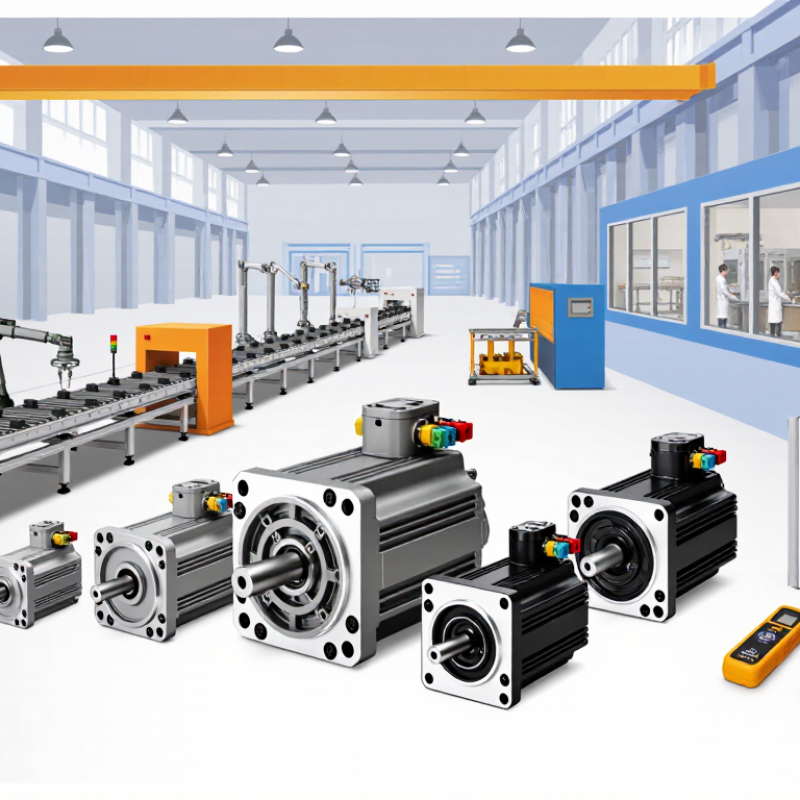
Automation motors are electromechanical units that create controlled movement in machines. They drive conveyors, robotic joints, packaging lines, pumps, and precision tools. Unlike ordinary motors, they often work with drives, sensors, or controllers. This combination manages speed, position, torque, and acceleration. Servo motors suit accurate movement, while stepper motors offer simpler positioning. Induction motors remain useful for steady industrial loads. Each type has practical limits.
China supplies global markets because its manufacturing network is broad and highly connected. Motor producers can source magnets, bearings, windings, housings, and control components nearby. Large production volumes can reduce unit costs and shorten delivery schedules. Many factories also support custom shafts, mounting sizes, voltages, connectors, and protective ratings. Major ports and established export services further simplify international purchasing.
A careful buyer should request torque-speed curves, thermal data, efficiency results, and service-life testing. Check encoder accuracy and braking performance under real loads. In factory evaluations, a low quoted price can hide weak insulation or poor heat control. Cost alone can mislead. Supplier audits, sample testing, and production inspection improve reliability. China’s advantage is substantial, but quality still depends on engineering discipline and transparent testing. One overlooked detail matters: the motor must match the complete control system, not just the machine’s nameplate.
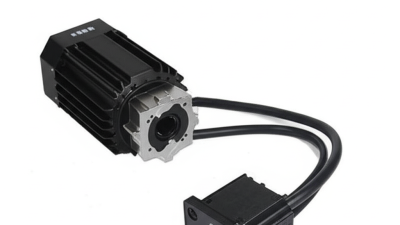
Automation motors convert electrical energy into controlled movement, but their designs differ sharply. AC induction motors suit pumps, fans, and conveyors because they are durable and cost-efficient. Servo motors deliver precise position, speed, and torque for robotic arms, CNC equipment, and packaging lines. Stepper motors offer simple positioning at lower speeds. Brushless DC motors work well in compact machines, medical devices, and automated warehouse systems.
The International Energy Agency reports that electric motor systems consume roughly half of global electricity. Efficiency is therefore more than a purchasing detail. Variable-speed drives can reduce energy waste when machine loads change. The International Federation of Robotics recorded 541,302 industrial robot installations in 2023. This growth increases demand for servo systems, feedback encoders, and reliable motion controllers. Still, robot numbers do not tell the whole story. A motor may perform well in a laboratory but struggle beside dust, vibration, or frequent washdowns.
Global buyers should match motor selection to the application, not only the rated power. Check continuous torque, peak torque, duty cycle, thermal limits, braking needs, and controller compatibility. A packaging machine may need fast acceleration, while a conveyor values steady torque and low maintenance. Installation space matters too. A practical warning: oversized motors can waste energy and complicate tuning. Real factories are rarely perfect. Cable routing, ambient heat, and imperfect alignment can reduce expected performance. Reports from the U.S. Department of Energy also emphasize system-level efficiency, showing why motor, drive, and load should be evaluated together.
Evaluating Chinese automation motor suppliers requires evidence, not attractive catalogs. The International Energy Agency estimates motor-driven systems consume 43–46% of global electricity. Small efficiency gaps can become significant operating costs. Ask for rated efficiency, power factor, torque curves, thermal limits, and duty-cycle results. Request test conditions, not only headline values. A 7.5 kW motor tested at 50 Hz may behave differently under frequent starts, dust, or variable loads.
Supplier capability should be checked on the production floor. Review winding equipment, rotor balancing records, insulation testing, and final inspection sampling. IEC 60034 test methods provide a common reference for performance and temperature rise. ISO 9001 certification helps, but it does not prove every batch is consistent. Verify certificate scope and recent audit status. Require serial-level traceability, material records, and retained test data. Photos are not enough.
For international projects, assess documentation and after-sales response before signing. Confirm voltage, frequency, mounting dimensions, shaft tolerances, encoder interfaces, ingress protection, and export packaging. The U.S. Department of Energy reports that efficient motors and controls can reduce system energy use. Evaluate performance at the system level. Pilot samples should run through your real load profile. One sample can mislead. No audit is perfect. Sampling may miss a weak process, so define corrective-action deadlines, warranty evidence, and independent inspection rights in the contract.
Recommended procurement weighting for global buyers evaluating technical capability, quality, compliance, delivery, and after-sales support.
The weighting emphasizes motor performance and quality consistency while also considering international certifications, production flexibility, delivery reliability, and technical support. Buyers should verify these factors through test reports, factory audits, sample orders, and contractual service terms.
China Top Automation Motors Suppliers for Global Buyers?
China’s automation motor supply base covers several practical categories. Servo motors support robotic arms, packaging lines, and precision assembly. Stepper motors suit compact positioning systems with controlled budgets. Brushless DC motors fit conveyors, fans, pumps, and battery-powered equipment. AC induction motors remain useful for durable, continuous-duty machinery.
The International Federation of Robotics reported 541,302 industrial robot installations worldwide in 2023. That volume increases demand for reliable servo systems, feedback devices, and compatible drives. The International Energy Agency estimates that motor-driven systems consume about 46% of global electricity. Therefore, efficiency should guide supplier selection, not only the purchase price. Buyers should check rated torque, overload capacity, encoder resolution, insulation class, and duty cycle.
Gear motors deserve special attention in slow-speed applications. They combine motor output with mechanical reduction, often reducing installation space. However, gearbox backlash and heat can affect accuracy.
A factory audit should review winding tests, vibration records, load testing, and traceability documents. ISO 9001 certification can support process confidence, but it does not guarantee every shipment performs equally. That assumption is risky. Sample testing remains necessary.
Technical communication also matters. Suppliers should provide CAD files, wiring diagrams, tolerance data, and multilingual manuals. Lead time claims need verification against production capacity and export experience. Some specifications look impressive on paper, yet field performance may depend on tuning, cable quality, and installation practice. This is where many purchasing plans become too optimistic.
Global buyers sourcing automation motors need more than a competitive quotation. Supplier selection should begin with verified production experience, engineering capability, and consistent quality records. Ask for motor curves, insulation class, rated torque, efficiency data, and operating-temperature limits. A supplier should explain these figures clearly, not hide behind general claims. In my experience, small specification gaps can create noise, overheating, or unexpected downtime after installation.
Quality control must continue beyond factory approval. Request pre-production samples and compare them with approved drawings. During production, inspect winding quality, shaft dimensions, bearing fit, and terminal connections. Factory acceptance testing can confirm speed, torque, vibration, and temperature rise. Keep serial numbers, inspection reports, and material records for traceability. Remote audits are useful, but they cannot reveal everything. That limitation deserves attention.
Tips: Use a written quality agreement with measurable tolerances. Define inspection points before production starts. Use an independent inspector for larger orders. Check packaging with real transport conditions, including moisture and vibration. Ask for corrective-action reports when defects appear. Do not accept vague promises. Clear evidence matters more. Also, review supplier performance after delivery, because one successful shipment may not prove long-term reliability.
| Sourcing and Quality Dimension | Measurable Data Point | Recommended Requirement or Reference | Verification Method | Buyer Action |
|---|---|---|---|---|
| Motor classification | Motor type, rated output, rated speed and duty cycle | Specify induction, servo, stepper or geared motor; define continuous or intermittent duty using the applicable IEC motor documentation | Review the datasheet, nameplate, drawings and sample test report | Create one standardized technical specification before requesting quotations |
| Electrical compatibility | Voltage, frequency, phase, rated current and connection configuration | Match the motor to the destination power system and drive; document permissible voltage and frequency deviations | Check nameplate values and perform no-load and loaded electrical tests | Require written confirmation of compatibility with the intended controller or inverter |
| Efficiency performance | Efficiency class and measured efficiency at defined load points | Use the applicable IEC 60034-30-1 efficiency classification for covered AC motors; state the test conditions | Compare the declared class with an accredited or calibrated efficiency test report | Include efficiency and test method in the purchase order rather than relying on marketing descriptions |
| Ingress protection | IP code for protection against solids and water | Select the IP rating according to the installation environment and confirm it under IEC 60529 test conditions | Review the test report and inspect enclosure, cable glands, seals and drain arrangements | Do not substitute a higher or lower enclosure rating without written engineering approval |
| Insulation system | Insulation class, winding resistance and dielectric withstand result | State insulation class and test voltage or method in accordance with the applicable IEC 60034 requirements | Witness winding resistance, insulation resistance and dielectric withstand tests with calibrated equipment | Define acceptance limits before production and retain serial-number traceability |
| Mechanical fit | Mounting dimensions, shaft diameter, shaft extension, keyway and flange details | Use a controlled drawing with tolerances, datum references and revision number | Measure samples with calibrated gauges or a coordinate measuring machine where appropriate | Approve a first article before releasing the full production order |
| Speed and torque | Rated torque, peak torque, speed range, acceleration and allowable overload | Define the complete torque-speed curve and duty profile instead of specifying only maximum torque | Perform dynamometer or application-representative testing at agreed operating points | Use the same load profile for supplier comparison and incoming validation |
| Positioning accuracy | Encoder resolution, repeatability, backlash and position error | Set application-specific limits and define the measurement reference, load condition and temperature | Test the assembled motor and drive using a calibrated motion measurement system | Evaluate the complete motor-drive-feedback combination, not the motor alone |
| Vibration and noise | Vibration velocity, acoustic noise and bearing condition | Specify measurement speed, mounting arrangement, load and acceptance limit; reference ISO 20816 where applicable | Use calibrated vibration and sound-level instruments during routine or type testing | Require trend records for recurring orders to detect process drift |
| Thermal performance | Winding temperature rise, ambient temperature and cooling method | Define ambient conditions, duty cycle, cooling arrangement and allowable temperature rise using the applicable motor standard | Conduct a temperature-rise test under representative load and ventilation conditions | Check thermal margins when the motor is installed inside a cabinet or enclosed machine |
| Factory quality system | Quality-management certification status, process controls and corrective-action records | Request a current certificate and verify its scope, validity and manufacturing location; certification does not replace product testing | Conduct document review, remote audit or on-site process audit | Score suppliers using the same audit checklist and retain objective evidence |
| Incoming inspection | Sampling plan, critical defects, major defects and minor defects | Use a documented sampling plan such as ISO 2859-1 and define zero-tolerance safety or functional defects | Inspect identification, dimensions, electrical results, accessories and packaging before release to production | Link inspection results to purchase-order, batch and serial-number records |
| Pre-shipment inspection | Quantity, configuration, test coverage and packaging condition | Release shipment only after agreed tests, documentation and visual inspection are complete | Use an independent inspection or buyer witness according to the purchase order | Make payment milestones conditional on passing the agreed inspection criteria |
| Documentation and traceability | Datasheet, drawing, test report, certificate, serial number and revision history | Require consistent technical documents with controlled revisions and identifiable production batches | Cross-check documents against the delivered motor and purchase-order requirements | Block shipment or payment when essential documents are missing or inconsistent |
| Compliance and market access | Required conformity markings, declarations and destination-market documents | Identify applicable electrical safety, electromagnetic compatibility, environmental and machinery requirements before ordering | Review declarations, laboratory reports and technical files against the destination market | Treat regulatory compliance as a contractual deliverable, not an optional supplier claim |
| Supply continuity | Component sourcing, capacity, standard lead-time commitment and change-notification process | Require advance notification for changes to materials, production location, firmware, tooling or critical components | Review capacity evidence, approved-subcontractor controls and business-continuity procedures | Qualify an alternate source or approved equivalent for critical applications |
Office: (281) 855-2218
Copyright © 2025 Telco Intercontinental Corp. All rights reserved. Privacy Policy | Legal Disclaimer
Telco®, TelcoMotion®, and TelcoGreen® are registered trademarks of Telco Intercontinental Corp.