Main Menu

Choosing a 240v dc motor in 2026 requires more than comparing speed and price. Motor selection affects efficiency, maintenance, heat, noise, and long-term equipment reliability. This guide examines the leading motor types used in industrial drives, automation systems, battery-backed equipment, conveyors, pumps, and precision machinery.
The main options include brushed permanent-magnet motors, wound-field motors, series-wound motors, shunt motors, compound motors, and brushless DC designs. Each type behaves differently under load. A brushed motor may offer simple control and strong starting torque, but its brushes and commutator require scheduled inspection. A brushless model can reduce mechanical wear, although its controller adds cost and technical complexity. Small details matter. A warm terminal, a noisy bearing, or unstable acceleration can reveal a poor match.
This comparison focuses on practical performance, not marketing claims. It considers torque curves, speed regulation, duty cycles, cooling methods, controller compatibility, insulation quality, and service access. Manufacturer datasheets, test records, and recognized electrical safety practices should guide the final decision. Real installations also deserve attention. Dust, vibration, humidity, and frequent starts can change the ranking completely.
Some expectations need reconsideration. The most efficient motor is not always the best value. A compact design may struggle with continuous loads. An older brushed configuration can still outperform newer technology in a controlled environment. Careful engineering wins. Readers should verify voltage tolerance, protection requirements, and emergency isolation before installation. This overview offers a practical starting point, while site-specific testing remains essential.
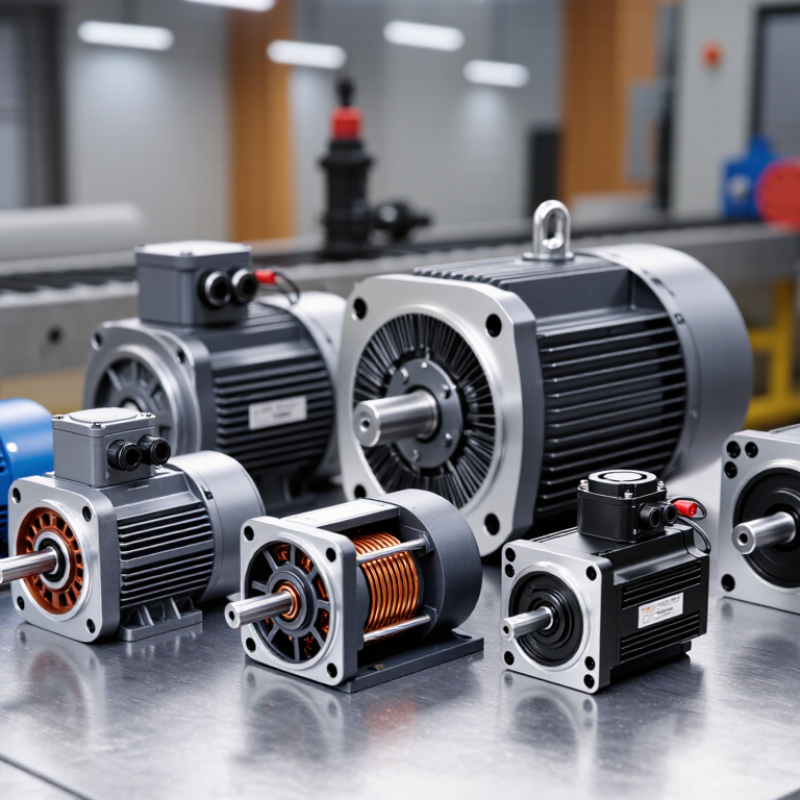
A 240V DC motor converts electrical energy into mechanical rotation through magnetic force. When direct current enters the armature windings, it creates a magnetic field inside the motor. This field interacts with the stationary field, producing torque at the shaft. In a brushed motor, carbon brushes and a commutator switch current between windings as the rotor turns. That switching keeps the torque moving in one direction.
The operating speed depends on applied voltage, load, and back electromotive force. A controller can adjust speed through pulse-width modulation, but the motor still needs suitable current limiting. Under heavy load, armature current rises quickly. Heat follows. A practical technician checks starting current, shaft alignment, bearing condition, and cooling airflow before selecting a 240V unit.
Common choices include brushed shunt motors, series motors, compound motors, and electronically commutated DC motors. Shunt designs offer steadier speed, while series designs provide strong starting torque. Electronically commutated types reduce brush wear but require a compatible controller. The simple explanation is incomplete. Cable losses, regenerative voltage, and sudden load changes can affect real performance. I would also question any specification that lists voltage without continuous current, duty cycle, insulation rating, and enclosure protection. At 240V DC, an accidental contact can be severe. Use isolation, fusing, guarded terminals, and qualified installation practices. Safety cannot be an afterthought.
A 240V DC motor is an electric motor designed to operate from a nominal direct-current supply of approximately 240 volts. Its performance depends on the motor architecture, controller, load profile, cooling method, and allowable voltage range.
| Motor Type | Operating Principle | Typical 240V DC Configuration | Speed and Torque Characteristics | Main Advantages | Key Limitations | Typical Applications | Control Requirements |
|---|---|---|---|---|---|---|---|
| Separately Excited DC Motor | The armature and field winding receive power from independent DC sources or independently controlled outputs. Armature torque is produced by the interaction between armature current and the separately regulated magnetic field. | 240V armature supply with a separately controlled field circuit, often operated with a lower field voltage or a dedicated field current regulator. | Wide speed-control range. Speed can be adjusted through armature voltage below base speed and field weakening above base speed. Provides strong starting torque and good regulation. | Precise control Wide speed range High starting torque | Requires separate field and armature control. Brushes and commutators require inspection and eventual replacement. | Industrial hoists, rolling equipment, test stands, elevators, large conveyors, and retrofit variable-speed drives. | A controlled rectifier, DC drive, or regenerative drive is normally used. Current limiting and field-loss protection are important. |
| Shunt-Wound DC Motor | The field winding is connected in parallel with the armature. The nearly constant field flux produces a relatively stable torque constant and speed characteristic. | 240V armature and field circuits connected across the DC bus, with field voltage and current selected according to the motor design. | Moderate starting torque with comparatively stable speed from no-load to rated load. Speed can be varied by changing armature voltage or weakening the field. | Stable speed Simple operating concept Suitable for continuous duty | Starting torque is lower than that of a series motor. Loss of field excitation can cause overspeed in some operating conditions. | Fans, pumps, machine tools, printing equipment, and conveyors requiring steady speed. | Usually operated with a DC drive. A field-loss relay, overcurrent protection, and controlled acceleration are commonly applied. |
| Series-Wound DC Motor | The field winding is connected in series with the armature, so field current changes with load current. This creates high torque at low speed. | A 240V DC supply feeds the series field and armature in the same current path. The motor must be operated with an appropriate load or control system. | Very high starting torque, but speed can rise dangerously at light load. Speed regulation is poorer than that of shunt and separately excited motors. | Very high starting torque Strong overload capability Good for traction loads | Must not be operated unloaded. Speed varies significantly with load, and control becomes more demanding at high speed. | Crane drives, winches, traction systems, hoists, and other applications requiring high breakaway torque. | Uses current-limited DC control, soft starting, and load-dependent speed management. Mechanical overspeed protection may be required. |
| Cumulative Compound DC Motor | Combines shunt and series field windings whose magnetic effects reinforce each other. It balances high starting torque with better speed regulation than a pure series motor. | A 240V armature circuit with both parallel and series field connections designed for the motor's rated current and field configuration. | Higher starting torque than a shunt motor and better speed stability than a series motor. The exact characteristic depends on the series-field strength. | Balanced performance Good starting torque Useful load response | More complex wiring and adjustment. The series field can increase speed droop and losses if incorrectly sized or controlled. | Presses, compressors, elevators, conveyors, shears, and machinery with changing mechanical loads. | Requires a compatible DC drive and correct field polarity. Current, field, and acceleration limits should be configured during commissioning. |
| Permanent-Magnet DC Motor (PMDC) | Permanent magnets provide the stationary magnetic field, while the armature and commutator produce rotating torque. No separate field winding is required. | A 240V-rated PMDC motor is connected to a variable DC supply or PWM drive. The allowable continuous voltage and current must be verified from the motor rating. | Good efficiency at small and medium power levels. Speed is approximately proportional to applied voltage, while torque is approximately proportional to armature current within the rated range. | Compact design No field copper loss Simple control | Permanent magnets can be affected by excessive temperature, demagnetizing current, or mechanical shock. Power range is limited compared with some wound-field designs. | Actuators, laboratory equipment, automation systems, small conveyors, pumps, and battery-powered industrial subsystems. | Typically uses PWM voltage control with current limiting, braking control, and adequate electromagnetic-noise suppression. |
| Brushless DC Motor (BLDC) | Permanent magnets are mounted on the rotor and electronic switching replaces the mechanical commutator. The controller energizes the stator phases according to rotor position. | A 240V DC bus supplies an inverter or electronic commutation drive. The motor itself is generally a multiphase permanent-magnet machine rather than a brushed DC machine. | High efficiency, strong dynamic response, and a wide speed range. Torque ripple and acoustic behavior depend on winding design, commutation method, and controller settings. | Low maintenance High efficiency High power density | Requires an electronic controller. Position sensing, sensorless control, electromagnetic compatibility, and regenerative-energy handling must be considered. | Robotics, machine tools, pumps, fans, compressors, automated handling, and high-duty-cycle motion systems. | Uses a three-phase inverter with Hall sensors, an encoder, or sensorless position estimation. DC-link fusing and braking management are essential. |
| Permanent-Magnet Synchronous Motor (PMSM) | A permanent-magnet rotor rotates synchronously with the rotating magnetic field generated by the electronically controlled stator currents. It is commonly driven from a DC bus through an inverter. | A 240V DC link feeds a vector-controlled inverter. The inverter produces the variable-frequency, multiphase waveform required by the motor. | High efficiency and excellent torque control, especially with field-oriented control. Constant-power operation can be extended through controlled field weakening. | High efficiency Precise torque control Quiet operation potential | Controller tuning is more complex than basic brushed-motor control. Magnet temperature, demagnetization margin, and inverter compatibility must be assessed. | Servo systems, electric vehicle auxiliaries, precision machinery, energy-efficient pumps, and high-performance industrial drives. | Requires a suitable inverter, current sensors, and rotor-position feedback or a validated sensorless algorithm. Regenerative braking capability is often needed. |
| Switched Reluctance Motor (SRM) | Torque is produced because the rotor moves toward the position of lowest magnetic reluctance when electronically switched stator phases are energized. The rotor contains no permanent magnets or windings. | A 240V DC bus supplies a dedicated asymmetric power converter that independently switches the motor phases. | High starting torque and wide-speed capability. Torque ripple and audible noise depend strongly on electromagnetic design and control strategy. | Robust rotor High-temperature potential Fault-tolerant architecture | Requires a specialized controller. Torque ripple, acoustic noise, and electromagnetic interference may require additional design measures. | Industrial pumps, compressors, fans, traction auxiliaries, harsh-environment drives, and applications prioritizing rotor robustness. | Uses rotor-position feedback or sensorless estimation with phase-current control. The converter and control software are integral to system performance. |
| Coreless or Slotless DC Motor | The armature uses a low-inertia winding structure with little or no conventional iron core. Torque is generated in the magnetic field while reducing rotor mass and iron-related losses. | Available designs may use a high-voltage DC input through a suitable PWM controller, but 240V operation must be explicitly specified because many coreless motors are low-voltage products. | Very fast acceleration and deceleration with low mechanical inertia. Continuous torque and thermal capacity are generally lower than those of larger iron-core motors. | Very low inertia Fast response Low cogging potential | Limited high-power availability, sensitivity to thermal overload, and careful insulation requirements at elevated voltage. | Precision actuators, laboratory mechanisms, optical systems, high-speed positioning, and specialized automation. | Requires tightly controlled PWM, current limiting, thermal monitoring, and confirmation of winding insulation for the 240V DC bus. |
Technical note: “240V DC” is a nominal bus or motor rating, not a universal operating value. Actual allowable voltage, current, speed, insulation level, braking method, cooling requirement, and controller compatibility must be confirmed from the specific motor and drive specifications. BLDC and PMSM systems accept DC power but use electronic inverters to create the multiphase currents inside the motor.