2026 Best Motor Types by Power for Global Buyers
Choosing a motor in 2026 is not a contest to find the largest number on a nameplate. Buyers must match rated power to the load, duty cycle, supply, and operating environment. A conveyor moving steady loads has different needs from a pump facing changing flow or a machine that starts repeatedly. Small details matter: a hot enclosure, a long cable run, or a heavy start can change the practical choice.
Nikola Tesla, a pioneer of alternating-current motor systems, wrote, “The present is theirs; the future, for which I really worked, is mine.” That perspective suits today’s purchasing decisions. Efficiency rules, control systems, and service access can shape lifetime value as much as upfront power. For a global buyer comparing an induction motor, a synchronous motor, or a permanent-magnet design, the best option depends on the application—not a headline claim. Verify performance data with the supplier, and check that the stated rating reflects the intended duty.
There is no universal power threshold where one motor type becomes best. Not quite. A motor selected for a clean, steady workshop may struggle in a dusty plant with frequent starts. This guide compares motor types by power range and highlights the questions buyers should ask before requesting a quote. It also uses the phrase motor power motor in its search context, while keeping the technical decision grounded in actual load requirements. One point deserves reflection: published efficiency figures rarely tell the whole operating story. Look beyond the brochure.
Define Rated Output: IEC 60034-30-1 Covers 0.12–1,000 kW
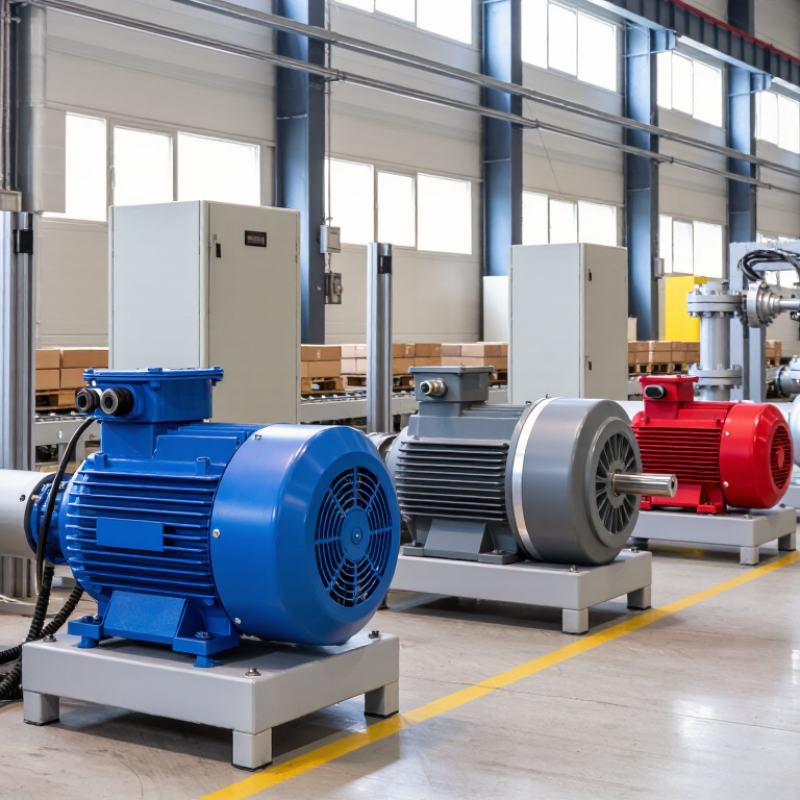
For global buyers, rated output is the motor’s mechanical power at the shaft, expressed in kilowatts. It is not the electrical power drawn from the supply. IEC 60034-30-1 sets efficiency-class requirements for covered motors across a rated-output range of 0.12 to 1,000 kW. That range helps compare efficiency, but it does not mean every motor design or duty is covered.
A small pump motor rated at 0.75 kW and a production-line motor rated at 90 kW may both fall within the range. Their loads, operating hours, starting methods, and supply conditions still differ. Match rated output to the driven equipment’s real load, not just its peak demand. Numbers need context. A motor selected too large may run inefficiently at light load; one selected too small may overheat under sustained demand. I have seen specifications that list kW but omit duty cycle. That gap deserves a closer look.
Tips: Check whether the motor falls within the standard’s scope, then compare its stated efficiency class and rated output. Confirm voltage, frequency, speed, and operating duty with the supplier. For unusual environments or variable-speed use, verify the applicable requirements separately.
Below 0.75 kW: Compare BLDC, Universal, and Single-Phase Induction Motors
Below 0.75 kW, the best motor depends on the load, duty cycle, and available controls. A BLDC motor suits equipment needing precise speed control, such as compact pumps or ventilation fans. Its electronic controller adds cost and design work, but can improve efficiency when speed varies. Universal motors deliver high speed and strong output for their size, making them common in handheld equipment. Their brushes wear over time, and noise can be noticeable. Single-phase induction motors are a practical fit for steady-speed fans and small pumps; they are simple, but speed control is less flexible. Not so simple.
The U.S. Department of Energy’s 2014 motor-systems sourcebook estimates that motor-driven systems use about 68% of electricity consumed in U.S. manufacturing. That figure covers industrial systems broadly, not motors below 0.75 kW, but it shows why operating hours matter. A small motor running all day may deserve more efficiency attention than a higher-powered unit used briefly. IEC 60034-30-1 defines efficiency classes for certain AC motors, but it does not provide a direct ranking across BLDC, universal, and single-phase induction designs. Compare measured input power at the actual load, starting behavior, speed range, and expected service life. A fair comparison is still imperfect: controller losses, enclosure, and cooling can shift results in real equipment.
2026 Best Motor Types by Power for Global Buyers — Below 0.75 kW
Typical efficiency ranges for BLDC, universal, and single-phase induction motors
BLDC motors often achieve higher efficiency, while universal motors offer high speed in a compact design. Single-phase induction motors are common for fixed-speed applications. These indicative ranges vary with motor design, rated load, and operating conditions; compare product specifications for a specific application.
From 0.75 to 75 kW: Compare Induction and Synchronous-Reluctance Motors
Across 0.75 to 75 kW,
the right motor depends on the load profile, operating hours, and control method.
Induction motors suit pumps, fans, and conveyors, especially where familiar starting and replacement arrangements matter. Their rugged design is a practical advantage. But prolonged light-load operation can increase energy waste. That adds up.
Synchronous-reluctance motors can reduce rotor losses and perform efficiently with a compatible variable-frequency drive. They are worth comparing where equipment runs many hours or varies speed. The motor and drive must be assessed as one system; a motor’s efficiency rating alone does not predict site savings. Check starting torque, speed range, cooling, and the actual duty cycle. I would not assume one type wins at every power rating.
Tips:
Request efficiency data at your expected load points, not only full load. Confirm drive compatibility, enclosure, mounting, and service support before comparing purchase prices. For a 75 kW installation, even small efficiency differences may matter over long operating hours. For an intermittent 0.75 kW duty, simplicity may matter more. Verify the figures against the supplier’s test data.
Above 75 kW: Assess High-Voltage Induction and Synchronous Motors
Above 75 kW, motor selection depends on the whole drive system, not output alone.
The IEA’s Energy Efficiency 2023 report estimates that motor-driven systems use about 53% of global electricity. A U.S. Department of Energy market assessment found they accounted for roughly 68% of electricity use in American manufacturing. These figures describe broad system impact, not a guaranteed saving from either motor type.
High-voltage induction motors suit demanding pumps, compressors, and fans where robust construction and straightforward operation matter. Synchronous motors can be attractive for large, steady loads and applications needing power-factor control. Neither is automatically more efficient in every installation. At the same output, higher supply voltage reduces current, but the site’s electrical infrastructure, starting method, variable-speed drive, and protection scheme all affect the decision. A 6.6 kV supply may fit one plant; another may be designed around a different voltage. That matters. The 75 kW threshold is a useful buying guide, not a universal boundary between low- and high-voltage designs.
Compare efficiency at the expected load, not only at the nameplate rating. Ask suppliers for tested performance, starting-current data, and service requirements, then check those figures against actual operating hours. The first sizing estimate can mislead. A motor that looks ideal on paper may run lightly loaded, face frequent starts, or require costly site upgrades.
Check IE3/IE4 Efficiency, 50/60 Hz Supply, and 2–8-Pole Compatibility
For global buyers, efficiency labels need context.
The U.S. Department of Energy’s Improving Motor and Drive System Performance sourcebook reports that motor systems use about 69% of U.S. manufacturing electricity. That figure makes IE3 or IE4 selection worth careful review, but the class alone does not predict a plant’s energy savings. IEC 60034-30-1 sets efficiency classes by motor output, pole count, and supply frequency. Compare test data at the intended operating point, not just the headline label.
Frequency changes speed.
Before slip, a 2-pole motor runs at 3,000 rpm on 50 Hz and 3,600 rpm on 60 Hz; a 4-pole motor runs at 1,500 and 1,800 rpm. Six- and 8-pole options provide lower speeds, useful for some direct-drive loads. Check the nameplate voltage and frequency, starting method, and driven equipment limits. A motor rated for both supplies may still need different protection or control settings. Small details matter.
I would verify the full rating twice.
Catalog tables can hide assumptions. Confirm that the selected IE3 or IE4 model is available in the required 2–8-pole configuration and works at the site’s actual voltage and frequency. IEC 60034-1 provides the framework for rating and performance declarations; ask for documentation tied to the exact motor variant. A neat efficiency label is helpful, but it is not the whole specification.