
Main Menu

Insulation Parts are the quiet barriers inside electrical equipment. They separate live conductors, support components, and help prevent unintended current paths. A molded terminal block, a thin mica sheet, or a ceramic bushing may look simple. Each must withstand heat, voltage, vibration, and aging in its specific application. When insulation is poorly selected, small defects can grow into overheating, tracking, or equipment failure.
The need is growing alongside electricity use. The International Energy Agency’s Electricity 2024 report projected global electricity demand growth of about 4% annually from 2024 through 2027. That forecast makes dependable equipment design increasingly important, though it does not measure insulation demand directly. IEC 60085 also provides a recognized framework for classifying electrical insulation systems by thermal endurance. These references help engineers compare materials and define operating limits; they do not replace testing under real conditions.
Thomas A. Short, an electrical distribution engineer and author of the Electric Power Distribution Handbook, offers valuable practical guidance on distribution equipment. A concise takeaway from that engineering perspective is: “Insulation is a working safety margin, not just a layer between conductors.” This is a summary, not a verified verbatim quotation. That distinction matters. In practice, engineers must consider creepage distance, clearances, moisture, and temperature together. Even a well-rated part can fail when installation details are overlooked. The humble spacer deserves more attention. It is easy to assume insulation simply “holds things apart.” That view is incomplete, and sometimes costly.
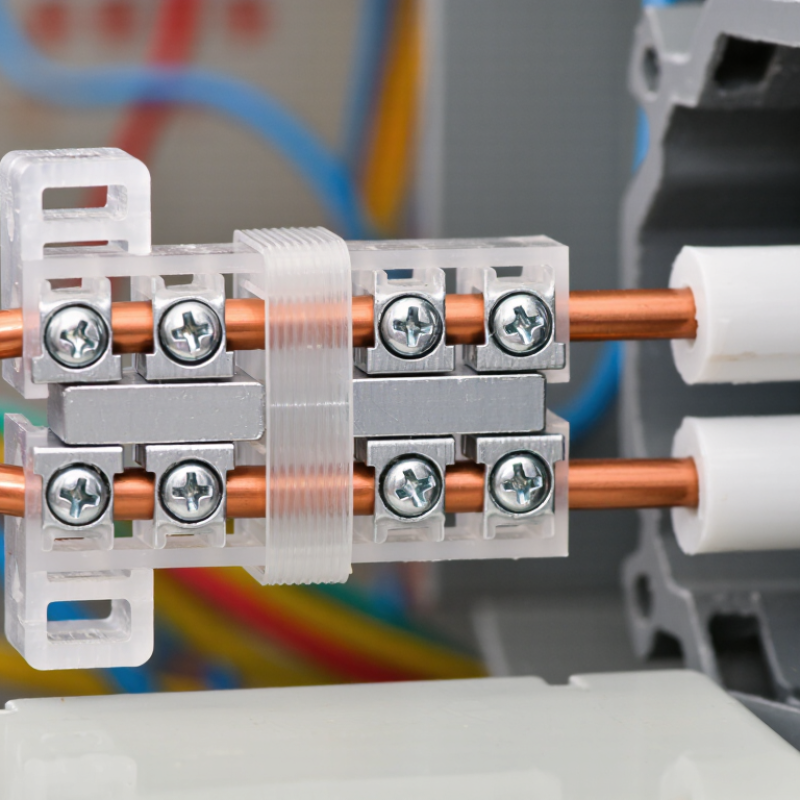
Insulation parts are nonconductive components that separate energized conductors from other conductors, grounded frames, or people. They help control where electrical current can flow. Common examples include sleeves, bushings, spacers, barriers, terminal supports, and coil liners. Materials vary with the job: porcelain and glass tolerate heat well, while polymers can offer lighter, shaped components. Mica is used in some applications that need strong heat resistance. Small parts matter.
These components appear throughout electrical equipment. In a transformer, bushings guide conductors through the tank wall, while insulating sheets separate windings. In motors, slot liners sit between copper wire and the steel core. Switchgear may contain barriers between live terminals, and terminal blocks use molded insulation to keep connection points apart. Cable supports and insulating washers also help maintain spacing where vibration or movement occurs.
Their location and shape are chosen for operating voltage, temperature, mechanical stress, and the surrounding environment. A cracked surface, loose spacer, or layer of dust and moisture can reduce insulation performance. During inspection, technicians look for discoloration, tracking marks, and damaged edges, while following equipment-specific procedures. The boundary is not always obvious: a part may both support a conductor and electrically isolate it. That distinction deserves careful attention.
| Insulation Part | Common Materials | Where It Is Found | Main Purpose | Practical Considerations |
|---|---|---|---|---|
| Insulating sleeve or tube | Heat-shrinkable polymer, silicone rubber, or glass-fiber-reinforced material | Over wire splices, terminals, busbar connections, and component leads | Covers exposed conductive sections and helps prevent accidental contact or short circuits. | Must fit the conductor and suit the operating temperature, voltage, and surrounding environment. |
| Insulating spacer or standoff | Porcelain, glass-reinforced epoxy, or engineering polymers | Between busbars, circuit assemblies, and grounded equipment frames | Supports conductors while maintaining electrical separation and clearance. | Mechanical strength, creepage distance, and resistance to heat and moisture are important. |
| Terminal block | Molded thermoset or thermoplastic insulating body with metal terminals | Control panels, junction boxes, and electrical enclosures | Holds and separates wire connection points to reduce the chance of unintended contact. | Selection depends on conductor size, current rating, temperature rating, and installation conditions. |
| Coil or winding insulation | Enamel, polymer film, insulating paper, or resin-impregnated materials | Inside motors, generators, transformers, and inductors | Separates adjacent turns and windings, helping prevent electrical breakdown within the component. | Thermal class and resistance to electrical, mechanical, and environmental stress affect service life. |
| Insulating sheet or barrier | Electrical-grade laminate, mica, polymer film, or insulating paper | Between components, phases, circuit layers, or live parts and an enclosure | Provides a physical dielectric barrier where conductive parts are close together. | Thickness and material properties should be appropriate for the equipment design and conditions. |
| Insulating bushing | Porcelain, glass, epoxy, or silicone-based materials | Where a conductor passes through an enclosure, tank, or grounded partition | Insulates and supports the conductor at the point where it passes through a surface. | Designs may need to withstand electrical stress, mechanical loads, heat, and outdoor exposure. |
| Printed circuit board substrate | Glass-fiber-reinforced epoxy laminate or other electrical-grade laminates | Between conductive copper tracks and layers in electronic equipment | Provides structural support and electrically separates circuit conductors. | Material choice can affect heat handling, dielectric performance, and mechanical rigidity. |
| Insulating enclosure or cover | Electrical-grade thermoplastic, thermoset, or composite material | Over switches, connectors, terminal assemblies, and other electrical parts | Helps protect people and equipment from contact with live components, when used as part of a suitable design. | Enclosure protection depends on its construction, openings, installation, and applicable safety requirements. |


