Main Menu
Choosing a Float Glass Machine is a major production decision, not simply a purchase of furnace capacity. The right line can support consistent thickness, clear surfaces, and dependable output. It can also shape energy use, maintenance demands, and future expansion. These details matter on the factory floor, where temperature variation or a brief process interruption can affect an entire run.
Sir Alastair Pilkington pioneered the float-glass process. The following is an editorial paraphrase of its central engineering principle, not a verified quotation: “Stable heat and controlled flow are essential to producing dependable glass.” Buyers should apply that principle when comparing machine design, process controls, service access, and supplier support. A polished brochure is not enough. Ask for operating data, installation requirements, and evidence from comparable production lines. Then consider whether the system fits your product mix and the skills of your team.
This guide examines the practical factors behind that choice, from capacity and automation to energy performance and after-sales service. Small details matter. For example, a difficult-to-reach inspection point can add time to routine maintenance. No machine removes every production risk, and projected savings may depend on local operating conditions. That deserves a second look. A careful assessment helps businesses distinguish impressive specifications from capabilities they can reliably use.
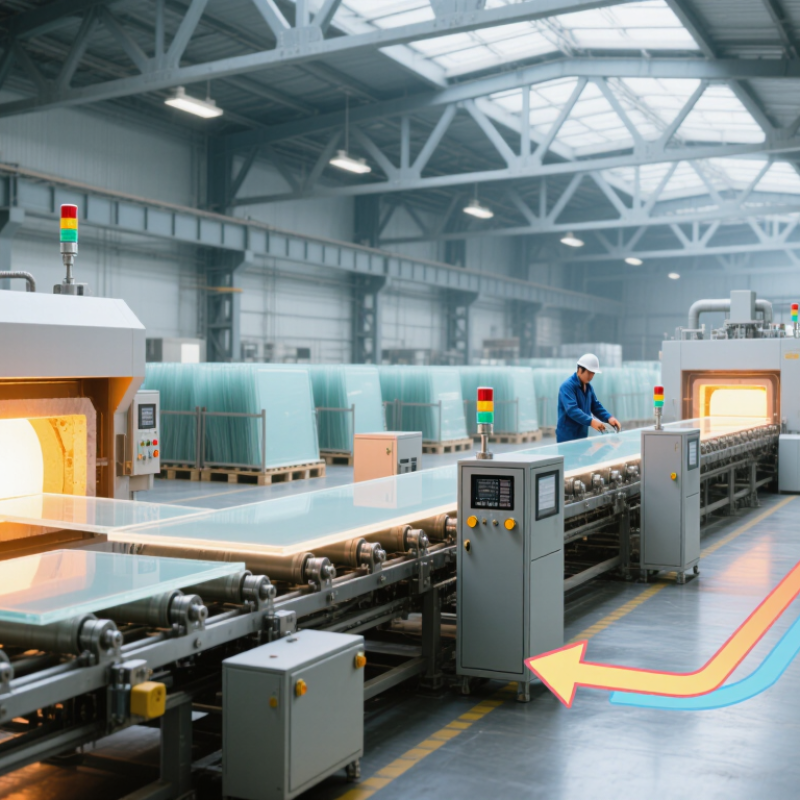
A float glass machine is part of a continuous production line that turns prepared raw materials into flat glass. The mixture is heated in a furnace until it becomes molten. Then it flows onto a bath of liquid tin, where the glass spreads into a smooth ribbon. The tin supports the glass without mixing with it. It is a precise process, but not a simple one.
The ribbon’s thickness depends on factors such as its flow rate, temperature, and how quickly it is drawn across the bath. Adjustments affect the final sheet, so operators monitor temperatures and line speed closely. After forming, the glass passes through an annealing lehr, where controlled cooling helps reduce internal stress. Too much variation can lead to defects or breakage later. Not magic.
The line then inspects the glass and cuts it into usable sheets. Depending on the setup, equipment may also handle edging or surface checks. A float glass machine does not guarantee perfect output by itself; raw material quality, maintenance, and process control matter too. Even a well-run line has limits. A business choosing this equipment should consider its target thicknesses, production volume, and tolerance for downtime before planning a purchase.
A float glass line starts with silica sand, soda ash, limestone, and carefully measured recycled glass. The batch melts in a furnace at roughly 1,500°C. Molten glass then flows onto a bath of liquid tin inside a controlled atmosphere. It spreads into a smooth ribbon. Rollers and line speed help set the thickness.
The ribbon enters an annealing lehr, where controlled cooling reduces internal stress. Inspection systems check for bubbles, stones, and surface defects before cutting. The European Commission Joint Research Centre’s 2013 Glass Manufacturing BREF reports float-glass furnace energy use in an approximate range of 5.5–8.5 GJ per tonne, depending on operating conditions. Still, averages can mislead. A machine’s real performance depends on furnace design, maintenance, and consistent batch quality.
Tips: When evaluating a float glass machine, ask for energy-use figures per tonne and clarify how they were measured. Check temperature controls and inspection equipment, too. Small variations matter. Even an efficient line can waste material when settings drift, and operators may need time to fine-tune them.
Float glass is melted in a furnace, formed as a ribbon on molten tin, and gradually cooled in an annealing lehr. These approximate temperatures illustrate the process; operating conditions vary by glass composition, product thickness, and production line.
A float glass machine produces a continuous ribbon of glass with a smooth surface and controlled thickness. For a business, that consistency can reduce uneven sheets, rework, and material waste. When production runs are planned well, steady output also makes delivery schedules easier to manage. That matters. Buyers notice reliable dimensions and fewer defects, especially when glass is cut for windows, partitions, or façades.
Modern float glass equipment can support larger production volumes and more repeatable quality than small, manual processes. Automated temperature and speed controls help operators keep the molten glass and forming process within set ranges. Better control may lower costs per sheet over time, but the result depends on energy prices, maintenance, and actual demand. A machine that runs below capacity can become an expensive burden. Even careful forecasts can be wrong; businesses should test assumptions against seasonal orders and service costs before committing.
Tips: Compare expected output with confirmed demand, not just optimistic sales targets. Ask how often key components need inspection, and budget for trained operators. Track glass thickness, surface defects, energy use, and downtime from the first production shift. These figures show whether the equipment is delivering value. Small issues can hide in the numbers.
Before selecting a float glass machine, match its capacity to your actual orders. Check maximum glass width, thickness range, and daily output—not just the advertised peak rate. A line designed for oversized sheets may waste energy when most orders are smaller. Review the furnace, forming section, and annealing lehr as one connected system. Uneven cooling can create stress that appears later during cutting or handling. Small details matter.
Assess product consistency, controls, and maintenance access. Ask how thickness and temperature are monitored, and whether operators can identify faults quickly. Request operating data from a comparable production setup, then verify what conditions produced those figures. Also consider floor space, power use, staff training, and the availability of replacement components. Downtime costs. A technically capable machine can still disappoint if local teams cannot maintain it. I would not rely on a brochure alone; site requirements and product mix change the decision.
Tips: List your common sheet sizes and target output before requesting quotations. Compare energy use per unit, planned maintenance intervals, and commissioning support. Leave room for future needs, but avoid paying for capacity your business may never use.
Why Choose a Float Glass Machine for Your Business?
Float glass production supports a broad mix of products, from clear building windows and shopfronts to mirrors, furniture panels, and vehicle glazing. Its flat, uniform surface is a practical starting point for cutting, coating, laminating, and tempering. Product requirements differ, though: automotive glazing needs tight optical and dimensional control, while a large architectural panel may prioritize thickness consistency and coating compatibility. One line cannot economically make every specification equally well. That limitation deserves honest planning.
Demand is shaped by several industries. The International Energy Agency’s Global Status Report for Buildings and Construction 2023 estimates that buildings account for about 30% of global final energy consumption, sustaining demand for windows and façade glass. For another signal, the IEA reported that global solar PV capacity additions exceeded 420 GW in 2023. This supports interest in solar glass, but not every float line can make solar-grade products without suitable process controls and downstream finishing. Details matter. A production plan should match local buyers, required glass thicknesses, furnace capacity, and finishing equipment—not just headline market growth.
Tips: Before investing, compare target product specifications with a machine’s thickness range, width, yield, and changeover needs. Ask for documented quality data and realistic energy-use estimates. A beautiful sample is not a production guarantee. Include maintenance access and skilled-operator training in the budget; these are easy to underestimate.
| Industry | Products Supported | Typical Float-Glass Characteristics | Common Further Processing |
|---|---|---|---|
| Architecture and construction | Clear, tinted, and coating-ready flat glass for windows, façades, doors, partitions, and skylights | Common nominal thicknesses include 3–12 mm; thicker glass is also produced for selected applications. Color and thickness depend on the line and product specification. | Cutting, edge finishing, heat treatment, insulating-glass assembly, lamination, or application of suitable coatings |
| Automotive and transport | Flat-glass blanks used to manufacture vehicle side windows, rear windows, and windshields | Automotive glass commonly uses relatively thin glass, often around 2–6 mm before or as part of further processing; specifications vary by vehicle component and design. | Precision cutting and shaping, bending, tempering for many side and rear windows, or lamination for windshields |
| Solar energy | Cover glass for photovoltaic modules and selected solar-thermal applications | Solar cover glass is commonly in the approximate 2–4 mm range; optical, strength, and surface requirements depend on the system design. | Cutting, edge processing, tempering, and application of appropriate anti-reflective or other functional coatings |
| Furniture and interior design | Tabletops, cabinet doors, shelves, display cases, and interior partitions | Common choices include 4–12 mm clear or tinted glass, with final thickness selected for size, support, and safety requirements. | Cutting, polishing, drilling, tempering, lamination, or decorative finishing |
| Appliances and display equipment | Shelves, doors, control-panel covers, and display or protective panels | Products often use glass in the approximate 3–8 mm range, depending on the appliance, load, and temperature conditions. | Cutting, edge finishing, drilling, tempering, printing, or other application-specific finishing |
| Mirrors and decorative glass | Mirror substrates and clear or tinted decorative panels | Mirror substrates commonly use approximately 3–6 mm glass; the selected specification depends on panel size and installation. | Cutting and edge finishing, followed by application of reflective and protective layers for mirror products |
Note: Thickness ranges are indicative examples, not universal specifications. A float glass line produces flat glass; many finished products require separate downstream processing. Available thicknesses, dimensions, colors, and production capabilities vary by line configuration and product requirements.
Office: (281) 855-2218
Copyright © 2025 Telco Intercontinental Corp. All rights reserved. Privacy Policy | Legal Disclaimer
Telco®, TelcoMotion®, and TelcoGreen® are registered trademarks of Telco Intercontinental Corp.