What Is the Best China 240V Geared Motor?
Choosing the best 240v geared motor requires more than comparing price, torque, or brand reputation. A conveyor may need steady torque at 30 rpm, while a mixer may face sudden load changes and frequent starts. These conditions can expose weaknesses quickly.
The International Energy Agency reports that electric motor systems consume roughly half of global electricity. Its efficiency studies also indicate meaningful savings from correct sizing, controls, and mechanical design. The U.S. Department of Energy similarly identifies motor-driven equipment as a major share of industrial electricity use. These findings make gearbox efficiency, thermal performance, and duty rating practical buying priorities.
Dr. Paul Waide, an energy-efficiency specialist involved in international motor-system research, states: “The greatest savings come from the whole system, not the motor alone.” That principle matters here. A 240V motor with excessive reduction may run hot, waste energy, and shorten lubricant life. A correctly matched unit should deliver the required torque without constant overload.
Look closely at rated output torque, gearbox ratio, service factor, insulation class, IP protection, noise, and brake options. Check the actual load cycle. A motor running beside dust, moisture, or a hot steel frame needs different protection than one used indoors.
There is no universal winner. That answer would be too easy.
A reliable comparison should combine manufacturer test data, independent certification, installation experience, and lifecycle cost. Even then, uncertainty remains. Real performance depends on alignment, voltage stability, lubrication, and operator habits. The best 240v geared motor is therefore the one that fits the application—not merely the one with the highest headline torque.
What Is a China 240V Geared Motor?
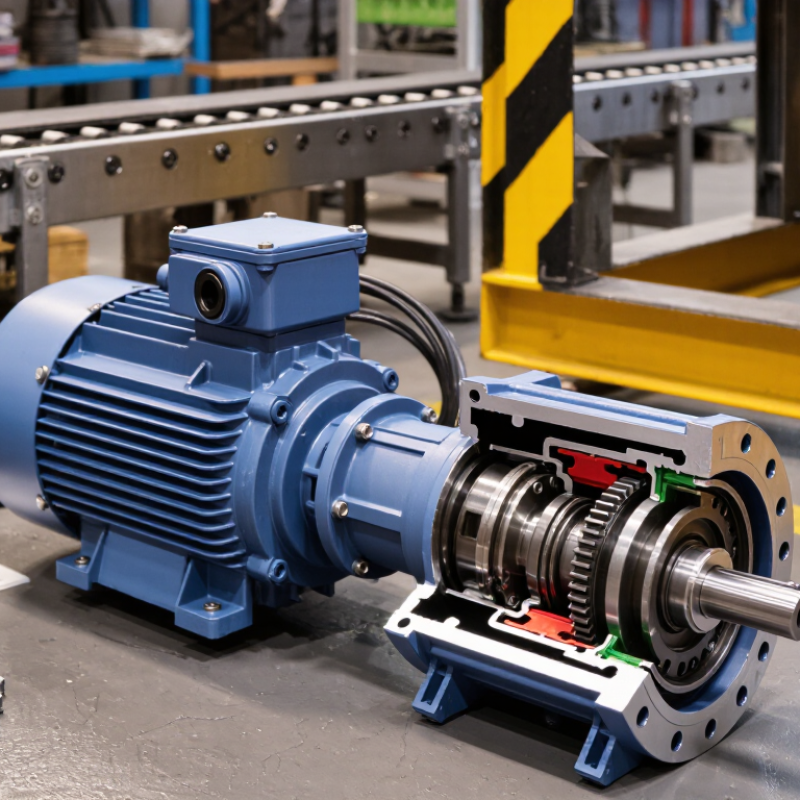
A China 240V geared motor is an electric motor made in China that operates from a 240-volt power supply. It combines a motor with a gearbox, reducing speed while increasing usable torque. This design suits conveyors, shutters, mixers, small hoists, and automated machinery.
The motor may use single-phase or three-phase AC power, so the electrical specification requires careful checking. A 50 Hz motor may not perform correctly on every 60 Hz system. Buyers should compare rated speed, gearbox ratio, output torque, duty cycle, insulation class, and protection rating. For example, a 30-rpm output can move a slow conveyor steadily, but it may stall under sudden loading. Torque matters more than speed alone.
In practical equipment checks, shaft alignment often affects performance more than expected. A slightly uneven coupling can create noise, heat, and premature gear wear. Mounting bolts should stay tight, while the gearbox needs suitable lubrication and airflow. Some units arrive with unclear wiring labels, which is not ideal. A qualified electrician should verify terminals, grounding, overload protection, and rotation direction before operation.
Not every China 240V geared motor has the same quality or lifespan. Housing materials, bearing accuracy, sealing, and gearbox machining can vary between suppliers. Requesting test data, dimensional drawings, noise limits, and load curves improves reliability. A low purchase price may become expensive if the motor overheats after several hours of continuous work.
What Is the Best China 240V Geared Motor? - What Is a China 240V Geared Motor?
A China 240V geared motor is an electric motor integrated with a gearbox to reduce speed and increase output torque. The best choice depends on the required torque, output speed, duty cycle, mounting method, environmental protection, and control requirements.
| Geared Motor Type |
Typical Power Range |
Typical Reduction Ratio |
Typical Output Speed |
Typical Output Torque |
Main Advantages |
Common Applications |
| AC Helical Geared Motor |
0.12–7.5 kW |
3:1–200:1 |
7–470 rpm |
5–2,000 N·m |
Good efficiency, quiet operation, and suitable for continuous industrial duty |
Conveyors, packaging equipment, mixers, and material-handling systems |
| AC Worm Geared Motor |
0.06–7.5 kW |
5:1–100:1 |
14–280 rpm |
10–1,000 N·m |
Compact, economical, and available with high reduction ratios |
Gates, small conveyors, lifting mechanisms, and positioning equipment |
| AC Parallel-Shaft Geared Motor |
0.12–15 kW |
3:1–200:1 |
7–470 rpm |
20–3,000 N·m |
Space-saving design and high radial-load capability |
Belt conveyors, feeders, warehouse equipment, and industrial drives |
| AC Bevel Geared Motor |
0.12–22 kW |
3:1–200:1 |
7–470 rpm |
20–4,000 N·m |
High transmission efficiency and flexible shaft orientation |
Heavy conveyors, automated production lines, and processing machinery |
| AC Planetary Geared Motor |
0.2–30 kW |
3:1–1,000:1 |
1–470 rpm |
50–10,000 N·m |
High torque density, strong load capacity, and low backlash options |
Robotics, heavy automation, indexing systems, and precision machinery |
Key Selection Criteria for a 240V Geared Motor
| Selection Dimension |
What to Check |
Recommended Practice |
| Voltage and Frequency |
Rated voltage, phase, and supply frequency |
Confirm whether the motor requires 220–240 V single-phase or three-phase power and whether it supports 50 Hz, 60 Hz, or both. |
| Output Torque |
Continuous torque, starting torque, and peak load |
Select a rated torque above the calculated operating requirement and allow additional margin for starting and shock loads. |
| Output Speed |
Required revolutions per minute at the gearbox shaft |
Choose the reduction ratio from the motor speed and required output speed; use a variable-frequency drive when adjustable speed is needed. |
| Duty Cycle |
Operating hours, starts per hour, and load variation |
For frequent starts or continuous operation, select a motor and gearbox with an appropriate service factor and thermal capacity. |
| Protection Rating |
Exposure to dust, water, oil, and cleaning procedures |
IP54 is commonly suitable for protected indoor areas; IP55 or higher is preferable where dust or water spray is present. |
| Installation and Shaft |
Mounting position, flange or foot mounting, shaft diameter, and key dimensions |
Match the gearbox dimensions and mounting orientation to the machine before ordering. |
| Safety and Compliance |
Electrical protection, grounding, insulation class, and applicable market requirements |
Verify nameplate data, overload protection, thermal protection, grounding, and required conformity documentation before installation. |
Note: The performance figures shown are typical industry ranges for 220–240 V geared-motor configurations. Actual torque, speed, efficiency, dimensions, protection rating, and service factor vary by motor size, gearbox design, operating conditions, and configuration.
How Does a 240V Geared Motor Work?
A 240V geared motor combines an AC motor with a mechanical gearbox. The motor receives 240-volt alternating current through its windings. This current creates a rotating magnetic field inside the stator. The field pulls the rotor into motion. Simple, but not effortless.
The rotor usually spins faster than the machine needs. Gears reduce its speed and increase usable torque. Small pinions drive larger gears, while shafts transfer force toward the output. Lubricated gear teeth help control friction, heat, and noise. In daily operation, the motor may turn quickly, but the output shaft moves slowly and steadily.
A capacitor may help the motor start or maintain stable rotation, depending on its design. Some units use induction principles, while others include electronic control components. The gearbox ratio strongly affects lifting strength, travel speed, and energy use. A higher ratio gives more torque, but movement becomes slower.
In practical maintenance, unusual humming can indicate electrical or mechanical stress. Excessive vibration may come from worn bearings, loose mounting, or poor alignment. I have found that temperature checks often reveal problems before visible damage appears. Still, heat alone is not a diagnosis. The load, duty cycle, insulation condition, and gearbox lubricant all matter. Power must be isolated before inspection, and wiring should follow local electrical requirements. A basic explanation can miss important details. That is why the motor’s nameplate and service documentation deserve careful attention.
What Is the Best China 240V Geared Motor? How Does a 240V Geared Motor Work?
This chart uses a transparent engineering example: a 0.37 kW, 1,400 rpm, 240V motor combined with different gearbox ratios. Output speed is calculated as motor speed divided by the reduction ratio, while ideal output torque is calculated as 9550 × power ÷ output speed. Actual torque is lower because of gearbox and motor losses. A suitable geared motor should be selected according to required speed, torque, duty cycle, efficiency, protection rating, and load conditions.
Which Specifications Define the Best Geared Motor?
What Is the Best China 240V Geared Motor?
The best 240V geared motor is defined by its operating specifications, not its origin. Confirm whether the supply is single-phase or three-phase, and check the required frequency. Rated output, starting torque, gearbox ratio, and continuous torque must match the load. A motor that spins correctly may still fail under repeated starts.
The U.S. Department of Energy’s Motor Systems Market Assessment reports that motor-driven equipment uses about 68% of industrial electricity. Efficiency therefore matters. Select a documented efficiency class, suitable insulation, and a thermal protection method. For dusty or wet facilities, verify the enclosure rating instead of trusting general descriptions. IEC 60034-30-1 provides a useful framework for motor efficiency comparison. In practical commissioning, I also check shaft loading, backlash, mounting accuracy, noise, and brake response. These details are easy to overlook. I would not call any motor “best” without its duty cycle and service factor.
Tips:
Record the real load, not only the machine’s rated power. Measure current during acceleration and steady operation. Allow extra torque for conveyors, lifts, and frequent reversing. A lower speed may improve control, but it can increase gearbox stress. Ask for test records, dimensional drawings, insulation data, and batch traceability. IP ratings alone are not enough. Maintenance access matters too. My own early selections sometimes focused too heavily on price; that mistake made lifecycle costs harder to defend.
How to Compare China 240V Geared Motor Manufacturers
What Is the Best China 240V Geared Motor?
How to Compare China 240V Geared Motor Manufacturers
Choosing a China 240V geared motor requires more than comparing catalog prices. The U.S. Department of Energy reports that motor-driven equipment uses about 70% of industrial electricity. Efficiency, therefore, affects operating costs for years. Ask manufacturers for rated torque, gearbox ratio, output speed, duty cycle, insulation class, and efficiency test data. Confirm whether 240V means single-phase or three-phase power. This detail can prevent an expensive installation error.
Reliable manufacturers should provide drawings, load curves, material specifications, and traceable testing records. Look for production controls aligned with ISO 9001 and motor data referencing IEC 60034 requirements. Check protection ratings carefully. An IP54 enclosure may suit a clean workshop, but dusty or wet machinery may require stronger protection. The International Energy Agency has linked electric motors to roughly half of global electricity consumption, making thermal performance and standby losses important comparison points. Request sample units and test them under your real load, not only an unloaded bench test.
Price still matters, but it should not lead the decision. Compare bearing quality, gear material, lubrication, noise, warranty terms, spare-part access, and delivery stability. A manufacturer that answers technical questions clearly is usually easier to manage after installation. I would not trust impressive efficiency claims without independent or witnessed test evidence. I have also seen low quotes overlook couplings, brakes, or custom shafts. That comparison was incomplete. Ask for a total-cost quotation, including testing, packaging, documentation, and replacement lead time.
How to Select and Maintain the Right Geared Motor
What Is the Best China 240V Geared Motor?
Selecting a 240V geared motor starts with the machine, not the catalog. Measure the required load, shaft speed, starting torque, and daily operating hours. A motor running a conveyor needs different gearing than one driving a small mixer. Check the 50 Hz supply, mounting position, shaft diameter, and available space. Leave a reasonable service factor for brief overloads. Do not select only by horsepower. I have seen undersized motors overheat during repeated starts, even when their rated power looked adequate.
Gear ratio controls speed and output torque. A high ratio gives slower movement but stronger rotation. Confirm the gearbox can handle radial and axial shaft loads. For dusty or damp areas, review the enclosure rating and sealing details. Ambient temperature matters too. A nameplate is useful, but it cannot describe every installation condition. This is where careful measurement matters.
Maintenance should be practical and scheduled. Inspect oil or grease levels according to the gearbox design. Look for leakage, unusual noise, loose mounting bolts, and rising surface temperature. Check coupling alignment and keep ventilation openings clean. Recheck electrical terminals after initial running, with power isolated by a qualified person. Measure insulation resistance during planned servicing, not after a failure. I once treated vibration as normal; the worn coupling later damaged the gearbox input bearing. That mistake was avoidable. Keep a simple log of temperature, noise, load changes, and service dates. Some manufacturers provide incomplete maintenance guidance, so the motor manual and site conditions both deserve review.