Main Menu

Choosing the right motor can shape an entire production line. A small efficiency gain may reduce thousands of operating hours each year. A poor match can cause overheating, vibration, downtime, and unexpected maintenance costs.
This guide examines the 10 best industrial motors for global buyers in 2026. It considers induction motors, permanent magnet motors, servo systems, and other proven technologies. Each option is assessed through practical buying criteria, including efficiency, torque response, duty cycle, enclosure protection, noise, controls, and serviceability. Standards such as IEC and NEMA also matter, especially when equipment crosses borders. Clear documentation matters too.
Real factories rarely operate under perfect conditions. Dust enters cabinets. Voltage fluctuates. Operators sometimes select motors from incomplete specifications. That happens. Therefore, this review looks beyond catalogue performance. It considers installation environments, replacement access, spare-part availability, warranty support, and total ownership cost. A motor rated highly on paper may disappoint in a humid plant without suitable protection.
The ranking is not universal. A food-processing facility, steel mill, and warehouse automation system need different solutions. Buyers should verify load profiles, starting requirements, ambient temperature, and control compatibility before ordering. Independent testing, manufacturer data, and qualified engineering advice can reduce costly mistakes. The strongest choice balances measurable performance with dependable support. That balance is easy to overlook. This guide aims to make the decision clearer, more evidence-based, and more useful for international procurement teams.
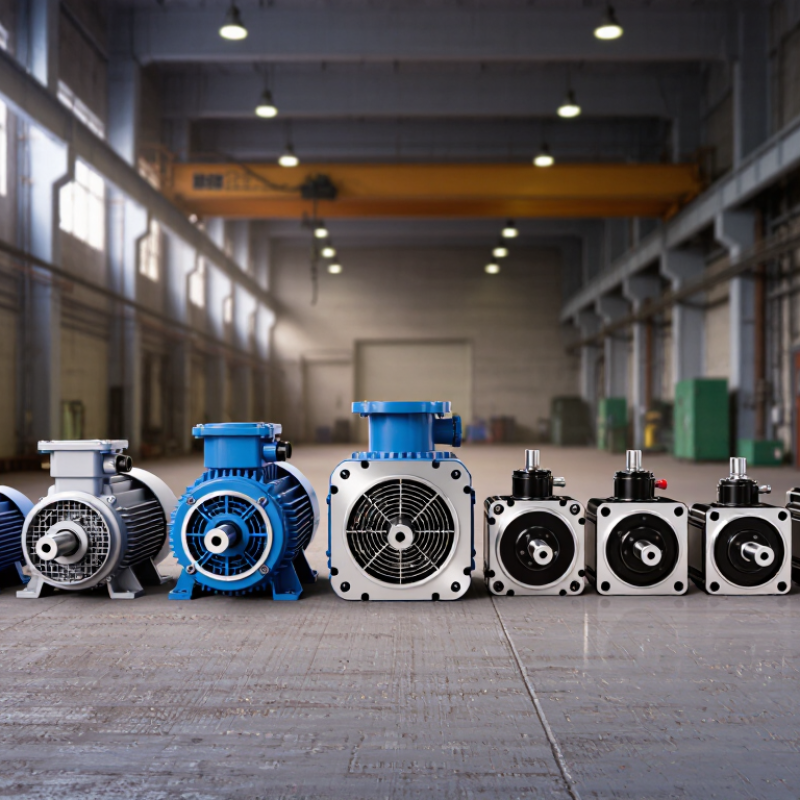
Industrial motor selection begins with the load, not the catalog. An induction motor suits pumps, fans, and conveyors because it is rugged and widely serviceable. A synchronous motor fits constant-speed, high-efficiency duties. Permanent-magnet designs offer strong torque density, while DC motors remain useful in legacy systems. They can complicate maintenance.
Ratings determine whether a motor survives real work. Check rated power, voltage, frequency, current, speed, service factor, duty cycle, and starting method. IEC 60034-30-1 defines efficiency classes from IE1 to IE5. The U.S. Department of Energy reports that motor-driven equipment can consume about 70% of industrial electricity in manufacturing. The IEA’s Energy Efficiency 2023 report identifies motor systems as a major global electricity demand. Efficiency affects heat, wiring, and operating cost.
Match enclosure protection to the room. IP55 may suit dusty production areas, but washdown zones need stronger protection. Select insulation and cooling for ambient temperature, altitude, and cycling. A variable-frequency drive can control speed and reduce throttling losses, especially in centrifugal pumps and fans. Verify compatibility before installation. Field measurements often expose a weakness: a correctly rated motor can still waste energy when oversized. This is where theory needs humility. The cheapest motor is rarely the cheapest machine to run.
| Rank | Motor Type | Typical Power Range | Typical Speed Range | Typical Efficiency | Key Ratings and Characteristics | Best-Fit Applications | Global Buying Considerations |
|---|---|---|---|---|---|---|---|
| 1 | Three-Phase Squirrel-Cage Induction Motor | 0.12 kW–20 MW | 750–3,600 rpm | Approximately 80%–97% | Robust construction, low maintenance, high starting current, commonly available in IEC frame sizes and IE2–IE5 efficiency classes. | Pumps, fans, compressors, conveyors, machine tools, and general-purpose factory equipment. | Confirm voltage, frequency, enclosure, mounting arrangement, duty cycle, insulation class, and local efficiency requirements. |
| 2 | Permanent-Magnet Synchronous Motor (PMSM) | 0.75 kW–10 MW | 500–6,000 rpm | Approximately 90%–98% | High power density, high efficiency at variable speed, strong torque control, and usually operated with a compatible drive. | High-efficiency pumps, compressors, elevators, electric vehicles, robotics, and precision production lines. | Evaluate magnet temperature limits, drive compatibility, demagnetization protection, service availability, and lifecycle cost. |
| 3 | Synchronous Reluctance Motor | 0.75 kW–1 MW | 750–3,600 rpm | Approximately 90%–97% | Rotor without permanent magnets, low rotor losses, good efficiency over a wide load range, and requires an inverter or variable-frequency drive. | HVAC systems, pumps, fans, conveyors, compressors, and energy-saving retrofit projects. | Check drive-motor matching, acoustic noise, starting method, overload capability, and availability of replacement components. |
| 4 | Servo Motor | 50 W–500 kW | Up to approximately 6,000 rpm | Approximately 85%–95% | Closed-loop feedback, rapid acceleration, accurate positioning, high peak torque, and operation through a dedicated servo drive. | Robotic systems, CNC machines, packaging equipment, printing presses, and automated assembly lines. | Specify encoder type, feedback resolution, brake requirements, peak torque, continuous torque, and controller communication protocol. |
| 5 | Brushless DC Motor (BLDC) | 10 W–100 kW | 500–20,000 rpm | Approximately 80%–95% | Electronic commutation, compact design, low brush maintenance, good controllability, and dependence on an electronic controller. | Automation equipment, cooling systems, small pumps, material-handling equipment, and battery-powered industrial machinery. | Verify controller voltage, Hall-sensor or sensorless operation, cooling method, duty cycle, and electromagnetic-compatibility requirements. |
| 6 | Wound-Rotor Induction Motor | 100 kW–10 MW | 500–1,800 rpm | Approximately 85%–95% | External rotor resistance can provide high starting torque and controlled acceleration; slip rings and brushes require maintenance. | Large cranes, hoists, mills, crushers, conveyors, and heavy-duty machinery with high inertial loads. | Assess brush and slip-ring maintenance, starting-resistor design, enclosure rating, spare-part access, and operator expertise. |
| 7 | Switched Reluctance Motor | 0.25 kW–1 MW | 500–20,000 rpm | Approximately 80%–95% | Simple rotor, high-speed capability, wide operating range, and electronic switching through a dedicated power converter. | High-speed compressors, pumps, conveyors, traction systems, and applications requiring a mechanically robust rotor. | Review torque ripple, acoustic noise, converter availability, control software, and local technical support. |
| 8 | Synchronous Reluctance-Hybrid Motor | 1 kW–500 kW | 750–6,000 rpm | Approximately 92%–98% | Combines reluctance torque with permanent-magnet assistance for high efficiency and power density; requires variable-speed control. | Industrial pumps, fans, compressors, machine tools, and compact high-efficiency drive systems. | Compare total cost of ownership, magnet material exposure, drive compatibility, thermal performance, and regional service capability. |
| 9 | Brushed DC Motor | 0.1 kW–2 MW | 100–3,000 rpm | Approximately 75%–92% | Simple speed control and high starting torque, but brushes and commutators create wear, electrical noise, and maintenance requirements. | Legacy production equipment, cranes, hoists, rolling mills, test stands, and systems requiring wide speed control. | Confirm brush replacement access, ventilation, hazardous-area approval, DC supply availability, and modernization plans. |
| 10 | Single-Phase Capacitor-Start or Capacitor-Run Motor | 0.05–7.5 kW | 1,400–3,600 rpm | Approximately 65%–88% | Operates from single-phase power, offers moderate starting torque, and is suitable where three-phase supply is unavailable. | Small pumps, fans, compressors, workshop machinery, agricultural equipment, and light industrial appliances. | Check supply frequency, starting current, capacitor rating, thermal protection, duty cycle, and local electrical standards. |
| Typical values are indicative engineering ranges rather than guaranteed product specifications. Final selection should be based on load torque, duty cycle, ambient conditions, altitude, enclosure protection, insulation system, power quality, control method, and applicable IEC or NEMA requirements. | |||||||