Main Menu
Industrial robots are becoming faster, smaller, and more collaborative. The motor inside each joint must respond precisely, survive repeated cycles, and waste as little energy as possible. According to the International Federation of Robotics’ World Robotics 2024 report, manufacturers installed 541,302 industrial robots worldwide in 2023. That scale increases demand for reliable dc motors for robots across factories, laboratories, warehouses, and mobile platforms.
The 2026 motor conversation will not focus on one universal winner. Brushed DC motors remain practical for compact, cost-sensitive mechanisms. Brushless DC motors offer longer service life and lower maintenance, especially in high-cycle joints. Coreless motors can deliver rapid acceleration in lightweight grippers and surgical-style manipulators. Geared DC motors add torque for lifting and joint movement, while integrated servo motor systems combine feedback, control, and mechanical power in one assembly. Market research from MarketsandMarkets and Grand View Research continues to identify automation, collaborative robots, and autonomous mobile robots as major growth areas. However, their forecasts use different definitions and assumptions. They should be compared carefully.
Real selection begins with evidence, not labels. Engineers should measure stall torque, continuous torque, speed range, thermal rise, duty cycle, backlash, encoder resolution, noise, and expected operating hours. A motor that looks efficient on paper may overheat inside a sealed joint. Small details matter. A 24-volt BLDC motor, a planetary gearbox, and a high-resolution encoder can transform a smooth arm movement. Yet this combination may increase cost, weight, and control complexity. This guide examines the top dc motors for robots expected in 2026, while acknowledging an uncomfortable truth: the best choice depends on the robot’s task, not the motor’s marketing description.

What Are the 2026 Top Types of DC Motors for Robots?
Robot DC motors are classified by torque, speed, and control behavior. Brushed DC motors remain practical for simple grippers and small mobile platforms. They offer strong starting torque at a modest cost, but brush wear limits maintenance intervals. Brushless DC motors suit high-speed joints, cooling fans, and compact drive modules. Their electronic commutation improves efficiency and service life, although control hardware becomes more complex.
Torque decides whether a robot lifts, pushes, or stalls. A geared DC motor increases output torque while reducing shaft speed. This helps an arm hold a 5-kilogram load without demanding excessive current. High-speed motors need accurate feedback, especially near resonance or sudden load changes. According to the International Federation of Robotics’ World Robotics 2024 report, 541,302 industrial robots were installed globally in 2023. That scale increases demand for repeatable motion and maintainable motor systems.
Control separates basic motors from robotic actuators. Open-loop control may work for a conveyor, but it cannot reliably correct joint errors. Encoders enable position feedback, while current sensing estimates torque during contact. Servo-oriented DC systems combine both methods with proportional-integral-derivative control. According to the U.S. Department of Energy’s motor system analysis, efficient motor operation depends heavily on loading and control conditions, not rated efficiency alone. This point is often missed. A theoretically efficient motor can still waste energy when oversized, poorly tuned, or repeatedly accelerated.
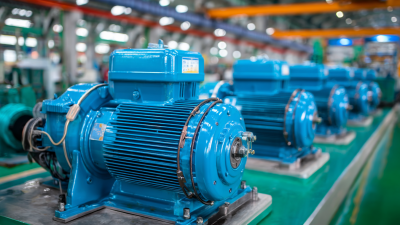
Brushed DC motors remain practical for compact robots, grippers, mobile platforms, and educational machines. Their simple control circuit supports fast prototyping and low-cost maintenance. The trade-off is clear: brushes wear, create electrical noise, and limit continuous-duty life.
The International Federation of Robotics reported 542,000 industrial robot installations worldwide in 2023. That growth increases demand for predictable motor ratings, not only higher peak torque. IEC 60034-1 provides a useful framework for rating, duty, temperature-rise limits, and declared performance. Engineers should confirm the applicable edition and motor scope before comparing datasheets.
Thermal behavior matters most.
A motor may survive a short stall, yet fail under repeated acceleration. Designers should record winding temperature, ambient temperature, duty cycle, and gearbox load during testing. Temperature-rise data becomes more useful when measured near the brush assembly and housing, not only at the shaft.
The International Energy Agency estimates that electric motor systems consume roughly 45% of global electricity. Even small efficiency losses can become significant across large robot fleets. However, IEC compliance does not guarantee ideal robot performance. It does not remove commutation noise or correct poor cooling design.
A practical review should compare rated torque, peak torque duration, thermal time constant, brush replacement access, and acoustic output. This approach is less impressive than quoting maximum speed. It is usually more honest.
In 2026, BLDC motors remain a strong choice for robots using 24–48 V drive systems. Their electronic commutation reduces brush wear and supports long operating cycles. In mobile robots, this matters when motors face repeated starts, stops, and direction changes. A well-matched BLDC motor can deliver smooth torque with lower maintenance demands. It can also work efficiently with field-oriented control and precise position feedback.
Voltage selection should match the drive electronics, battery pack, and motor winding. A 24 V system may suit compact robots with moderate loads. A 48 V system can reduce current for the same power, helping limit cable heating and connector size. However, higher voltage does not automatically improve performance. The controller, insulation, fuses, and emergency stop design must support it. Small details matter.
Choose the motor from real motion data, not catalog speed alone. Measure wheel torque, acceleration time, duty cycle, and heat around the housing. Hall sensors may support basic commutation, while an encoder improves low-speed positioning. Gear reduction can increase output torque, but it adds backlash, noise, and losses. I have seen designs pass short bench tests and struggle after hours of repeated movement. That weakness is easy to miss. Thermal testing under the heaviest expected load deserves more attention. Engineers should also review electromagnetic interference, regenerative braking, sealing, and bearing life before production. Efficiency figures can be useful, but they are not always comparable across test conditions.
Comparative guide to common DC motor architectures used in mobile robots, robotic arms, actuators, and autonomous drive systems.
| Motor type | Typical robotic use | Typical bus voltage | Typical motor efficiency | Speed range | Control and feedback | Main advantages | Key limitations |
|---|---|---|---|---|---|---|---|
| BLDC Inrunner | Wheeled mobile robots, compact drive modules, high-speed joints, pumps, and fans | 24–48 V DC | Approximately 80–93% | 3,000–20,000 rpm; usually reduced through gearing | Three-phase inverter with Hall sensors, encoder, or sensorless estimation | Low rotor inertia, high speed, strong thermal path, and good power density | Requires electronic commutation; high-speed operation can increase noise and bearing demands |
| BLDC Outrunner | Direct-drive wheels, robotic gimbals, lightweight actuators, and low-speed torque applications | 24–48 V DC | Approximately 82–94% | 500–8,000 rpm; often suitable for direct or low-ratio drives | Six-step or sinusoidal control with Hall sensors or an absolute/incremental encoder | High torque per volume, low cogging options, and reduced gearbox requirements | Larger rotor inertia, exposed rotating housing, and more challenging mechanical integration |
| PMSM / Sinusoidal BLAC | Servo joints, collaborative robots, precision positioning, and traction drives | 24–48 V DC through an inverter | Approximately 85–96% | 500–10,000 rpm, depending on pole count and motor design | Field-oriented control with encoder, resolver, Hall sensors, or sensorless feedback | Low torque ripple, quiet operation, accurate torque control, and high efficiency | More complex tuning and electronics; position feedback is often needed for demanding servo work |
| Brushed Permanent-Magnet DC | Low-cost prototypes, simple grippers, educational robots, and intermittent actuators | 6–48 V DC | Approximately 65–90% | 1,000–10,000 rpm, commonly paired with a gearbox | PWM H-bridge; encoder, potentiometer, or limit switch can provide feedback | Simple drive electronics, easy speed reversal, low initial cost, and high starting torque | Brush and commutator wear, electrical noise, arcing, and higher maintenance requirements |
| Coreless / Ironless DC | Small precision grippers, miniature joints, optical mechanisms, and fast low-inertia positioning | 6–24 V DC; some designs support higher voltages | Approximately 60–88% | 2,000–20,000 rpm | PWM control with encoder or tachometer for closed-loop positioning | Very low rotor inertia, rapid acceleration, low cogging, and excellent small-scale response | Lower continuous overload capability, brush wear, and limited thermal mass |
| DC Gearmotor | Robot wheels, linear actuators, pan-tilt mechanisms, and compact lifting systems | 12–48 V DC | Approximately 50–85% system efficiency, including gearing | Output commonly 10–1,000 rpm, depending on gear ratio | Brushed or BLDC motor with encoder, Hall sensors, or no feedback for basic systems | High output torque, compact packaging, and straightforward mechanical integration | Gear backlash, acoustic noise, friction losses, wear, and limited shock-load tolerance |
DC gearmotors remain practical when robots need controlled motion, compact packaging, and predictable output torque. The International Federation of Robotics reported 541,302 industrial robots installed worldwide in 2023. That scale increases demand for efficient, serviceable drive systems.
A gearmotor multiplies motor torque while reducing speed. A 20:1 reduction can theoretically increase output torque twentyfold, before efficiency losses. Real systems often deliver less because gears, bearings, and seals consume energy.
A 100-watt motor producing 0.32 Nm at 3,000 rpm may approach 5.5 Nm after a 20:1 reduction and 86% efficiency. Check the datasheet carefully.
Ratio selection should match acceleration, payload, wheel radius, and duty cycle. Excessive reduction may improve holding force but reduce responsiveness. It can also increase reflected inertia. That matters.
Backlash is the overlooked problem.
Planetary, spur, and worm gear arrangements produce different clearance and efficiency profiles. Precision robotic joints often specify backlash in arcminutes, while simple mobile platforms may tolerate several degrees. The exact limit depends on control sensitivity.
A robot arm carrying a camera will expose looseness quickly. A floor robot may hide it.
The 2024 World Robotics report from IFR also shows continued automation growth, but adoption figures do not guarantee suitable motor sizing. Test the complete assembly under repeated reversals, not only free rotation. Measure twice. Thermal rise, shaft deflection, and gearbox wear can change torque performance over time. A theoretically perfect ratio may still be the wrong engineering choice.
Servo DC motors with encoder feedback remain strong candidates for robotic joints and linear axes. Brushless DC servo motors offer efficient, quiet operation and precise speed control. Brushed DC servo motors can still suit compact, cost-sensitive mechanisms. Both types need closed-loop feedback for serious positioning work.
The International Federation of Robotics reported 541,302 industrial robot installations worldwide in 2023.
Its World Robotics 2024 report also recorded 4.28 million operational industrial robots.
This expanding installed base increases demand for dependable motion accuracy.
An incremental encoder supports fast correction, while an absolute encoder preserves position data after power loss. That difference matters.
ISO 9283 evaluates robot pose accuracy, repeatability, and path performance under defined conditions. An encoder alone cannot guarantee compliance. Gearbox backlash, shaft flexibility, thermal drift, and controller tuning can create visible errors. A practical test should measure the output shaft, not only the motor rotor.
Small errors accumulate. In one design review, the motor looked accurate, but the gearbox weakened repeatability. That assumption needed revision.
Engineers should document payload, speed, temperature, and measurement methods before selecting a servo DC motor. Industry studies, including the IFR report, show scale. ISO 9283 provides discipline. The remaining challenge is applying both carefully.
Office: (281) 855-2218
Copyright © 2025 Telco Intercontinental Corp. All rights reserved. Privacy Policy | Legal Disclaimer
Telco®, TelcoMotion®, and TelcoGreen® are registered trademarks of Telco Intercontinental Corp.