+1 (281) 855-2218

Top Hydraulic Final Drive Manufacturers in China?

Choosing a Hydraulic Final Drive manufacturer in China requires more than comparing prices or product photos. These units convert hydraulic power into torque and rotation, making fit, durability, and sealing quality important to machine performance. For excavators, compact track loaders, and other tracked equipment, a mismatched drive can cause installation delays or uneven operation. That matters. A useful supplier review starts with the machine model, required displacement, mounting dimensions, pressure range, and expected duty cycle. Clear specifications reduce avoidable surprises.

This guide compares manufacturers through practical indicators, including product range, engineering support, quality-control processes, customization options, and spare-parts availability. Where available, review technical datasheets, dimensional drawings, test records, warranty terms, and examples of similar applications. Check shaft dimensions, port locations, and connection details against your machine requirements. Do not treat a polished catalog as proof of field performance. Confirm key details directly with the supplier.

The right choice depends on operating conditions, not a universal ranking. A quarry excavator working long shifts may need different sealing and thermal considerations than a lighter machine used intermittently. Compare shortlisted suppliers against the same requirements, and ask how they handle failures, lead times, and replacement components. Some product information may be incomplete or difficult to compare; that limitation deserves attention, not guesswork. The sections ahead introduce notable manufacturers and explain what buyers can verify before requesting a quotation.
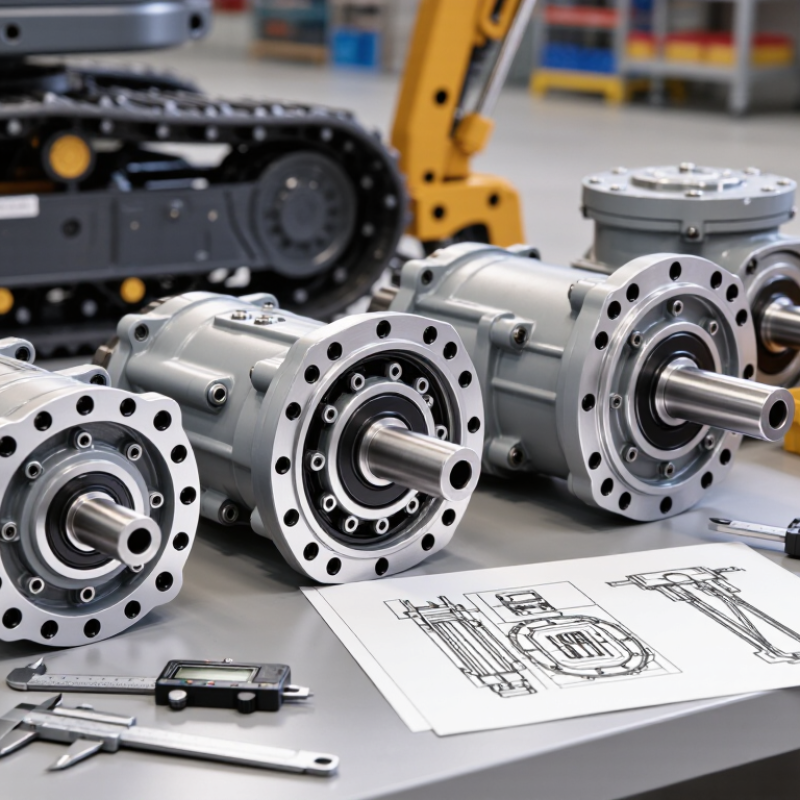
Top Hydraulic Final Drive Manufacturers in China?

Understanding Hydraulic Final Drives and Their Core Components

A hydraulic final drive turns pressurized oil into track or wheel motion. Its hydraulic motor produces rotation, while a planetary reduction gearbox trades speed for torque. Inside the housing, gears, bearings, seals, and a brake work in a tight, oil-filled space. Small details matter. Scored gear teeth can raise noise; worn seals can let oil escape or dirt enter.

The U.S. Department of Energy’s 2006 Improving Pumping System Performance sourcebook reports that pumping systems account for nearly 20% of global electricity demand and 25–50% of energy use in some industrial operations. Those figures describe pumping systems, not final drives, so they are context—not a final-drive efficiency rating. Still, they underline why hydraulic losses deserve attention. In a working machine, hot oil, restricted passages, or poor maintenance can waste power and accelerate wear.

Oil cleanliness is another core concern. ISO 4406 classifies fluid contamination by counting particles at specified sizes, including 4, 6, and 14 micrometres. A clean-looking sample can still contain damaging particles. That is easy to miss. Service checks should consider operating temperature, leakage, unusual vibration, and the manufacturer’s specified fluid and filtration requirements. No single symptom proves a failure; inspection and pressure testing provide better evidence.

How to Assess Hydraulic Final Drive Manufacturers in China

When assessing hydraulic final drive manufacturers in China, look beyond catalog torque and price. Ask how the unit performs under your machine’s actual load, operating pressure, and duty cycle. A useful supplier can explain its design limits and provide drawings, mounting dimensions, and installation guidance. Check whether the motor and reduction gearbox suit your required speed and torque. Small mismatches can cause overheating, poor traction, or premature wear.

Request recent test records and clarify what each test measures. Look for checks on leakage, pressure, noise, and temperature, plus traceable inspection records for key components. Ask about materials and heat treatment for gears and shafts. If possible, inspect a sample and compare its port positions and mounting face with your existing assembly. A polished brochure proves little. Field references help, though they may not match your working conditions exactly.

Tips: Share machine weight, travel speed, terrain, and expected daily hours before requesting a quotation. Confirm lead time, spare-part availability, warranty coverage, and who handles technical questions after delivery. Ask for written answers. If a specification remains unclear, pause and verify it; this step can feel slow, but skipping it is an avoidable risk.

Leading Chinese Manufacturers and Their Product Specialties

China’s hydraulic final-drive suppliers serve excavators, compact construction equipment, and specialized machinery. Their strengths often differ: some focus on compact, integrated travel motors, while others build higher-torque drives for heavier machines. Typical assemblies combine a hydraulic motor, planetary gearbox, brake, and housing. Fit matters. Small differences in mounting dimensions or oil ports can complicate installation.

The China Construction Machinery Association reported 195,018 excavators sold in 2023, including 104,895 exports. That industry statistic signals substantial demand for components suited to varied machine sizes and operating conditions; it does not measure final-drive market share. Chinese manufacturers commonly specialize in OEM production, custom displacement and reduction ratios, or replacement units for established machine platforms. Some also offer matched motor-and-gearbox assemblies, reducing integration work for equipment makers.

When comparing suppliers, request rated torque, maximum pressure, speed range, and duty-cycle data. Ask for leakage and endurance test records, not just catalog figures. A clear parts list and stable seal sourcing matter in muddy, high-load work. I would still verify field-service support and sample-test results; specifications can look convincing, yet performance may vary between production batches.

Industries and Equipment Served by Chinese Manufacturers

Chinese hydraulic final-drive manufacturers serve construction, mining, agriculture, forestry, and municipal equipment makers. Their travel drives commonly power excavator tracks, compact track loaders, drilling rigs, and tracked harvesters. The applications differ. An excavator working through wet clay needs dependable sealing and low-speed torque; a quarry machine faces abrasive dust and repeated shock loads. Small details matter.

The China Construction Machinery Association reported 195,018 excavator sales in 2023, including 104,214 exports. That scale points to demand across both domestic and overseas equipment channels, though it does not indicate final-drive sales directly.

Manufacturers also supply replacement units for older fleets, where installation dimensions, motor displacement, reduction ratio, and brake configuration must match. Not every unit fits. A catalog can make selection look simpler than it is; field wear, hydraulic pressure, and track load all affect service life.

For agricultural and forestry machines, compact packaging and contamination resistance can matter as much as peak torque.

Sources: China Construction Machinery Association, 2023 excavator sales statistics; equipment application descriptions reflect common hydraulic-drive engineering practice.

Key Factors for Choosing a Hydraulic Final Drive Supplier

When comparing hydraulic final drive manufacturers in China, assess evidence, not just catalog ratings. Match rated torque, speed, pressure, and duty cycle to the machine’s real operating conditions. A compact excavator working in wet clay faces different shock loads from a tracked carrier on a firm site. Ask for test records at defined oil temperature and pressure. Ask for raw data. ISO 4409:2019 specifies performance testing for hydraulic pumps, motors, and integral transmissions, offering a useful reference when reviewing supplier test methods.

Cleanliness and durability deserve equal attention. ISO 4406:2021 codes fluid contamination using particle counts at ≥4, ≥6, and ≥14 μm(c). Ask how the supplier controls cleanliness during assembly and what filtration level its test procedure uses. That matters. Request material and heat-treatment specifications for gears, plus seal compatibility guidance for your hydraulic fluid and temperature range. Check warranty response times, spare-parts availability, and whether replacement units can be traced to production batches. These details are less attractive than torque figures, but downtime is not abstract.

A supplier should explain limits, not promise universal fit. Compare sample test reports, inspection records, and lead-time commitments across quotations. If a report omits test conditions, its numbers may be difficult to compare. I would treat that gap as a reason to ask more questions, not as proof of poor quality; procurement evidence is rarely perfect.

SHOP BY BRAND