How to Choose the Best Puppy Collar for Your Dog?
Choosing the right Puppy Collar is a small decision with daily consequences. It touches your puppy’s skin, moves with every curious sniff, and may stay on during early training. A good choice should feel light, fit securely, and suit your puppy’s age, coat, and activity. Looks matter less than comfort. Quite a bit less.
Veterinarian Dr. Sarah Wooten’s practical guidance can be summed up this way: “A collar should fit comfortably, allow room for growth checks, and never replace supervision.” Treat that as a useful principle, not a substitute for advice about your individual dog. Puppies grow quickly, and a collar that fit last week may become tight. Check the fit often. You should be able to slide two fingers between the collar and your puppy’s neck without forcing them.
This guide will help you compare materials, widths, closures, and adjustable designs. It will also explain when a lightweight flat collar may suit everyday identification, and why leash training deserves careful thought. Watch how the collar sits when your puppy turns, trots, or scratches. Redness, rubbing, or repeated pawing are signs to reassess the fit. No single style works for every puppy; even a soft fabric collar can irritate sensitive skin. That detail is easy to miss. The goal is not to buy the fanciest option, but to choose a collar your puppy can wear comfortably while you keep checking as they grow.
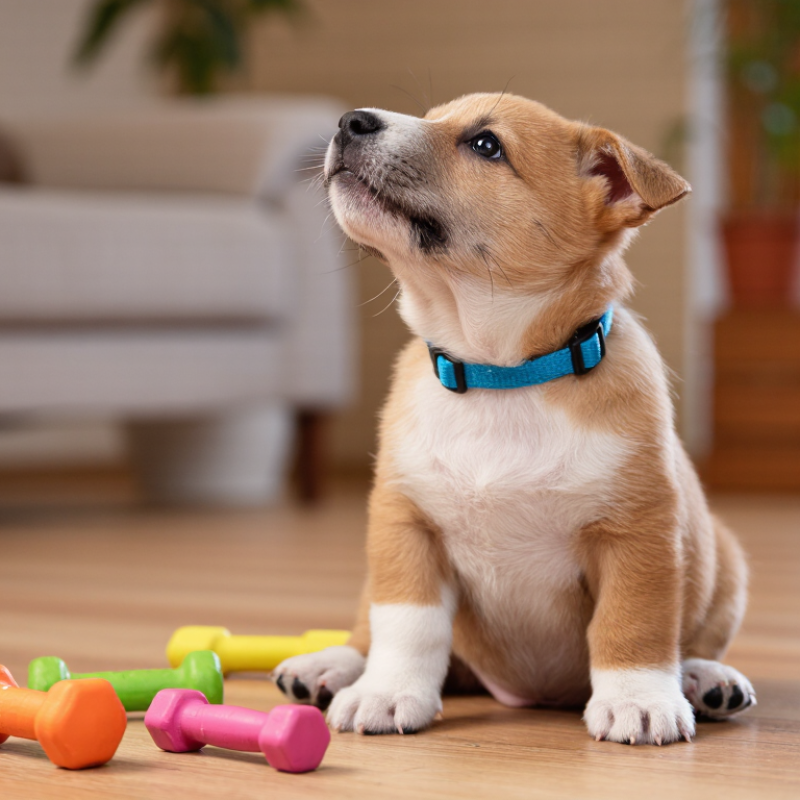
Understand the Main Types of Puppy Collars
A puppy’s first collar is usually a flat, adjustable buckle collar. It carries an ID tag and suits calm, supervised walks when the puppy is learning leash skills. Check the fit often: puppies grow quickly, and a collar that fitted last week may now rub behind the ears. Two fingers should slide comfortably beneath it. Still, that check is not perfect; fluffy coats can hide tightness.
A martingale collar tightens slightly when pulled, helping reduce escape risk for dogs with narrow heads. It should never keep tightening, and needs careful fitting. A breakaway collar releases under pressure if snagged, which can reduce entanglement risk at home. But it may come undone during a walk, so it is not a dependable leash attachment. Head collars guide the muzzle and require gradual, positive introduction; they can feel unfamiliar to a young puppy. Go slowly.
A harness is not a collar, but it is worth comparing for leash walks. In a 2006 study in the Journal of the American Veterinary Medical Association, researchers tested 26 healthy dogs and seven dogs with glaucoma. Collar restraint raised intraocular pressure, while harness restraint did not produce the same rise. This small study does not establish the best choice for every puppy, but it supports avoiding leash pressure on the neck, especially when eye concerns exist. Fit matters. A poorly fitted harness can rub under the front legs, too.
Measure Your Puppy's Neck for a Comfortable Fit
Measure your puppy’s neck before choosing a collar. Use a soft tape around the middle of the neck, where the collar will sit. Keep it close to the coat, but do not pull it tight. Check the measurement twice; a wiggly puppy can make guessing tempting. Add room for two fingers between the collar and neck. That fit should feel secure, not loose enough to slip over the head. Puppies grow fast. Recheck weekly during growth spurts, and after changes in coat or weight. A 2006 JAVMA study by Pauli and colleagues found that leash tension through a collar significantly raised eye pressure in 26 dogs; harness use did not. This was a small study, and it did not test collar sizing, but it supports avoiding pressure and pulling.
Tips: Measure with your puppy standing calmly, and note the number in centimeters or inches. Try the collar on indoors. Slide two fingers underneath, then watch for rubbing, coughing, or fur pressed flat. Adjust or remove it if you notice discomfort. Check the fit often; I would not trust yesterday’s measurement for a fast-growing puppy.
Compare Collar Materials, Closures, and Safety Features
Nylon is lightweight and easy to clean, but wet fabric can stay damp against a puppy’s neck. Soft leather may feel comfortable, yet it needs regular inspection for cracks or stiff edges. A padded collar can reduce rubbing, though padding may hide trapped dirt. Material alone does not guarantee comfort.
Closures matter, too. A flat buckle is secure for everyday walks when fitted correctly; a quick-release buckle is easier to open, but should not undo under ordinary leash tension. Breakaway designs can release if snagged, which may help indoors but can let a puppy slip free outside. Fit matters. Use a collar that lies flat, leaves room for two fingers, and is checked often as your puppy grows.
Safety includes how pressure travels through the neck. A 2006 study in the Journal of the American Animal Hospital Association tested 26 dogs and found leash tension increased eye pressure with a neck collar; the tested harness did not show the same increase. The study was not puppy-specific, so it cannot settle every collar choice. Still, it supports avoiding sharp leash jerks, especially for dogs with eye or airway concerns. A collar should carry identification, not serve as a reason to pull harder. Check seams, buckle cracks, and skin beneath the strap each week. Small details are easy to miss.
Choose a Collar Suited to Your Puppy's Age and Needs
A puppy’s collar should change with its body, confidence, and daily routine. A very young puppy usually needs a lightweight, flat collar with a simple buckle and no heavy dangling tags. Check the fit every week: you should be able to slide two fingers between collar and neck, without the collar slipping over the head. Growth can be uneven. A collar that fit last Monday may feel tight after a sudden growth spurt.
The 2022 AAHA Canine Vaccination Guidelines recommend puppy visits beginning at 6–8 weeks, repeated every 2–4 weeks until at least 16 weeks. Use these regular visits as reminders to check fit and skin beneath the collar. Look for redness, rubbed fur, or dampness after rain or play. As your puppy grows stronger and begins leash practice, choose an adjustable, sturdy collar that remains comfortable—not a heavy adult-size one. Keep early sessions short. A wriggly puppy may chew the strap, and that is worth watching closely. For walks, a well-fitted harness may be more comfortable for some puppies, especially those that pull; ask your veterinarian to assess fit if you are unsure.
How to Choose the Best Puppy Collar for Your Dog? - Choose a Collar Suited to Your Puppy's Age and Needs
| Puppy age or stage | Collar to consider | Fit and adjustment | Best suited for | Important safety note |
| About 8–12 weeks | Lightweight, adjustable flat collar with a smooth lining | Choose a size that can be adjusted as your puppy grows. You should be able to fit two fingers comfortably between the collar and neck. | Short, supervised sessions to get used to wearing a collar and carrying an ID tag | Check the fit daily, and remove the collar during unsupervised crate time or play where it could snag. |
| About 3–6 months | Adjustable flat collar with a secure, quick-release buckle | Recheck frequently during growth; loosen or replace the collar if it becomes tight or leaves marks. | Everyday identification and brief leash practice | For walks, consider a well-fitted harness if your puppy pulls, coughs, or strains against the leash. |
| About 6–12 months | A durable, adjustable flat collar sized for the puppy’s current neck measurement | Measure the neck again before buying; adult size and growth rate vary by breed and individual dog. | Daily ID and supervised outings, alongside leash equipment suited to the dog’s training and build | A collar is not a substitute for secure leash handling or a properly fitted harness when one is needed. |
| Small or toy-breed puppy | Very lightweight, narrow, adjustable flat collar | Avoid bulky hardware; confirm that the collar does not restrict breathing, swallowing, or comfortable movement. | Identification and gradual collar acclimation | Use extra care with leash pressure; a harness may be a better choice for walks. |
| Any age | A comfortable flat collar; choose materials and hardware appropriate to the puppy’s size and activity | Inspect regularly for rubbing, damaged stitching, loose fasteners, or a poor fit. | Comfortable everyday wear when supervised and correctly fitted | Avoid choke, prong, or other aversive collars for a growing puppy; ask a veterinarian or qualified trainer for individual advice. |
General guidance: measure your puppy’s neck with a flexible tape and follow the collar maker’s sizing instructions. Growth varies, so check the fit often and replace the collar when it no longer adjusts comfortably.
Check the Fit Regularly as Your Puppy Grows
A puppy’s collar can fit well on Monday and feel tight a few days later. Young dogs grow quickly, and their necks may change before the rest of their bodies look different. Check the fit regularly, especially during the first months at home. You should be able to slide two fingers between the collar and your puppy’s neck without forcing them. It should not slip over the head when gently tested. A loose collar can catch on objects, while a tight one may rub or restrict breathing.
Tips: Check after meals or walks, when your puppy is calm. Look for redness, flattened fur, or damp skin beneath the collar. If you spot irritation, remove the collar and reassess the fit. Check again tomorrow.
Make fit checks part of a routine, such as before clipping on the leash each morning. Adjust the collar a little at a time, then check the two-finger space again. Watch your puppy move, too. They should be able to turn and lower their head comfortably. Buckles and adjustment sliders can shift during play, so inspect them for wear and secure fastening. Puppies can be surprisingly squirmy; a quick check may not tell the whole story. If you are unsure whether the collar is fitting safely, ask a veterinarian to assess it.


