What Is a Dancing Water Fountain and How Does It Work?
A Dancing Water Fountain is more than a decorative pool with moving jets. It is a coordinated system of pumps, valves, lights, nozzles, sensors, and digital controls. Together, these components shape water into timed patterns that appear to dance with music or programmed effects.
Industry research shows why this technology deserves careful attention. Grand View Research reports continued growth in the global water features market, driven by commercial development, tourism, and public-space investment. MarketsandMarkets also identifies automation and smart control systems as important directions for modern fountain engineering. These reports suggest strong demand, but market growth does not guarantee a successful installation. Design quality still depends on water treatment, hydraulic balance, maintenance access, and accurate programming.
WET Design founder Mark Fuller has described water as “an amazing material.” That simple phrase explains the appeal of a Dancing Water Fountain. Water can look soft, yet its performance depends on precise pressure and timing. A single blocked nozzle may distort an entire visual sequence. Small errors become visible quickly.
The U.S. Environmental Protection Agency’s WaterSense guidance also highlights efficient water management, which matters for public fountains. Recirculation systems can reduce waste, but they still require filtration and routine monitoring. The technology is impressive. It is not effortless.
Understanding how pumps create pressure, how valves control movement, and how software coordinates each effect makes the fountain easier to evaluate. Some explanations focus too heavily on spectacle. A better approach also examines operating cost, safety, reliability, and long-term water quality.
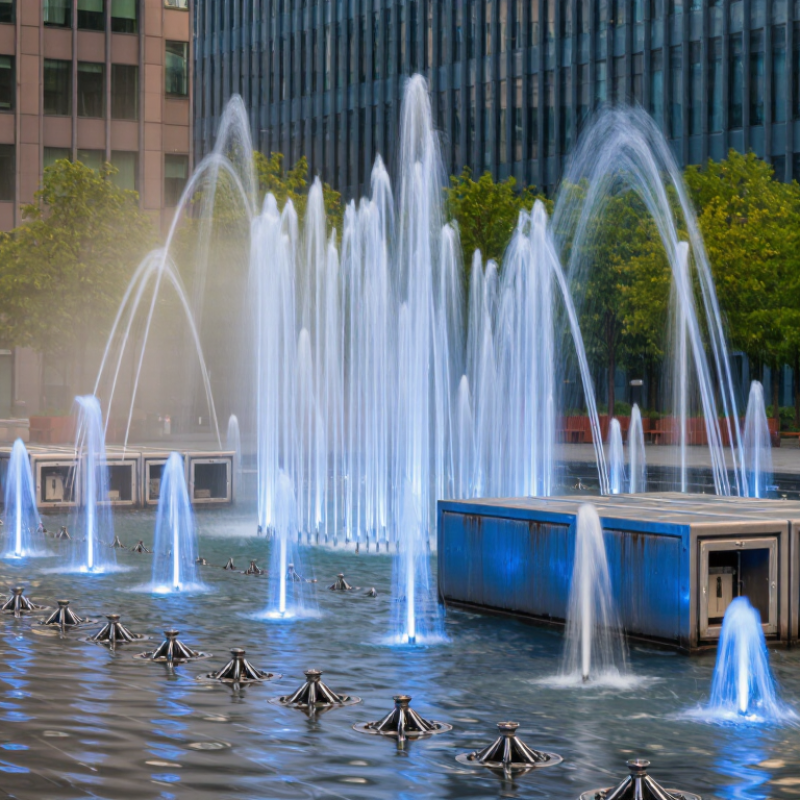
Definition and Core Features of a Dancing Water Fountain
A dancing water fountain is an interactive water installation that combines moving jets, lighting, sound, and programmed timing. Unlike a static fountain, it creates visible patterns that appear to move with music or changing commands. Its central feature is controlled motion. Water does not dance by itself.
A typical system uses a pump, pipes, valves, nozzles, and a digital controller. The pump sends recycled water through separate outlets. Fast valves adjust each stream’s height and direction within seconds. A controller coordinates these changes with lighting and audio signals. Some installations also use sensors to respond to visitors, wind, or water levels. The basin usually includes filters and drainage equipment to maintain cleaner circulation.
The nozzles shape the display. Narrow openings create tall, sharp streams, while wider openings produce softer arcs. LED fixtures can color the water from below or beside the jets. In practical maintenance work, alignment matters greatly. A slightly blocked nozzle may create an uneven pattern. Wind can also push water beyond the basin. Perfect synchronization is difficult, especially outdoors. This limitation deserves attention during design. Operators must check pumps, filters, valves, electrical controls, and water quality regularly. A beautiful performance depends on these less visible details.
The Role of Pumps, Nozzles, Sensors, and Control Systems
A dancing water fountain turns pressurized water into timed movement. Its pump draws water from a basin and pushes it through pipes. Nozzles then shape the flow into columns, arcs, or fine mist. Nozzle diameter matters. A small opening creates higher velocity, but it also increases pressure loss. The U.S. Department of Energy reports that pumping systems can represent about 25% of industrial electricity use, making hydraulic efficiency a practical design concern.
The control system coordinates pump speed, valve position, lighting, and music cues. Variable-speed drives can adjust flow instead of wasting excess pressure through throttled valves. Sensors monitor water level, pressure, flow, and sometimes wind conditions. A level sensor can stop the pump before air enters the intake. A pressure sensor can reveal a blocked nozzle or damaged pipe. These details are easy to overlook.
Timing must remain accurate. A delay of a few milliseconds may change the visual rhythm. Programmable controllers use stored sequences and feedback signals to repeat movements reliably. The International Energy Agency identifies motor-driven systems as a major global electricity user, supporting careful control and maintenance (Energy-Efficiency Policy Opportunities for Electric Motor-Driven Systems, 2011). In field practice, filters clog, sensors drift, and water chemistry changes nozzle performance. Perfect choreography is unlikely. Regular inspection still matters. A beautiful pattern may hide inefficient pumping.
Common Designs, Uses, and Maintenance Requirements
A dancing water fountain combines pumps, programmable valves, nozzles, lighting, and control software. Pumps send water through narrow nozzles, while valves change pressure and height. Lighting then follows the programmed movement. Common designs include linear jets, circular basins, musical fountains, and interactive splash systems. Sensors can detect movement and adjust the display. Timing is everything.
Public plazas use these fountains as landmarks and cooling features. Shopping centers, hotels, parks, and private gardens use them to improve visitor experience. Water efficiency now deserves equal attention. The UNESCO World Water Development Report 2024 states that agriculture accounts for about 70% of global freshwater withdrawals. A fountain uses far less water, but poor sealing and excessive splash-out still create avoidable losses. EPA WaterSense estimates that household leaks waste more than one trillion gallons annually in the United States. That figure is not fountain-specific, yet it exposes a familiar maintenance mistake: small losses become expensive over time.
Maintenance should include daily visual checks, regular strainer cleaning, nozzle inspection, and pump monitoring. Operators should record water level, pressure, clarity, and equipment noise. Filters need scheduled replacement, not only emergency cleaning. Public interactive systems also require documented disinfectant and pH testing under applicable health codes, including guidance from the CDC Model Aquatic Health Code. Water recycling systems reduce demand, although they can increase filtration complexity. A design may look efficient while hiding difficult service access. That assumption deserves testing before installation.
What Is a Dancing Water Fountain and How Does It Work?
Common fountain designs and their typical spray-height ranges
A dancing water fountain uses pumps, electronically controlled valves, lighting, and programmed timing to synchronize water movement with music or visual effects. The ranges below are typical design examples; actual height depends on nozzle size, pump capacity, wind conditions, and installation depth. Routine maintenance usually includes removing debris, checking nozzles and filters, inspecting pumps, and monitoring water quality.


