+1 (281) 855-2218

How to Choose the Best Welding Tube in 2026?

Choosing the best Welding Tube in 2026 means looking beyond price and polished product photos. The right tube must match the application, welding process, service environment, and required dimensions. A small mismatch in wall thickness or seam quality can complicate fit-up, raise rework, or shorten service life. Details matter.

The World Steel Association reported 1,882.6 million tonnes of global crude steel production in 2024, underscoring the scale of the material supply chain. Grand View Research valued the global welding market at about $20.05 billion in 2023 and projected continued growth through 2030. These figures describe broad markets, not tube quality. Still, they show why buyers need clear specifications and dependable supplier records. Welding engineer Duane K. Miller’s published guidance emphasizes a practical point: weld quality depends on controlling the process, not just inspecting the finished joint. Treat that as a reminder, not a guarantee.

For a real comparison, check material grade, outside diameter, wall thickness, straightness, surface condition, and seam consistency. Ask for inspection records and traceability where the project requires them. Then assess corrosion exposure, operating temperature, pressure, and the welding method your shop will use. A tube that looks smooth under warehouse lighting may still have dimensional variation. That happens. This guide explains how to compare those details, question unsupported claims, and choose a Welding Tube suited to the job—not merely the catalog description.
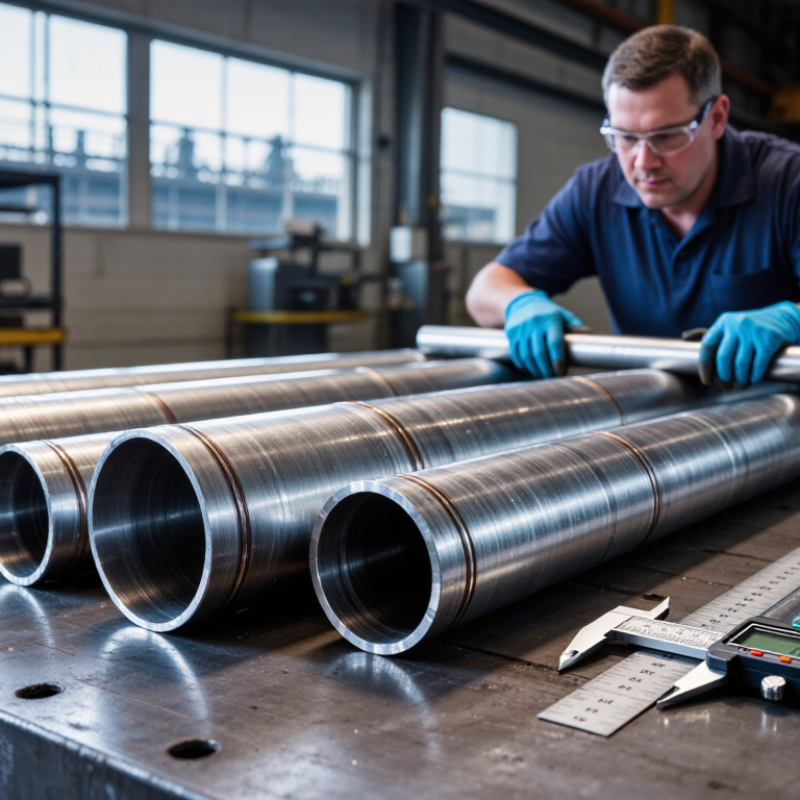
How to Choose the Best Welding Tube in 2026?

Identify the Tube’s Application and Operating Conditions

Choose a welded tube by defining its job before comparing grades or prices. A structural frame faces different demands from a tube carrying hot process fluid. Record the medium, working pressure, normal and peak temperatures, flow rate, and exposure to weather or cleaning chemicals. Note whether vibration, repeated loading, or frequent start-ups could stress the weld seam. Small details matter.

NACE International’s 2016 IMPACT study estimated global corrosion costs at US$2.5 trillion annually, or 3.4% of global GDP. This figure covers many industries; it is not a tube failure rate. Still, it shows why fluid chemistry and maintenance deserve attention during selection. A tube near a washdown area may need more corrosion resistance than one in a dry indoor frame. Check the actual fluid composition, not just its common name. Also confirm wall thickness, joining method, inspection needs, and temperature limits against the intended service. I would avoid choosing from a catalogue description alone; “corrosion resistant” does not explain performance in every environment. Compare the supplier’s material documentation with the operating conditions, and investigate any mismatch before fabrication.

Compare Tube Materials and Welding Processes

Carbon steel is often a practical choice for frames and general structures because it is widely available and straightforward to weld. Its weak point is corrosion: a tube exposed to rain may need a protective finish. Stainless steel resists many corrosive environments, but its grade and service conditions matter. Aluminum keeps assemblies light, yet its oxide layer and high heat conductivity demand careful preparation and heat control. There is no clean winner.

The process should match the material, wall thickness, and production setup. MIG welding can suit repeatable work on steel tube, especially when speed matters. TIG offers precise control on thin walls and visible joints, though it usually takes more time. Aluminum can be welded with either process when equipment, filler, and preparation are appropriate. Laser welding can produce narrow seams, but it depends on accurate fit-up and suitable access. Fit-up matters.

Before choosing, compare the tube’s actual wall thickness, joint geometry, expected load, and exposure to moisture or chemicals. A small gap at a joint can cause trouble, even with a capable process. Test a sample using the same tube and setup planned for production, then inspect the weld and check for distortion. Material charts help, but they rarely capture every shop condition; that is an imperfect part of the decision.

How to Choose the Best Welding Tube in 2026? - Compare Tube Materials and Welding Processes
Tube Material Common Tube-Welding Processes Key Advantages Limitations and Checks Typical Applications Best Choice When...
Carbon steel High-frequency resistance welding (ERW/HF); TIG or MIG for fabrication; submerged arc welding for larger sections Widely available; generally economical; good strength and weldability with suitable grades and procedures Usually needs a protective coating or other corrosion-control measures in wet or corrosive environments. Confirm grade, wall thickness, and applicable tube specification. Structural frames, general engineering, furniture, machinery, and many fluid-service applications where the selected grade is suitable Cost, availability, and general-purpose strength are priorities, and corrosion protection can be managed.
304 / 304L stainless steel TIG, laser, or resistance welding; ERW production is also used for welded stainless tube Good general corrosion resistance in many indoor, food-processing, and mildly corrosive environments; 304L's lower carbon content can help reduce sensitization risk after welding. Not ideal for every chloride-rich or marine exposure; heat tint and weld contamination can reduce corrosion performance if not properly treated. Food and beverage equipment, architectural tubing, tanks, and general process equipment A versatile stainless tube is needed for general service without severe chloride exposure.
316 / 316L stainless steel TIG, laser, or resistance welding; welded tube production with suitable process control Molybdenum improves resistance to pitting and crevice corrosion compared with 304 in many chloride-containing environments; 316L is commonly selected for welded parts. Higher material cost than 304; not immune to chloride attack, especially in warm, stagnant, or concentrated chloride conditions. Verify service conditions and cleaning requirements. Marine components, chemical-processing equipment, and process lines exposed to more corrosive environments Improved chloride-related corrosion resistance is required and the service environment has been assessed.
Aluminum 6061 TIG (GTAW) or MIG (GMAW); laser welding may be used in controlled production settings Low density; useful strength-to-weight ratio; naturally forms a protective oxide layer Welding can reduce strength in the heat-affected zone of heat-treated 6061. Oxide removal, clean surfaces, and suitable filler and joint design are important. Transport equipment, frames, recreational equipment, and lightweight structures Low weight is important and the design accounts for the strength change around the weld.
Aluminum 3003 TIG or MIG; resistance welding for suitable production applications Good formability and corrosion resistance; generally straightforward to weld with appropriate procedures Lower strength than many structural aluminum alloys; confirm that the selected temper and wall thickness meet load requirements. Light-duty tubing, tanks, heat-transfer components, and formed assemblies Formability and corrosion resistance matter more than high structural strength.
Copper TIG, MIG, or gas-shielded arc processes with suitable joint preparation and filler; brazing may be considered where a fused weld is not required High thermal and electrical conductivity; good corrosion resistance in many applications High heat conductivity can make welding more demanding; use a process and procedure suited to the copper grade, thickness, and heat-sink effect. Heat exchangers, electrical systems, and specialized plumbing or process equipment Thermal or electrical conductivity is a primary design requirement.
Duplex stainless steel TIG, MIG, or controlled mechanized welding; tube production requires careful heat-input control Combines useful strength with strong resistance to stress-corrosion cracking and pitting in many service environments Welding procedure and cooling conditions affect the balance of phases and corrosion performance. Require qualified procedures and appropriate inspection for the application. Chemical processing, offshore equipment, and demanding industrial service Higher strength and corrosion resistance are needed, and qualified fabrication controls are available.
Titanium (commercially pure or alloy grade) Inert-gas-shielded TIG or specialized laser welding with strict shielding and cleanliness controls High specific strength and strong corrosion resistance in many environments Reactive at elevated temperatures; contamination by air, moisture, or dirty tooling can damage weld quality. Fabrication and inspection requirements are more demanding. Chemical processing, aerospace components, and specialized high-performance systems Low weight or exceptional corrosion performance justifies the higher material and fabrication requirements.

Selection note: Match the tube grade, dimensions, weld quality, and inspection requirements to the actual pressure, temperature, corrosion exposure, loading, and governing specification. A welding process is not a substitute for confirming that the finished tube meets the applicable design and service requirements.

Check Dimensions, Tolerances, and Applicable Standards

Before comparing welding tube suppliers, write down the required outside diameter, wall thickness, and cut length. A tube can look right on the rack yet fail to fit a fixture because its diameter or wall varies. Small differences matter. Check whether dimensions are nominal or guaranteed, and whether tolerances apply to each tube, each batch, or the finished assembly.

Ask for the permitted ranges for diameter, wall thickness, ovality, and straightness. For a close-fitting joint, even slight ovality can leave an uneven gap; that may affect fit-up and welding. Inspect a sample at several points, using suitable measuring tools rather than relying on one reading.

Then confirm the exact product standard and grade on the quotation and inspection documents. ASTM, ASME, and EN specifications cover different products and requirements, so a standard name alone is not enough. Verify its revision and relevance to the tube’s material, manufacturing route, and service conditions. It is tempting to request the tightest tolerances, but that can add cost without improving the weld. I would still check whether the drawing captures the real assembly needs; that part is easy to overlook.

Evaluate Quality, Durability, and Supplier Reliability

Choosing a welding tube in 2026 means checking more than a polished surface. Start with the required material grade, outside diameter, wall thickness, and tolerance range. Compare the specification with the application, including loads, temperature, and exposure to moisture or chemicals. A tube may fit a drawing yet prove difficult to weld if its dimensions vary. Check sample pieces for straightness, ovality, end condition, and consistent seam appearance. Small details matter. Review material certificates and traceability records, then confirm they match the delivered lot. If possible, run a trial weld using your normal equipment and procedures. Inspect the fit-up and finished joint. Paperwork helps, but it cannot replace a practical check.

Durability depends on the environment as much as the tube itself. Ask how the selected grade handles corrosion, vibration, and repeated loading. Do not assume thicker walls solve every problem. A heavier tube can add cost and weight without addressing poor weldability or a weak design. Supplier reliability deserves equal scrutiny. Check whether lead times are realistic, production changes are communicated, and technical questions receive clear answers. Ask for records. A dependable supplier should explain inspection methods, batch identification, and how specification issues are handled. Still, a successful sample does not prove every future batch will match. Set acceptance criteria in writing, inspect early deliveries, and review them when the process or service conditions change.

How to Choose the Best Welding Tube in 2026

Suggested evaluation weights for comparing welding tubes and suppliers.

Use this scorecard as a starting point, not as a market survey. Prioritize weld integrity, material traceability, and dimensional accuracy, then adjust the weights to suit the tube’s application and the requirements of the relevant specification. Verify supplier documentation and inspection records before purchasing.

Balance Performance, Availability, and Total Cost

How to Choose the Best Welding Tube in 2026?
Balance Performance, Availability, and Total Cost

The best welding tube is not always the one with the highest strength rating. Match its material, diameter, wall thickness, and weld quality to the actual load, environment, and fabrication process. A tube used in a humid workshop may need different corrosion protection than one installed indoors. Small mismatch matters.

Ask suppliers for dimensional tolerances, material documentation, and details on inspection. Then check whether the tube can be cut, bent, and joined using your existing equipment. A slightly lower-cost option can create extra labor if its wall thickness varies or its seam needs more preparation. Test a sample when the application is critical.

Availability affects cost, too. Compare lead times and stock lengths alongside the quoted price; an inexpensive tube that delays production may cost more overall. Request quotes using the same specification, quantity, finish, and delivery terms. Check whether replacement stock is likely to remain available. One detail is easy to miss: carrying extra inventory ties up cash and floor space. The cheapest quote is not always the best value, and estimates can still miss handling or scrap costs. Revisit the numbers after a trial run, when actual cutting waste and fitting time are known.

SHOP BY BRAND