+1 (281) 855-2218

Why Choose a Nickel Alloy Round Bar Manufacturer?

Choosing a Nickel Alloy Round Bar Manufacturer is not just a sourcing decision. It affects material consistency, machining, delivery schedules, and the evidence available for quality checks. Nickel alloys are used where heat, corrosion, or mechanical stress can challenge ordinary metals. A bar that looks sound may still disappoint if its chemistry, dimensions, or traceability records do not match the job. Details matter.

Industry data explains why qualified sourcing deserves attention. The U.S. Geological Survey’s Mineral Commodity Summaries 2025 estimated global nickel mine production at about 3.7 million metric tons in 2024, with Indonesia contributing roughly 2.2 million. The International Energy Agency’s Global Critical Minerals Outlook 2024 also highlights expanding demand and supply-chain concentration for key minerals, including nickel. These reports describe the wider nickel market, not round-bar quality itself. That distinction is important.

A capable manufacturer should connect material selection with practical documentation. Buyers can ask for chemistry and mechanical test reports, heat-number traceability, dimensional tolerances, and confirmation of the applicable specification. For a machined component, even a small diameter variation can mean extra setup or scrap. For a corrosive service, alloy grade and condition require careful review. A polished sample is not enough. Experience helps, but it does not replace records or clear answers. The right supplier makes those checks straightforward and flags limitations before production begins. No supplier is perfect; the useful question is how clearly it handles problems when they arise.
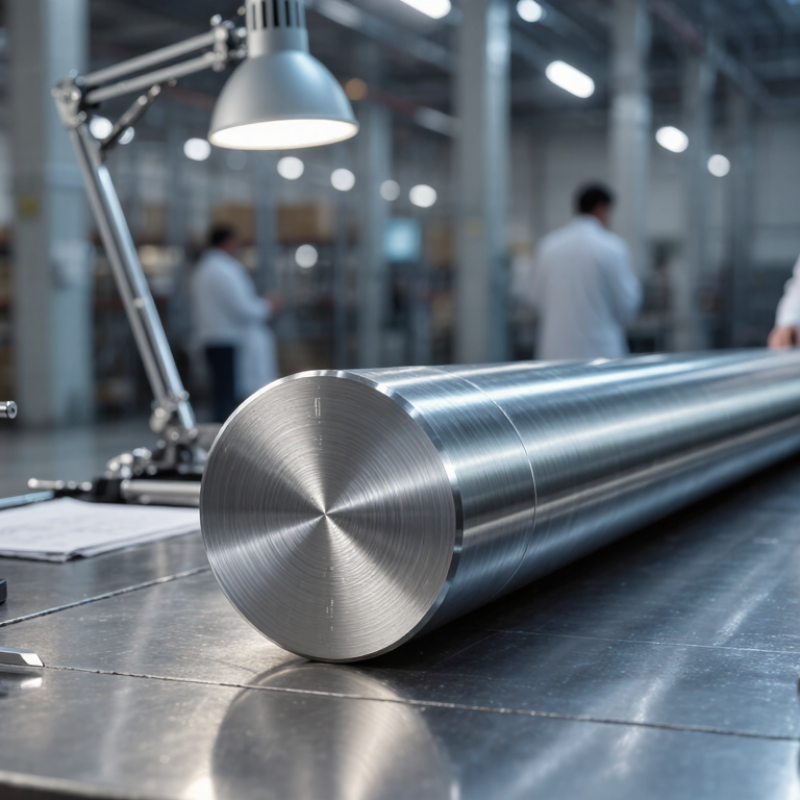
Why Choose a Nickel Alloy Round Bar Manufacturer?

What Nickel Alloy Round Bars Are and How They Are Classified

Why Choose a Nickel Alloy Round Bar Manufacturer?

What Nickel Alloy Round Bars Are and How They Are Classified

A nickel alloy round bar is solid, cylindrical metal stock supplied in standard or cut lengths. Nickel forms the main matrix, while elements such as chromium, molybdenum, iron, and copper adjust corrosion resistance, strength, or heat performance. These bars are machined into shafts, fasteners, and other components. The right choice depends on the actual service environment, not nickel content alone. Temperature, stress, and exposure to chemicals all matter.

Tips: Check the material certificate, specified grade, diameter, and heat-treatment condition. A polished surface does not prove the bar’s alloy or internal quality.

Classification often starts with alloy family: nickel-chromium, nickel-copper, nickel-iron-chromium, or nickel-chromium-molybdenum. Each family has different strengths, and no category is best for every application. Bars may also be identified by a recognized grade designation, manufacturing route, and condition, such as hot-worked, cold-drawn, or solution-treated. These details affect machinability and properties. It is easy to treat a grade name as a complete specification, but that can miss important requirements; confirm the applicable standard and ordered condition before comparing suppliers.

Why Choose a Nickel Alloy Round Bar Manufacturer? - What Nickel Alloy Round Bars Are and How They Are Classified
Classification Example grade (UNS) Composition or defining feature Typical properties and applications
Commercially pure nickel Nickel 200 (N02200) At least 99.0% nickel; low levels of other elements. Offers good corrosion resistance in many alkaline environments and useful electrical and thermal properties. Used in chemical-processing equipment and selected electrical components.
Nickel–copper alloy Alloy 400 (N04400) At least 63% nickel, with approximately 28–34% copper. Known for resistance to seawater, brines, and certain reducing environments. Used in marine hardware, pumps, valves, and chemical-processing equipment.
Nickel–chromium–molybdenum alloy Alloy 625 (N06625) Nickel base; typically 20–23% chromium, 8–10% molybdenum, and 3.15–4.15% niobium plus tantalum. Combines corrosion resistance with high strength; used in marine, aerospace, and chemical-processing components.
Nickel–molybdenum–chromium alloy Alloy C-276 (N10276) Nickel base; typically 14.5–16.5% chromium, 15–17% molybdenum, and 3–4.5% tungsten. Designed for resistance to a broad range of aggressive chemical environments. Used in pollution-control systems and chemical-process equipment.
Precipitation-hardening nickel alloy Alloy 718 (N07718) Nickel base; strengthened by elements including niobium, molybdenum, titanium, and aluminum, followed by heat treatment. Provides high strength and good performance at elevated temperatures. Used in aerospace, gas-turbine, and high-strength industrial components.
Nickel–iron–chromium heat-resistant alloy Alloy 800H (N08810) Typically 30–35% nickel and 19–23% chromium, with iron as a major constituent; controlled carbon content supports high-temperature performance. Used in furnaces, heat-treatment equipment, and petrochemical applications where resistance to oxidation and elevated-temperature service is required.
Round-bar product form Available in multiple alloy families A solid, cylindrical product supplied in specified diameters, lengths, and material conditions; processing may include hot working or cold finishing. Used for machining shafts, fasteners, valve parts, fittings, and other components. The appropriate grade depends on the service environment, temperature, strength needs, and fabrication method.

Note: Composition ranges are typical published grade ranges in weight percent, not a substitute for a material certificate. Exact limits, product availability, dimensions, and mechanical properties depend on the applicable specification, product form, and heat treatment.

Which Properties Make Nickel Alloy Bars Suitable for Demanding Conditions

Nickel alloy round bars suit demanding service because their chemistry can resist heat, oxidation, and corrosive fluids. In alloy UNS N06625, chromium supports oxidation resistance, while molybdenum helps resist localized corrosion in chloride-bearing environments. ASM International’s Alloy Digest data lists a density of about 8.44 g/cm³ and a melting range of 1,290–1,350°C for this alloy. These figures describe the material, not a guaranteed working temperature. Real performance depends on stress, exposure time, and the bar’s condition. That distinction matters.

A round bar may become a pump shaft, valve stem, or machined fastener exposed to hot process fluid. Its solid-solution strengthening helps retain useful mechanical strength as temperatures rise, while its corrosion resistance can reduce damage during service. ASTM B446 specifies requirements for UNS N06625 bar and rod, including chemistry and mechanical properties; buyers should check the applicable condition and test documentation. One practical caveat: machining can generate heat quickly, and careless cutting may affect tool life or surface finish. Alloy choice should follow the actual temperature, fluid chemistry, and loading—not a broad “high-performance” label.

How Manufacturers Control Production and Product Quality

Why Choose a Nickel Alloy Round Bar Manufacturer?

How Manufacturers Control Production and Product Quality

A capable manufacturer controls quality from the melt to the finished bar. Each heat is checked for chemical composition, while forging and rolling temperatures are monitored to limit internal defects and uneven grain structure. Heat treatment matters, too. Poor control can leave a bar with inconsistent hardness, even when its surface looks flawless. ASTM B446/B446M-19a provides a useful benchmark for annealed Alloy 625: minimum tensile strength is 827 MPa, minimum yield strength is 414 MPa, and elongation is 30%. Buyers should compare test results with the specified grade and condition, not rely on a generic certificate.

Traceability connects those results to the delivered material. Look for heat numbers marked on bars and matching inspection documents, including dimensional checks and mechanical test results. Ultrasonic inspection may also be useful for critical applications, but confirm its scope and acceptance criteria before ordering. A tidy report helps. It cannot reveal every handling mistake, so incoming checks still matter.

Tips: Ask for the applicable ASTM specification, heat-level traceability, and actual test values. Measure bar diameter at several points; one reading can miss a slight taper.

What Standards, Testing, and Traceability Buyers Should Review

When choosing a nickel alloy round bar manufacturer, review the standards against the bar’s intended service, not just the product description. A specification may define chemistry, dimensions, heat treatment, and mechanical properties. ASTM, ASME, or EN requirements can apply, depending on the grade and order. A standard name alone proves little. Ask for the exact specification and grade, plus any permitted exceptions.

Testing records should identify the test method, acceptance criteria, and results. Check that the material test report matches the ordered alloy and product form. Where the application requires it, review tensile results, hardness, chemical analysis, and non-destructive examination records. Ask for evidence. A report can look complete yet refer to a different heat or bar size, so compare its heat number with the product marking and packing list.

Traceability should connect each bar to its production heat and inspection documents. Confirm how markings are preserved if bars are cut, bundled, or repacked. Request sample records before placing a large order; this can reveal gaps early. Be candid about uncertainty: paperwork cannot replace competent inspection, and not every buyer needs the same tests. Clear answers about missing records matter as much as polished certificates.

How to Match a Manufacturer’s Capabilities to Application Requirements

Why Choose a Nickel Alloy Round Bar Manufacturer?

How to Match a Manufacturer’s Capabilities to Application Requirements

A suitable manufacturer should be able to connect your service conditions with a specific bar grade and production route. Share the operating temperature, corrosive media, loading, and expected machining process. These details matter. A bar used near hot exhaust may need different properties from one exposed to seawater or chemical processing. Avoid choosing by alloy name alone.

Check whether the manufacturer can supply the required diameter, length, heat-treated condition, and dimensional tolerances. Ask for material test reports showing chemistry and mechanical properties, along with clear heat or batch traceability. If components face demanding service, confirm what inspection is available, such as ultrasonic testing or surface checks. The exact method should fit the risk and specification, not simply appear on a sales sheet.

Production capability matters, too. A supplier may stock common sizes but lack the forging, heat-treatment, or testing capacity your project needs. Discuss sample approval and machining allowance before placing a large order. No supplier is perfect; clear answers about limits can be more useful than broad promises. I would also check whether delivery schedules and documentation match the needs of the workshop, since a technically suitable bar can still cause delays if either is missing.

SHOP BY BRAND