How to Choose a Boiler Centrifugal Fan in 2026?
Choosing the right Boiler Centrifugal Fan in 2026 requires more than comparing motor power and purchase prices. It demands a clear understanding of boiler design, fuel conditions, airflow resistance, and operating schedules. A fan that performs well in a small steam plant may struggle in a high-temperature industrial system. Details matter.
Experienced engineers usually begin with the boiler’s required air volume and total pressure, not the catalog cover. They examine flue-gas temperature, dust concentration, moisture, altitude, and duct layout. These factors influence impeller design, casing strength, bearing selection, and corrosion protection. For example, a fan handling dusty biomass exhaust may need abrasion-resistant components and easier access for cleaning. A poorly matched fan can create unstable combustion, excessive noise, vibration, or unexpected energy consumption.
Safety comes before impressive specifications. Check the operating range, balancing records, motor efficiency, emergency procedures, and available maintenance support. Ask whether the supplier can provide performance curves tested under relevant conditions. Certification and material documentation also deserve careful review. Marketing language is not engineering evidence.
Do not assume the largest fan is the best fan. Oversizing may increase electricity use and make airflow control difficult. Undersizing can limit boiler output and overwork the motor. Real installations often reveal issues that drawings miss, including tight maintenance spaces and uneven duct transitions. A site survey helps expose these risks.
This guide explains how to compare Boiler Centrifugal Fan options in 2026. It focuses on practical selection, reliable operation, lifecycle cost, and responsible verification. Some recommendations remain conditional, because every boiler room behaves differently. That uncertainty should be examined, not hidden.
Boiler Centrifugal Fan Basics and Operating Principles
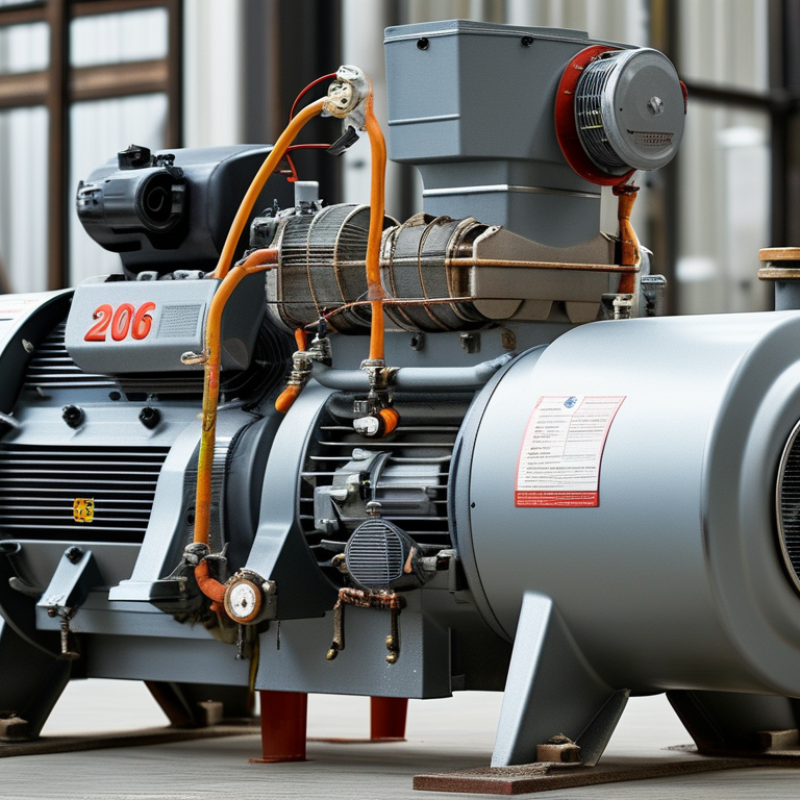
A boiler centrifugal fan moves air through the combustion and flue-gas system. Its impeller converts shaft power into pressure and airflow. Forced-draft fans push fresh air into the furnace, while induced-draft fans pull exhaust gases through the boiler. Some systems use both.
The fan curve links airflow, static pressure, efficiency, and speed. Select the duty point near the fan’s best-efficiency region, not at its maximum capacity. Pressure losses come from ducts, dampers, filters, bends, and heat-transfer surfaces. Air density changes. Temperature matters.
For a 2026 selection, calculate airflow at actual operating temperature and altitude. A fan rated only with standard air may deliver less mass flow in hot exhaust service. Check casing temperature, shaft sealing, bearing load, vibration limits, and emergency operating conditions. Backward-curved impellers often provide stable operation and useful efficiency, but the best geometry depends on pressure and particulate levels.
The U.S. Department of Energy’s Improving Fan System Performance sourcebook identifies fan-system improvements as a practical energy-saving opportunity, often exceeding 20% when controls and system resistance are corrected. The International Energy Agency reports that motor-driven systems consume roughly half of global electricity use, making fan efficiency more than a mechanical detail. Variable-speed control can reduce throttling losses, yet poor commissioning may create unstable combustion or excessive cycling. Small errors matter. Measure it again.
In field work, I would verify the actual draft with calibrated instruments after installation. Catalog values are not operating proof. A quieter fan is not automatically a better fan.
How to Define Boiler Fan Capacity and Pressure Requirements
How to Choose a Boiler Centrifugal Fan in 2026?
How to Define Boiler Fan Capacity and Pressure Requirements
Boiler fan capacity should begin with the boiler’s maximum firing rate, not the fan catalog. Convert fuel input into required combustion air, then add the specified excess-air level. Include air temperature, altitude, moisture, and expected leakage. These details change actual volume significantly. A fan sized only by normal load may struggle during cold starts or peak production.
Pressure requirements need a system map. Add furnace resistance, burner resistance, air preheater loss, duct friction, dampers, filters, and chimney resistance. Use total pressure when comparing the fan against the complete system. Static pressure alone can produce a misleading selection. Engineers should review the operating point at both minimum and maximum firing rates. A variable-speed drive can improve control, but it cannot fix an undersized impeller.
Keep a sensible margin, often based on verified project data rather than habit. Too little margin causes unstable combustion. Too much margin wastes power and may increase noise. Fan curves should be checked at the real gas temperature and density. Field measurements matter. A clean calculation can still be wrong if a damper is partly closed or a duct has an unexpected elbow. Commissioning should record airflow, pressure, motor load, vibration, and sound. Recheck the assumptions after several weeks; boiler rooms rarely behave exactly like drawings.
How to Choose a Boiler Centrifugal Fan in 2026?
Defining Boiler Fan Capacity and Pressure Requirements
The chart provides indicative design reference points for combustion-air fan selection across common boiler input levels. Required fan capacity generally increases with boiler thermal input, while total pressure must cover burner resistance, boiler-pass losses, air preheater losses, ductwork resistance, dampers, and a practical design margin. Final selection should be based on the actual fuel, excess-air setting, air temperature, altitude, system resistance curve, and operating range.
How to Compare Fan Types, Materials, and Efficiency Ratings
How to Choose a Boiler Centrifugal Fan in 2026?
Selecting a boiler centrifugal fan starts with the real operating point, not the catalog’s highest airflow. Backward-curved fans usually deliver strong efficiency for clean combustion air. Radial-blade fans handle dust and heavier particles better. Airfoil designs can reduce power use, but they need cleaner gas paths and careful maintenance.
Compare materials against temperature, moisture, and ash content. Carbon steel suits many ordinary air-handling duties. Stainless steel offers better resistance when condensation creates corrosive conditions. Abrasion-resistant steel may last longer in dusty flue-gas service. I have seen fans fail early because temperature limits were checked, but ash impact was ignored. That mistake is expensive and surprisingly common.
Tips: Measure airflow, static pressure, gas temperature, and dust concentration at the boiler. Compare total efficiency at the duty point, not the maximum rating. Check motor efficiency, inverter compatibility, noise, and access for cleaning. A fan running far from its best-efficiency point may waste power every hour. Leave room for future load changes, but avoid excessive oversizing. It sounds safer. It often is not. Recheck system resistance after ductwork changes, because elbows and dampers can quietly alter performance. Use documented test methods and request operating curves, material certificates, and maintenance guidance from qualified suppliers.
How to Choose a Boiler Centrifugal Fan in 2026? - How to Compare Fan Types, Materials, and Efficiency Ratings
| Comparison Dimension | Backward-Curved Centrifugal Fan | Backward-Inclined Centrifugal Fan | Forward-Curved Centrifugal Fan | Radial-Blade Centrifugal Fan |
| Typical boiler application | Induced-draft and forced-draft systems requiring high efficiency | General boiler ventilation and combustion-air systems | Low-to-medium pressure air movement and compact systems | Dusty flue gas, particulate-laden air, and higher-resistance systems |
| Pressure capability | Medium to high | Medium to high | Low to medium | Medium to high |
| Typical total efficiency range* | Approximately 75–85% | Approximately 70–82% | Approximately 55–75% | Approximately 55–75% |
| Energy-saving potential | High when operated near the design duty point | Good for stable, continuous operation | Moderate; efficiency may decrease at higher pressure | Moderate; selected mainly for durability and pressure capability |
| Overload behavior | Generally non-overloading power characteristic | Generally stable and relatively non-overloading | Motor overload is possible at certain operating conditions | Depends strongly on impeller geometry and system resistance |
| Noise level | Low to medium when correctly selected and balanced | Low to medium | Medium; blade-pass noise can be noticeable | Medium to high, particularly in high-pressure service |
| Dust-handling capability | Fair; filtration or flue-gas cleaning is recommended | Fair to good, depending on blade spacing | Limited for heavy particulate loading | Good because of the robust, open blade design |
| Best selection priority | High efficiency, variable-speed control, and stable operation | Balanced efficiency, pressure, and general-purpose reliability | Compact size and low-pressure airflow | Resistance to fouling, abrasion, and demanding air conditions |
Material Selection Guide
| Material or Treatment | Typical Use | Advantages | Limitations and Selection Notes |
| Carbon steel | Standard clean-air or moderately dusty boiler systems | Strong, widely available, and cost-effective | Requires suitable coating or corrosion control in wet or chemically aggressive flue gas |
| Stainless steel | Condensing flue gas, humid exhaust, or corrosive atmospheres | Improved corrosion resistance and service life | Higher purchase cost; grade selection must match the chemical environment and temperature |
| Abrasion-resistant steel | Coal, biomass, cement, and other particulate-laden flue gases | Better resistance to erosion from ash and hard particles | May be heavier and more difficult to fabricate or repair |
| High-temperature steel | High-temperature forced-draft or induced-draft service | Maintains mechanical strength better at elevated temperatures | Temperature limits must be checked for the complete fan assembly, bearings, seals, and motor |
| Protective coating or wear liner | Corrosive, abrasive, or moisture-prone applications | Can extend casing and impeller service life | Coating compatibility, thickness, adhesion, and temperature resistance must be verified |
Efficiency and Sizing Checklist
| Parameter | Recommended Evaluation Method | Practical 2026 Selection Guidance |
| Airflow requirement | Calculate required volume flow from boiler capacity, combustion demand, excess-air setting, and flue-gas conditions | Avoid selecting by motor power alone; use the required airflow at the actual operating temperature |
| Static pressure | Add pressure losses from the boiler, ducts, dampers, filters, heat-recovery equipment, and stack | Include a realistic design margin without excessive oversizing, which can increase energy use and control problems |
| Fan efficiency | Compare fan total efficiency or static efficiency at the specified duty point | Compare test conditions consistently; efficiency values are not directly comparable when airflow, pressure, density, or measurement basis differs |
| Motor and drive | Check motor efficiency class, variable-frequency-drive compatibility, starting current, and service factor | Variable-speed control can reduce throttling losses when boiler load changes significantly |
| Operating temperature | Specify normal, maximum, and emergency gas temperatures at the fan inlet | Verify bearing arrangement, shaft cooling, seals, expansion allowance, and material strength at the maximum temperature |
| Particulate and corrosion risk | Assess ash concentration, particle size, moisture, sulfur compounds, chlorides, and condensation risk | Select blade geometry, steel grade, coating, access doors, and cleaning provisions as a combined system |
| Reliability and maintenance | Review balancing grade, bearing life, vibration monitoring, inspection access, and spare-part requirements | Prioritize maintainability and condition monitoring for continuous-duty boiler installations |
*Efficiency ranges are indicative engineering ranges for comparative screening only. Actual performance depends on fan size, impeller design, speed, airflow, pressure, gas density, temperature, drive arrangement, and test method. Final selection should be based on certified performance data at the required operating point.
How to Verify Installation, Maintenance, Compliance, and Total Cost
How to Choose a Boiler Centrifugal Fan in 2026?
A reliable boiler fan begins with verification, not catalog selection. Check airflow, static pressure, gas temperature, dust loading, and operating hours against the actual boiler duty. The U.S. Department of Energy’s Operations & Maintenance Best Practices Guide estimates that effective maintenance can reduce energy use by 5% to 20%. That saving depends on disciplined execution, not optimistic specifications.
Installation should include alignment, shaft clearance, vibration measurement, guard protection, and documented rotation checks. Use recognized test methods, such as AMCA 210, to compare fan performance consistently. Compliance also requires checking electrical protection, noise limits, pressure ratings, and local boiler-room requirements. The ISO 13349 standard helps clarify fan terminology and performance descriptions. I would not accept a certificate without matching its model, test conditions, and serial records.
Tip: Photograph every connection before commissioning. Record vibration, motor current, bearing temperature, and airflow at startup. Small details matter.
Maintenance costs often hide inside poor access and unplanned shutdowns. The International Energy Agency reports that motor-driven systems consume more than half of global electricity, making motor efficiency and control strategy important cost factors. Compare purchase price, efficiency, spare parts, inspections, downtime, and expected service life. A cheaper fan may become expensive after repeated belt failures or difficult bearing replacement. My own review process is not perfect; field conditions can change after commissioning. Recheck the fan during seasonal load changes, and revise the maintenance interval when operating data disagrees with the original plan.


