+1 (281) 855-2218

How to Choose the Right AC DC Converter for Your Needs?

Choosing the right Ac-Dc Converter is not simply a matter of matching voltage and wattage. A dependable selection starts with the real equipment, not a generic product listing. Check the input range, output tolerance, continuous load, startup current, and operating temperature. A small adapter may power a router successfully, yet fail when a motor starts. That difference matters.

This guide examines the practical decisions behind converter selection. It considers isolated and non-isolated designs, efficiency, ripple, electromagnetic interference, cooling, and protection features. It also explains why headroom is important. A converter rated exactly at the expected load may run hot and age faster. Leave room for variation. Always review the manufacturer’s datasheet, derating curves, test conditions, and certification information. Safety approvals should match the intended market and installation environment.

Real applications are rarely perfect. Dust, blocked ventilation, unstable mains power, and frequent switching can change performance. I have learned that a neat spreadsheet cannot reveal every field problem. Measure the load where possible. Observe the equipment during startup. Confirm the connector polarity and cable temperature. Small details prevent expensive failures. Still, no single specification guarantees reliability. Installation quality, supplier credibility, and independent testing deserve equal attention. The goal is not the cheapest Ac-Dc Converter, but a suitable unit that performs safely over time. Some choices will remain uncertain. That is a reason to test carefully, not to guess.
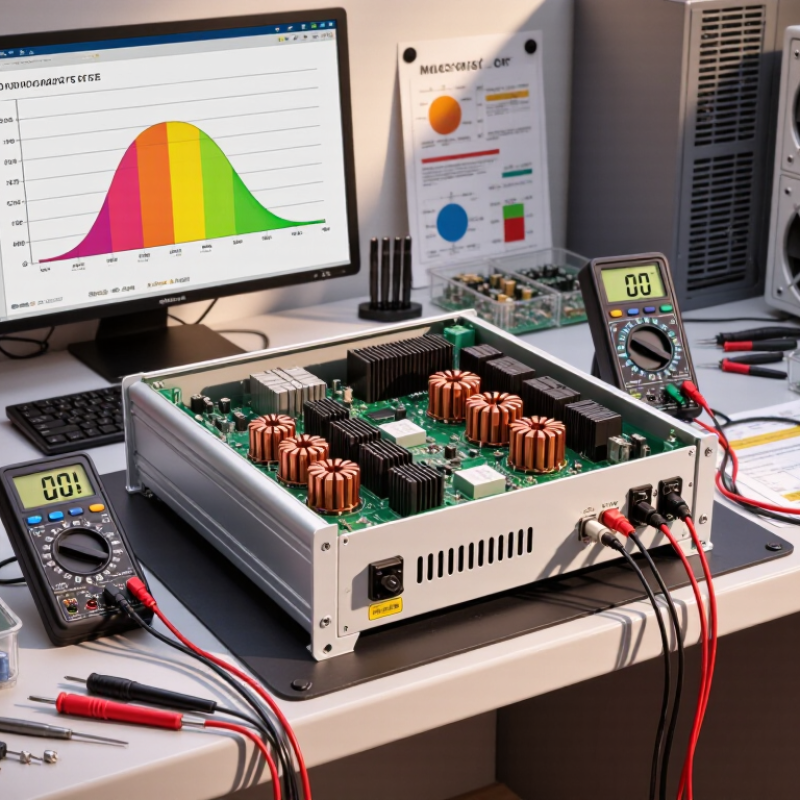
How to Choose the Right AC DC Converter for Your Needs?

Define the Power and Voltage Requirements of Your Application

Choosing an AC DC converter starts with measurable application limits. Record the input range, output voltage, continuous current, and startup current. Do not size the unit from the average load alone. Motors, relays, and processors can create short power spikes. Calculate watts with P = V × I, then add practical headroom. Engineers often allow 20% to 30%, but the correct margin depends on temperature and duty cycle. A neat calculation can still mislead.

Voltage stability matters as much as wattage. Check output tolerance, ripple, isolation, and transient response against the load’s datasheet. A 24 V control system may fail when voltage dips during startup. Thermal conditions also change the result. In an enclosed cabinet, derating can reduce usable power significantly. The International Energy Agency reported that data centers used about 460 TWh of electricity in 2022. It expects demand to exceed 1,000 TWh by 2026. Efficiency and heat loss deserve serious attention, even in smaller equipment.

Tips: Measure the real load with a meter, including startup behavior. Confirm the converter’s full-load rating at your highest ambient temperature. Compare efficiency at your normal operating point, not only the advertised peak. Leave room for expansion, but avoid extreme oversizing because light-load efficiency may fall. Finally, test the converter with the actual cable length and protection devices. Laboratory values are useful, but field conditions are less tidy.

Compare Converter Types, Topologies, and Conversion Efficiency

How to Choose the Right AC DC Converter for Your Needs?

Choosing an AC DC converter starts with the load, not the advertised wattage. Record input voltage, output voltage, current, startup demand, and daily operating hours. A non-isolated buck topology suits many low-voltage applications with a stable input. Boost converters raise voltage, while buck-boost designs handle wider input ranges. Flyback converters provide isolation and remain practical for lower power levels. Higher-power equipment may benefit from forward, half-bridge, or LLC topologies. Topology changes everything.

Conversion efficiency is not a single number. Compare efficiency curves across light, typical, and peak loads. A converter rated at 95% efficiency may perform poorly at 10% load. Check standby consumption, switching losses, heat rise, ripple, and transient response.

In one prototype, the converter met its efficiency target but overheated inside a small enclosure. I had ignored airflow. That mistake mattered.

Use measured data from controlled tests, not datasheet highlights alone. Verify isolation requirements, protection functions, insulation spacing, and output stability under changing loads. Leave thermal margin for dust, warm rooms, and aging components. A slightly less efficient converter can be more reliable when it runs cooler. It may survive longer. I still question every result measured under ideal laboratory conditions.

Evaluate Input, Output, and Load Compatibility

Choosing an AC DC converter begins with compatibility, not wattage alone. Confirm the input range, frequency, polarity, and connector requirements. A unit rated for 100–240 VAC may suit global equipment, but only when its output remains stable across that range. Check the device’s required voltage and maximum current. Then add a practical margin of about 20% to 30%. Too little margin creates heat and voltage drop.

Load behavior matters. Motors, relays, and wireless transmitters can draw brief startup surges. A converter matching only the steady-state current may fail during those moments.

The U.S. Department of Energy evaluates external power supplies at 25%, 50%, 75%, and 100% load, showing why efficiency changes across operating conditions. Test the expected load, not just the label.

It is easy to overlook light-load losses. The International Energy Agency’s 4E initiative also links standby consumption with significant avoidable electricity use, especially across large device populations. Choose low no-load consumption where equipment stays plugged in.

Check thermal performance inside the real enclosure, too. Airflow on a workbench can be misleading. IEC 62368-1 hazard-based requirements provide a useful safety reference, but compliance markings do not guarantee application compatibility.

A converter can meet a standard and still be poorly matched to your load. Verify ripple, transient response, isolation, and protection behavior with measured data. Some assumptions will be wrong. Recheck them before production.

Check Safety Features, Certifications, and Environmental Ratings

How to Choose the Right AC DC Converter for Your Needs?

Safety should be checked before output voltage, size, or price. Select a converter tested to the relevant IEC 62368-1 safety requirements. This standard addresses electric shock, fire, mechanical hazards, and energy sources. For transformer-based designs, IEC 61558-1 may also apply. Request the complete test report, not only a printed certification mark. A certificate is not a magic shield.

Efficiency matters beyond electricity bills. The International Energy Agency reported that data centres consumed about 460 TWh globally in 2022. Their demand could reach between 620 and 1,050 TWh by 2026. Even small conversion losses become significant in continuous equipment. The U.S. Department of Energy’s external power supply analyses also evaluate active-mode efficiency and no-load consumption. Check both figures. A converter that runs cool usually places less stress on nearby wiring and components.

Environmental ratings deserve equal attention. Match the enclosure’s IP rating with dust, water, and cleaning exposure. Confirm the rated operating temperature, humidity range, altitude, vibration resistance, and pollution category. Do not confuse an IP rating with outdoor suitability. I have seen installations fail because moisture entered through an unsealed cable joint. That detail is easy to miss. Certification documents can also omit performance at temperature extremes, where output voltage may drift or protection may activate earlier. Ask for derating curves, surge data, and independent laboratory evidence before approving the unit.

How to Choose the Right AC DC Converter for Your Needs?

Compare environmental protection levels, then verify the converter’s safety standards and certification requirements.

Safety

Check isolation, insulation, overvoltage, overcurrent, short-circuit, and over-temperature protection.

Certifications

Confirm applicable standards such as IEC 62368-1, IEC 61558-1, IEC 60335-1, and EMC requirements for the final application.

Environmental Rating

Select an IP rating suitable for dust and water exposure. The chart uses the standard IP-code digit meanings.

Select the Best Converter for Installation, Cost, and Long-Term Reliability

Choosing an AC DC converter starts with the installation, not the catalog price. Check input voltage, output tolerance, peak current, inrush current, and available airflow. A 24 V, 10 A load needs 240 W continuously, but motors and relays may demand much more during startup. Leave at least 20% headroom. Thermal derating matters too. A converter rated at 300 W may deliver less inside a sealed cabinet at 50°C.

Efficiency affects operating cost and heat. The IEA’s Electricity 2024 report estimates that data centers consumed about 240–340 TWh globally in 2022. Small conversion losses become significant across thousands of units. Compare efficiency at your actual load, not only at the advertised peak. Also review standby consumption, ripple, isolation, and protection against overload, short circuits, and surges. Compliance with IEC 62368-1 or IEC 61010-1 may support safer integration, depending on the application.

Tips: Measure cabinet temperature after several hours, then check output voltage under real load. Choose screw terminals for vibration-prone installations and enclosed cooling for dusty areas. MTBF figures can help, but they are estimates, not guarantees. A cheaper converter may appear economical, yet fan replacement, downtime, and rewiring can cost more. I would not ignore service access; that decision is easy to regret later. Use documented test results, independent certifications, and a realistic maintenance plan before purchase.

How to Choose the Right AC DC Converter for Your Needs? - Select the Best Converter for Installation, Cost, and Long-Term Reliability
Converter Option Typical Input Typical Output Common Power Range Typical Efficiency Isolation Installation Method Relative Cost Reliability Considerations Best-Fit Applications
Encapsulated AC-DC Module 85–264 VAC, 47–63 Hz 5, 12, 15, 24, or 48 VDC 3–60 W Typically 80–90% Usually isolated PCB-mounted or screw-terminal installation Low to medium Encapsulation improves protection against dust, moisture, and vibration. Heat dissipation must be considered because the sealed enclosure limits servicing. Compact control boards, sensors, small automation equipment, and embedded electronics
Open-Frame AC-DC Power Supply 85–264 VAC, 47–63 Hz 5–48 VDC 15–350 W Typically 82–92% Usually isolated Mounted inside a protected equipment enclosure Low to medium Good airflow can support long service life. The exposed circuit board requires protection from dust, conductive particles, accidental contact, and condensation. Industrial control cabinets, office equipment, measurement instruments, and internal system assemblies
Enclosed AC-DC Power Supply 85–264 VAC, 47–63 Hz 12, 24, or 48 VDC 30–1,000 W Typically 85–94% Usually isolated Chassis-mounted with screw terminals Medium Metal covers improve safety and mechanical protection. Confirm ventilation clearance and derating requirements to control internal temperature. Industrial machinery, access control, LED systems, test equipment, and general-purpose installations
DIN-Rail AC-DC Power Supply 85–264 VAC, 47–63 Hz 12, 24, or 48 VDC 15–960 W Typically 87–95% Usually isolated Directly mounted on a standard DIN rail Medium to high Fast installation and organized cabinet wiring are major advantages. Check terminal spacing, cabinet airflow, overload behavior, and the permitted operating temperature. Factory automation, building controls, security systems, process control, and electrical cabinets
Desktop AC-DC Adapter 90–264 VAC, 47–63 Hz 5–48 VDC 5–250 W Typically 80–92% Usually isolated External adapter with a DC cable and plug Low to medium Simple replacement and minimal installation work are advantages. Cable strain relief, connector durability, operating temperature, and continuous-load rating should be checked. Networking equipment, displays, small instruments, consumer electronics, and portable systems
Wall-Plug AC-DC Adapter 90–264 VAC, 47–63 Hz 5–24 VDC 3–65 W Typically 80–90% Usually isolated Plugs directly into an AC receptacle Low Very easy to install, but the adapter can obstruct adjacent outlets and may experience mechanical stress at the receptacle. Confirm plug, polarity, and safety requirements. Low-power consumer devices, routers, small sensors, and residential electronics
Medical-Grade AC-DC Supply 85–264 VAC, 47–63 Hz 5–48 VDC 15–500 W Typically 85–93% Enhanced isolation and leakage-current control Internal, chassis, or external installation depending on the system design High Designed for demanding leakage-current, insulation, and electromagnetic-compatibility requirements. The complete end product still requires appropriate system-level evaluation. Medical instruments, patient-connected systems, laboratory equipment, and clinical monitoring devices
Configurable Modular AC-DC System 85–264 VAC, 47–63 Hz Multiple regulated DC outputs 200–3,000 W Typically 85–94% Usually isolated between input and output; output-to-output isolation varies Chassis or rack-mounted installation High Supports redundancy, multiple output voltages, and system monitoring. It has a higher initial cost and requires careful thermal, wiring, and service planning. Telecommunications, laboratory systems, industrial platforms, and high-availability equipment
Selection guidance: Choose an output voltage that matches the load, size the rated power at least 20–30% above the expected continuous load where practical, verify peak or startup current, and allow additional thermal derating for high ambient temperatures or restricted airflow. Confirm input range, isolation, protection functions, electromagnetic compatibility, safety approvals, dimensions, and service requirements before installation.
SHOP BY BRAND