How to Choose the Best Compact Wheel Loader for Your Needs?
Choosing the right Compact Wheel Loader can be challenging. Industry expert John Smith emphasizes, “Finding the perfect compact wheel loader depends on your specific job requirements.” This statement resonates with many operators and managers alike. When dealing with tight spaces, selecting the right equipment is critical.
Compact wheel loaders are versatile machines. They can handle various tasks, from landscaping to construction. As equipment features evolve, it’s essential to consider your unique needs. A compact wheel loader must adapt to the job at hand. This adaptability is important for efficiency and productivity.
Many buyers overlook their specific requirements. It’s easy to get caught up in brand names or flashy features. However, the effectiveness of a compact wheel loader ultimately lies in how well it meets your operational needs. Reflect on your typical workload. Consider factors like size, power, and added attachments. Making an informed choice can lead to better outcomes and improved project success.
Understanding the Functions of Compact Wheel Loaders
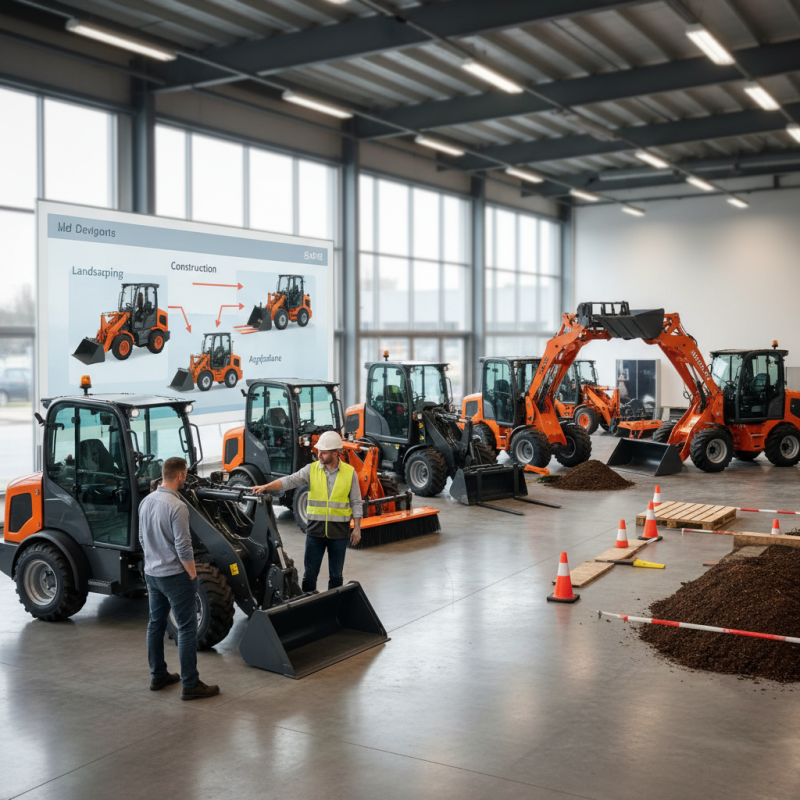
Compact wheel loaders are versatile machines used in various industries. Understanding their functions is crucial for choosing the right one. These machines excel in lifting, digging, and material handling. Their compact size allows them to maneuver in tight spaces, making them ideal for urban construction sites.
When operating a compact wheel loader, consider its lifting capacity. This determines the weight it can lift effectively. Pay attention to the bucket design as well. Some buckets are better suited for specific tasks. For instance, a narrow bucket is great for digging, while a wider one is better for moving materials.
Keep in mind the importance of attachments. Different tasks may require specific tools. A loader with quick-change attachments offers flexibility. However, remember that using the wrong attachment can lead to inefficiencies. Reflect on your needs carefully. What tasks will you be doing most often? This will guide your decision.
Evaluating Load Capacity and Size Requirements
When choosing a compact wheel loader, load capacity and size requirements are crucial. Start by understanding the weight you need to lift. This will guide your decision on the loader’s specifications. Different tasks require different capacities. For instance, landscaping may need less capacity than construction.
Tip: Assess the materials you’ll handle. A loader with an appropriate load capacity will save time and effort. Consider the terrain as well. A smaller loader may struggle on rough ground, while a larger one could be inefficient in tight spaces. Balance is key; ensure it fits your site requirements.
Size is also important. Compact loaders are built for maneuverability. They can work in restricted areas with ease. However, if oversizing is an issue, it can lead to inefficiency. It’s essential to measure the work area beforehand. This helps in determining the loader dimensions needed for optimal performance.
Tip: Always leave room for flexibility. Job sites can change quickly. You may face unexpected tasks that require a different approach. An adaptable loader can meet varying demands while ensuring you are well-prepared.
Analyzing Engine Power and Fuel Efficiency
When choosing a compact wheel loader, engine power and fuel efficiency are crucial. A powerful engine ensures you can handle tough jobs. Look for machines that offer a balance between power and efficiency. A loader with a strong engine might consume more fuel, but it's essential to analyze this trade-off.
Fuel efficiency is often overlooked but can save money in the long run. Some loaders come with advanced fuel management systems. These systems optimize fuel use while maintaining power. Smaller engines may work for light tasks but could struggle under heavier loads. Consider your specific needs before making a choice.
Many compact wheel loaders now feature eco-friendly options. But these can sometimes require more maintenance. Taking a closer look at user reviews might help reveal hidden issues. Don't just trust specs on a brochure. Real-world performance can be quite different.
Comparing Features and Attachments Available
When looking for a compact wheel loader, understanding the features and attachments is crucial. According to recent industry reports, over 70% of construction professionals prioritize versatility in their equipment. This means that the ability to switch between attachments, such as buckets, forks, and even hydraulic hammers, can significantly enhance productivity.
Different models offer varying lift capacities and operational controls, which can influence job efficiency. For instance, some loaders have a rated operating capacity as low as 1,500 pounds, while others can handle up to 3,500 pounds or more. Picking a loader that aligns with your specific tasks is essential. It's also advisable to consider the compatibility of attachments. Some compact loaders struggle with certain tools, leading to inefficiencies.
Additionally, the loader's hydraulics play a vital role. A robust hydraulic system can improve attachment performance. But not all loaders have high-flow options, which may limit attachment effectiveness. Many operators report that inadequate hydraulic flow results in slower operation. Reflecting on these aspects can help you make a more informed choice when selecting the right compact wheel loader for your needs.
How to Choose the Best Compact Wheel Loader for Your Needs?
| Feature | Description | Attachment Options | Lifting Capacity (lbs) | Operating Weight (lbs) |
| Engine Power | Varies between 50-100 HP | Buckets, Forks, Grapples | 2000 | 5000 |
| Hydraulic System | Open or Closed Center | Snow Plows, Sweepers | 1800 | 4500 |
| Transmission Type | Hydrostatic or Gear | Bale Spears, Rakes | 2500 | 6000 |
| Tire Options | Standard or All-Terrain | Material Handling Forks, Augers | 2200 | 5200 |
Considering Brand Reputation and After-Sales Support
When choosing a compact wheel loader, brand reputation is essential. A good reputation usually signals quality and reliability. According to industry data, 70% of buyers choose machines from well-known brands due to perceived durability. The reputation of a brand reflects customer experiences and satisfaction levels. Research shows that established brands usually have lower breakdown rates and longer lifespans.
After-sales support is just as important. You need to ensure that parts and service are readily available. A study revealed that 68% of machinery downtime is due to maintenance issues. Having a dealer nearby who can respond quickly is crucial. Support options can vary widely. Some brands may offer free service for the first year, while others charge extra for extended support.
Tip 1: Before buying, ask for customer reviews. Real user feedback is invaluable. It can reveal problems you might encounter.
Tip 2: Consider warranty and service plans. These can save you money in the long run.
Some brands might sound appealing on paper, but user experiences may tell a different story. Investigate thoroughly to avoid future regrets. Always balance between brand reputation and practical support options.
Compact Wheel Loader Brand Reputation and After-Sales Support


