+1 (281) 855-2218

What Are China Top 10 Solar Water Purification Systems?

Solar Water Purification can turn sunlight into a practical source of treatment power, but the right system depends on the water, location, and daily demand. This guide explores ten solar water purification systems associated with China, spanning solar stills and solar-powered filtration technologies. The category is broad. A solar still uses heat to evaporate and condense water, while photovoltaic panels can power pumps, ultraviolet treatment, or other equipment. These methods are not interchangeable, and sunlight alone does not guarantee safe drinking water.

The comparison focuses on details that matter in real use: stated treatment capacity, energy needs, feedwater limits, pretreatment, maintenance, and the availability of technical support. A unit beside a sunny rural home may face different conditions from one serving a small facility with cloudy days and changing water quality. Look for clearly documented test methods and verify that claims match the contaminants of concern. Some systems may need additional disinfection or mineral adjustment; those requirements should be checked with qualified water professionals. No ranking is perfect. Product specifications can change, and published figures may not reflect local operating conditions. A bucket of cloudy source water is not the same as a controlled laboratory sample. This guide offers a careful starting point, not a substitute for independent testing. Before choosing any system, confirm its intended use, maintenance schedule, and performance evidence for your specific water source.
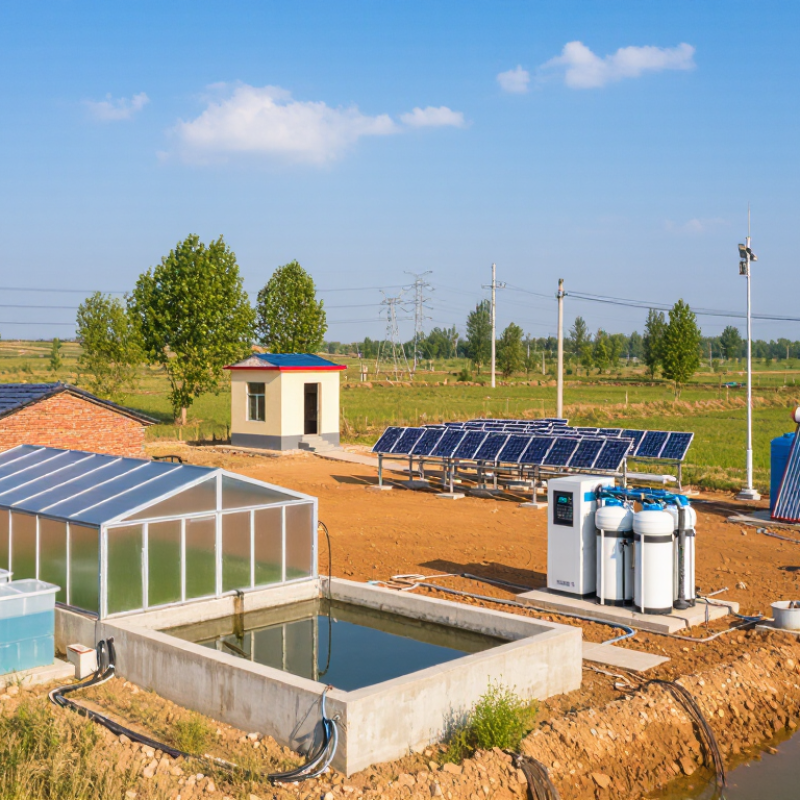
What Are China Top 10 Solar Water Purification Systems?

What Solar Water Purification Systems Are and How They Work

Solar water purification systems use sunlight to help make water safer for specific uses. Some systems collect heat in a covered basin. Sunlight warms the water, evaporation separates it from many dissolved salts and particles, and vapor condenses on a cooler surface. The droplets then run into a clean storage container. No moving fuel needed. This approach is simple, but usually produces water slowly.

Other designs use solar panels to power pumps, filters, or ultraviolet treatment units. A pump may push water through sediment and activated-carbon filters before further treatment. Ultraviolet light can reduce many disease-causing microorganisms when the water is clear and the unit works correctly. Solar power supplies the electricity; it does not purify water by itself. A tidy diagram can make the process seem easier than daily maintenance really is. Still, limits matter: performance depends on sunlight, water quality, system design, and upkeep.

Tips: Keep the collection surface and storage vessel clean, and protect treated water from recontamination. Check filters and treatment components as instructed. If water is cloudy, let particles settle or pre-filter it before treatment. Solar distillation may not remove every volatile chemical, and a UV unit does not remove salts or particles. For drinking use, verify that the system is suitable for the source water, and test the finished water when possible.

Key Technologies Used in China’s Solar Water Purification Systems

China’s solar water purification systems use sunlight in two main ways: heat and electricity. Solar thermal units warm contaminated water, then condense the vapor on a cooler surface. This can reduce many microbes and dissolved substances, but output is often modest. Small collection channels may produce only a limited volume on cloudy days.

Photovoltaic panels can power pumps, ultraviolet lamps, and monitoring controls. Some systems pair them with ultrafiltration or reverse osmosis membranes. Sediment and activated-carbon filters often protect these components from grit and organic matter. Carbon filters do not remove dissolved salts, so treatment stages must match the source water. Details matter.

Battery storage can keep pumps or UV treatment running after sunset, though batteries add cost and require care. Sensors may track flow, pressure, or water quality, but readings still need routine checks. Treated water also needs clean, covered storage to avoid recontamination. No system is magic. Local testing, reliable maintenance, and clear operating instructions determine whether a solar unit delivers safe water consistently.

What Are China Top 10 Solar Water Purification Systems? - Key Technologies Used in China’s Solar Water Purification Systems

The table summarizes ten representative solar-powered water purification system types and technology pathways used or applicable in China. It is a technology overview, not a ranked list of brands or commercial products.

System Type Key Technology Typical Water Source or Need Main Advantages Important Considerations
Solar photovoltaic reverse osmosis PV electricity powers high-pressure pumps and RO membranes. Brackish water or seawater, including remote and coastal sites. Can remove dissolved salts and many other contaminants; modular system design is possible. Needs suitable pretreatment and membrane maintenance; produces concentrated brine and requires reliable energy management.
Solar-powered electrodialysis PV electricity drives ion movement through alternating ion-exchange membranes. Brackish water with moderate salinity. Electrical energy use can be favorable for lower-salinity feed water; treated-water salinity can be adjusted. Less suitable for seawater desalination; scaling and membrane fouling need control.
Solar thermal distillation Solar heat evaporates water, which is then condensed and collected. Small-scale freshwater production from saline or contaminated water. Simple operating principle and low dependence on electrical equipment. Output depends on sunlight, collector area, and weather; cleaning and safe storage of distillate are important.
Solar membrane distillation Solar heat creates a temperature difference across a hydrophobic membrane; water vapor passes through and condenses. Saline water or concentrated streams where low-grade heat is available. Can use relatively low-temperature heat and is not driven by hydraulic pressure in the same way as RO. Heat recovery, membrane wetting, scaling, and system design affect performance and operating life.
PV-powered ultrafiltration Solar electricity powers pumps that move water through a pore-based membrane. Surface water or groundwater requiring particle and microbial-risk reduction. Can reduce suspended solids, turbidity, and many microorganisms as part of a treatment train. Does not remove most dissolved salts; disinfection and routine membrane cleaning may still be needed.
Solar-powered nanofiltration PV-driven pressure filtration through a selective nanofiltration membrane. Water requiring hardness reduction or removal of some dissolved organic matter and ions. Often retains multivalent ions more strongly than many monovalent ions, depending on membrane and operating conditions. Does not provide the same broad salt removal as RO in all cases; pretreatment and concentrate management are required.
PV-powered UV disinfection Solar electricity powers ultraviolet lamps or UV-LEDs to inactivate microorganisms. Relatively clear water after adequate filtration. Provides a chemical-free disinfection step and can be combined with filtration. Turbidity can reduce UV effectiveness; UV leaves no residual disinfectant and does not remove salts or chemical contaminants.
Solar water pasteurization Solar thermal collectors heat water sufficiently to reduce disease-causing microorganisms. Household or community microbial-risk treatment where sunlight is available. Can use direct solar heat without a complex membrane process. Does not desalinate water or remove most chemical pollutants; effective time and temperature must be controlled.
Solar-powered activated-carbon filtration PV-powered pumping moves water through activated carbon, often after sediment filtration. Water with taste, odor, or certain adsorbable organic contaminants. Can improve taste and odor and reduce some organic compounds, depending on the carbon and water quality. Does not reliably remove dissolved salts or all contaminants; media replacement and a separate disinfection step may be necessary.
Solar photocatalytic treatment Light activates a photocatalyst to promote oxidation of some organic pollutants. Selected organic contaminants in water, usually as a specialized or supplementary treatment step. Can use sunlight as the activation source and may complement other treatment processes. Performance depends on water chemistry, light, and catalyst design; it is not a stand-alone desalination method.

Appropriate system selection depends on feed-water quality, required treatment outcomes, local sunlight, energy storage, operation and maintenance capacity, and safe management of residuals or concentrate.

Ten Leading Solar Water Purification Systems in China

Ten Leading Solar Water Purification Systems in China

China’s solar capacity reached about 609 GW by the end of 2023, according to IRENA’s Renewable Capacity Statistics 2024. That energy base supports varied purification designs, though capacity alone does not prove water quality. The ten notable configurations are photovoltaic ultrafiltration, photovoltaic reverse osmosis, solar thermal distillation, solar stills, humidification-dehumidification, solar membrane distillation, solar ultraviolet disinfection, solar pasteurization, solar photocatalysis, and hybrid photovoltaic systems using batteries and activated carbon. These are technical categories, not a verified sales ranking. Each fits different source water and operating conditions.

The WHO/UNICEF Joint Monitoring Programme reported that 2.2 billion people lacked safely managed drinking water in 2022. This figure highlights the need for reliable treatment and monitoring. In rural settings, a compact ultrafiltration unit may reduce turbidity, while brackish groundwater may require reverse osmosis. Solar stills are simple, but often produce limited daily volumes. Membrane systems can deliver more water, yet need cleaning and careful reject-water management. Performance depends on sunlight, feedwater chemistry, storage, and trained maintenance. A sunny site is not automatically a good site.

Tips: Test the source water before choosing a system. Measure output through cloudy days, and keep a simple log of flow, filter changes, and disinfection checks. I would avoid ranking technologies without local field data; that comparison is still imperfect.

How the Top Systems Compare in Performance and Applications

China’s leading solar water purification systems differ more by water source than by headline output. Photovoltaic-powered reverse osmosis can treat brackish groundwater, but it needs prefilters and regular membrane care. Solar stills use heat to evaporate and condense water. They are simple, yet produce less water per square metre. UV units work quickly when paired with clear water, though they do not remove salts or particles.

For homes and small clinics, compact systems may suit drinking and cooking needs. A village kiosk or container unit can serve more people, but storage tanks and trained operators become important. Mobile systems offer flexibility after storms or in remote locations. Larger hybrid installations can combine solar power with batteries or grid support, helping maintain output through cloudy periods. That matters. Performance depends on sunlight, feedwater quality, and daily demand—not just rated capacity.

A fair comparison should include litres produced per day, treatment quality, energy storage, and maintenance needs. Test reports should identify the water source and operating conditions. Otherwise, figures can mislead. I would not call any single design the best for every setting. Even a well-designed system may underperform when filters are neglected or winter sunlight falls. That detail is easy to overlook.

Factors to Consider When Choosing a Solar Water Purification System

Choosing a solar water purification system starts with the water itself. A clear well may need different treatment than cloudy river water. Test for microbes, sediment, salinity, and dissolved chemicals before comparing equipment. Solar UV units can inactivate many pathogens, but they do not remove salts or most chemicals. Water may need prefiltration first. Filters and membranes address different problems, and each stage adds maintenance. Small details matter.

Check daily output against household demand, not brochure peak capacity. Cloud, winter sun, and shade can reduce production. Consider a battery or safe storage tank if supply must continue after sunset. Ask how long treatment takes per liter and whether performance has been independently tested with similar water. Look for clear instructions on cleaning, replacing filters, and responding to a sudden drop in flow. Easy upkeep wins.

Materials and after-sales support matter too. Parts that contact water should resist corrosion, and replacement components should be obtainable locally. Compare running costs, including batteries, lamps, filters, and transport, rather than purchase price alone. A low-cost unit can become inconvenient. I would question any system promising clean water from every source; no single setup treats everything reliably. Keep a simple test record and retest if the source, taste, or appearance changes.

What to Consider When Choosing a Solar Water Purification System in China

China’s solar-resource class is one useful starting point when assessing a solar-powered purification system.

The bars show annual global solar radiation classes, not product rankings. Class I is shown to the chart’s 2,200 MJ/m²/year display limit; its actual classification is 1,750 MJ/m²/year or higher. When comparing systems, also consider seasonal sunlight, source-water quality, daily output, storage, pretreatment, and maintenance. Classification ranges follow China’s GB/T 31155-2014 standard.

SHOP BY BRAND