Main Menu
Choosing the best Powder Sieve Machine in 2026 depends less on a headline capacity and more on the powder itself. Fine, dry flour behaves differently from a damp, free-flowing mineral blend. Particle size, moisture, required mesh, and target throughput all affect screening performance. A machine that handles one material smoothly may clog or separate another poorly. Small details matter.
This guide compares key machine types and practical selection criteria, including screen area, vibration method, contact materials, noise, cleaning access, and replacement-screen availability. It also considers how operators feed the machine: an uneven pour can reduce screening consistency, even with suitable equipment. For food, chemical, or pharmaceutical production, verify that the design and documentation meet your facility’s requirements; specifications should be confirmed with the manufacturer. That step is easy to overlook.
There is no universal winner. A compact unit may suit product trials or limited batches, while continuous production may call for a larger, more automated system. Price alone is a poor shortcut. Compare usable capacity under your actual material conditions, not only the advertised maximum. Where possible, request a sample test and record the feed rate, separation quality, and cleaning time. Results can still vary between batches, so treat a single successful run with caution. The sections ahead explain what to check before deciding which Powder Sieve Machine best fits your process.
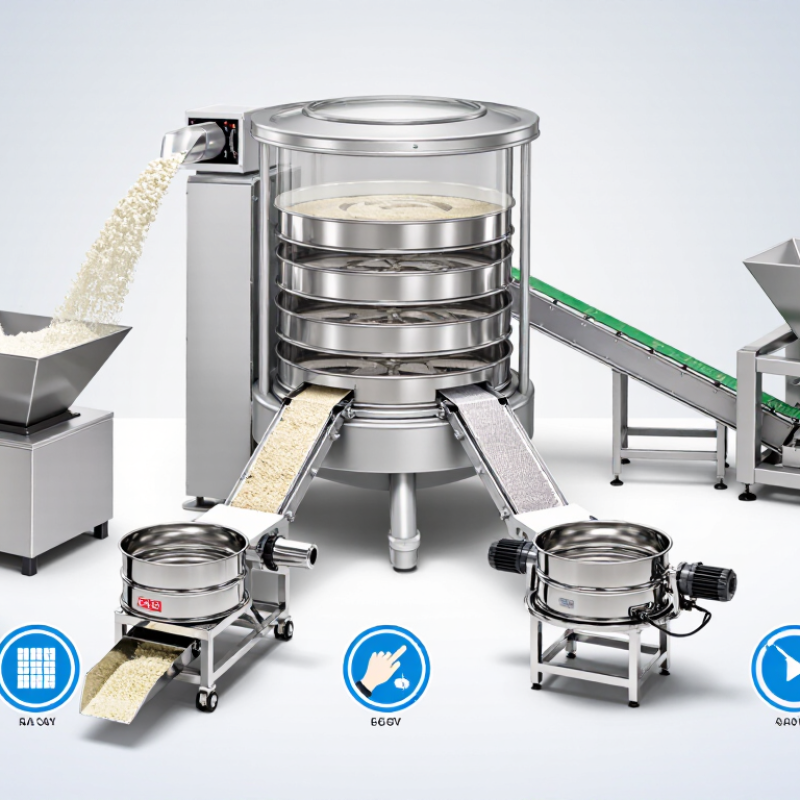
A powder sieve machine separates particles by size, using a mesh screen and controlled motion. Powder enters through the feed inlet, then vibration or rotation moves it across the screen. Smaller particles pass through the openings; larger particles remain above. Different screen sizes can sort powder into several fractions. The machine does not make particles smaller. It classifies them.
ASTM E11 specifies standard test sieve openings from 20 μm to 125 mm, giving operators a broad range for selecting a screen. In practice, the right opening depends on the product and the target particle-size distribution. A fine powder may cling to the mesh, while damp material can block openings. That changes throughput and results. USP General Chapter <786> also describes analytical sieving as a method for assessing particle-size distribution. Real production conditions can still differ from a laboratory test.
Tips: Match the mesh to your target cut size, and check it for damage before a run. Keep feed even; a thick layer can hide smaller particles. Watch for blinding. It is easy to miss. Record vibration settings and cleaning intervals, then compare samples from the beginning and end of a batch. One setting will not suit every powder.
Powder sieve machines separate particles by size, but their motion suits different materials. A vibrating sieve uses rapid oscillation to move powder across a mesh. It works well for dry, free-flowing ingredients and routine grading in food, mineral, and chemical processing. Operators can change screens to target a cut size. Fine dust can still escape unless the unit is properly enclosed.
A centrifugal sieve uses a rotating paddle or rotor to push material through a cylindrical screen. It can break soft lumps and handle higher feed rates, though heat-sensitive or fragile powders need careful trials. A gyratory, or tumbler, sieve follows a broad circular motion. It offers gentle separation across several decks, making it useful for quality checks and grading multiple fractions. That matters.
Ultrasonic sieving adds high-frequency vibration to the mesh, helping fine powders resist blinding and pass through smaller openings. It can suit cohesive materials, but it does not solve every feed problem; moisture and static charge may still cause clumping. Match the machine to particle size, required capacity, and cleaning needs. Test a representative sample before selection, and inspect the mesh after each run. Small details matter. A sieve that performs well in a short trial may behave differently during a long production shift.
| Machine Type | How It Works | Best Suited For | Main Advantages | Considerations | Common Uses |
|---|---|---|---|---|---|
| Circular Vibratory Sieve | A motor generates vibration that moves powder across one or more circular screen decks. | General-purpose screening, grading, and removal of oversized particles from free-flowing powders. | Versatile; available with multiple screen decks; suitable for separating material into different size fractions. | Very fine, cohesive, or electrostatically charged powders may blind the mesh unless suitable screen-cleaning measures are used. | Food ingredients, mineral powders, chemicals, and pharmaceutical ingredients. |
| Ultrasonic Vibratory Sieve | High-frequency ultrasonic vibration is applied to the screen mesh alongside mechanical vibration. | Fine powders and materials that tend to clog or adhere to the screen. | Can reduce mesh blinding and improve passage of fine, difficult-to-screen material. | More complex than a standard vibratory sieve; screen condition and process settings still affect performance. | Fine chemical powders, pharmaceutical powders, metal powders, and other materials requiring fine screening. |
| Tumbler Sieve | A low-frequency, three-dimensional gyratory motion gently spreads material over the screen surface. | Fragile, abrasive, or irregularly shaped particles where gentle handling or longer screening time is useful. | Gentle screening action; large screening area; can support multiple classification stages. | Typically occupies more floor space and may screen more slowly than high-energy vibratory designs. | Granules, abrasives, minerals, food products, and other materials requiring careful classification. |
| Centrifugal Sifter | A rotating internal rotor moves powder against a cylindrical screen; acceptable material passes through the mesh. | Continuous screening of dry powders and granules in enclosed process lines. | Compact, continuous operation; can be integrated with conveying and other production equipment. | Not ideal for every fragile or heat-sensitive material; screen and rotor selection must suit the product. | Food processing, plastics, chemicals, and powder reclaim or de-lumping applications. |
| Inline Pneumatic Sifter | Powder conveyed through a closed pipeline is screened within an inline separation unit. | Processes that need screening during pneumatic transfer or require enclosed material handling. | Can reduce open handling and fit into automated conveying systems. | Performance depends on conveying conditions, powder flow properties, and the design of the integrated system. | Closed-transfer powder production, bulk handling, and automated processing lines. |
| Static Safety Sieve | Powder passes through a fixed screen, commonly positioned at a material charging or transfer point. | Basic protection against foreign objects and large agglomerates rather than precise particle-size grading. | Simple construction; useful as a final safety check before downstream processing. | Usually provides limited separation control compared with powered screening machines. | Bag-dumping stations, ingredient charging, and bulk-bag discharge points. |
Selection guide: The best machine depends on powder flowability, particle size, moisture, required throughput, separation accuracy, and whether the process is batch or continuous. Test the actual material before final equipment selection.
Choosing a powder sieve machine in 2026 starts with the material, not a catalog headline. Record the target particle range, batch size, moisture level, and whether the powder clumps during handling. Dry, free-flowing powder may pass through a vibrating screen easily. Fine, humid powder can blind the mesh. Small details matter. Choose mesh openings using a representative sieve analysis, then check whether the required cut stays consistent at normal feed rates. Greater capacity is not always better; overloading can weaken separation and send usable material into rejects.
Compare screening methods against your product’s behavior. Vibratory units suit many routine grading tasks. Rotary or centrifugal designs may help with sticky or fine powders, but confirm performance through trials. Ask how quickly operators can change screens, inspect seals, and clean product-contact surfaces. Request throughput data from conditions similar to your own, including feed rate and moisture. Check noise, dust containment, screen availability, and access for routine maintenance. A technically impressive specification can still disappoint in daily use. Test with your own powder before committing, and record both output quality and cleaning time.
A powder sieve machine should be compared using your actual material, not only a catalogue capacity. Ask for throughput in kilograms per hour under conditions close to your process. Fine powders, damp material, and uneven feeding can all reduce output. Capacity is not a single number. Measure it on-site.
Accuracy depends on the screen opening, machine motion, and how consistently material is fed. Run a trial with a representative batch, then weigh the accepted and rejected fractions. Check several samples rather than relying on one clean test. Small changes in moisture or feed rate may affect separation. That matters. Keep records of the screen size, batch weight, and operating settings so comparisons remain fair.
Maintenance can change the real cost of ownership. Look for tool-free access to screens, straightforward gasket replacement, and surfaces that are easy to inspect and clean. Ask how long routine screen changes take, and whether operators can spot tears or loose fittings before production starts. A detailed checklist helps, though it may not capture every awkward step. Watch a cleaning and changeover in person. A machine that meets the target rate but takes too long to service may interrupt the schedule.
Choosing a powder sieve machine starts with the material, not the machine name. Is the powder dry and free-flowing, or does it cling to a scoop? Note its particle size, moisture, temperature, and tendency to form lumps. These details affect screening more than a headline capacity figure. A fine, static-prone powder may need a different setup from coarse granules that pass easily through a standard mesh.
Match the screen and motion to the job. Vibratory sifters suit many routine grading tasks, while rotary designs can handle some continuous processes. For sticky or very fine material, ask whether added screen-cleaning features are appropriate. Check the required mesh opening, actual feed rate, contact materials, and how quickly the machine can be opened and cleaned. A smooth interior helps, but seams and corners still deserve inspection. Small details matter.
Catalog numbers can mislead. Run a representative sample at the intended feed rate and inspect both the retained material and the undersize fraction. Ask operators to test loading, noise, dust control, and cleaning time. One awkward truth: a machine that meets a laboratory target may struggle during a long production shift. The best fit is the one that reliably meets product specifications within your space, maintenance capacity, and daily workflow.
Reference chart: nominal aperture sizes for commonly used ASTM E11 test sieves.
Choose a sieve machine by matching its screen aperture to your target particle cut, then consider required throughput, material characteristics, and cleaning needs. Aperture size is a reference—not a measure of machine capacity or separation performance. Values shown are nominal ASTM E11 sieve openings.
Office: (281) 855-2218
Copyright © 2025 Telco Intercontinental Corp. All rights reserved. Privacy Policy | Legal Disclaimer
Telco®, TelcoMotion®, and TelcoGreen® are registered trademarks of Telco Intercontinental Corp.