10 Best Electric Motors for Industrial Buyers
Industrial buyers rarely purchase an electric motor in isolation. They buy uptime, predictable energy use, and a workable service plan. The International Energy Agency’s 2011 report, Energy-Efficiency Policy Opportunities for Electric Motor-Driven Systems, estimates that motor-driven systems consume about 45% of global electricity. That figure shows why motor selection matters to operating costs and energy use.
IEA Executive Director Fatih Birol has described energy efficiency as “the first fuel.” The idea applies directly to motor choices: small efficiency differences can add up across long operating hours. But nameplate efficiency alone is not enough. Buyers need to assess motor type, load profile, starting method, speed control, ambient conditions, and maintenance needs. A premium motor may disappoint if paired with an unsuitable drive or oversized pump. Details matter.
This guide compares ten widely used options, including induction, synchronous, servo, and permanent-magnet motors. It weighs practical trade-offs such as starting torque, variable-speed performance, enclosure protection, thermal limits, and lifecycle cost. Where performance depends on the application, the comparison makes that clear rather than claiming one motor suits every plant.
A shortlist is only a start. Before ordering, verify the duty cycle and service support with the manufacturer. That step is unglamorous, but often decisive. Global estimates cannot predict one facility’s savings. Site measurements and a clear load profile still matter.
How Industrial Electric Motors Convert Electrical Energy into Motion
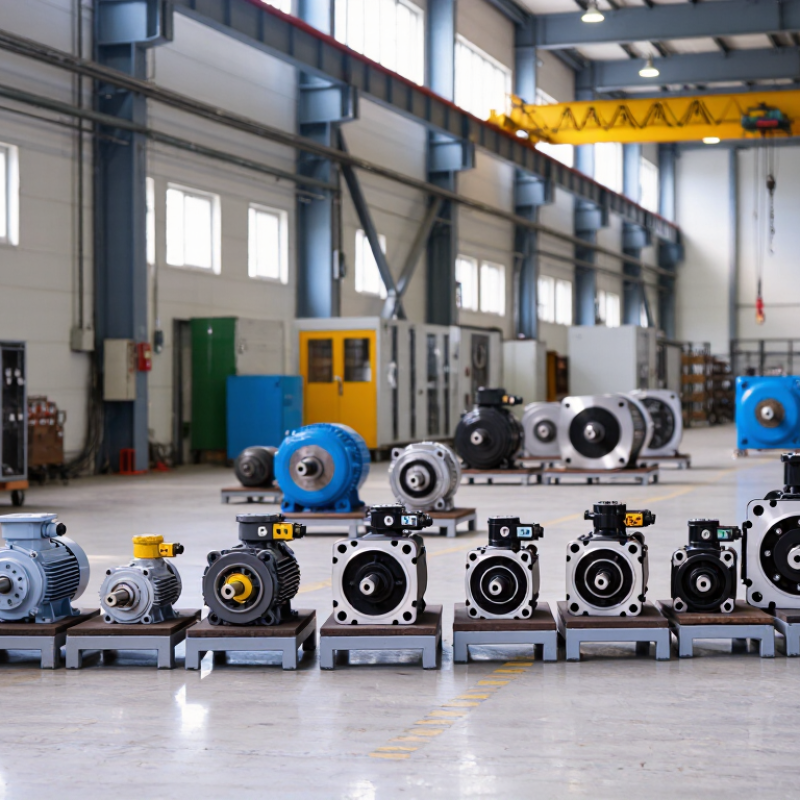
An industrial motor converts electrical energy into motion through magnetic force. In a typical three-phase induction motor, current in the stator windings creates a rotating magnetic field. That field induces current in the rotor, which turns slightly behind it. This lag, called slip, produces torque at the shaft. A coupling carries the rotation to a pump, fan, conveyor, or compressor. Small details matter. Misalignment, worn bearings, or a clogged filter can waste energy as heat and vibration.
The U.S. Department of Energy’s 2021 industrial motor-system assessment estimates that motor-driven systems use about 54% of electricity consumed by U.S. manufacturing. The International Energy Agency estimated in its 2011 motor-systems report that such systems account for roughly 46% of global electricity use. Those figures explain why choosing a motor involves more than checking its nameplate. A variable-frequency drive changes the electrical frequency supplied to the motor, allowing speed to match demand. For a pump running below full flow, that can reduce needless energy use. But the drive is not a magic fix. Poor sizing or settings can add losses, and I may be oversimplifying when I treat the motor apart from its load. The whole system deserves attention.
The Main Electric Motor Types Used in Industrial Settings
Industrial motor choice depends on torque, speed control, duty cycle, and the surrounding environment. The U.S. Department of Energy’s Improving Motor and Drive System Performance estimates that motor-driven systems use about 68% of U.S. industrial electricity. The International Energy Agency has estimated their global share at roughly 45%. These figures make efficiency more than a nameplate issue; pumps, fans, and conveyors can run for thousands of hours each year.
Induction motors are common in factories because their construction is robust and maintenance needs are modest. Pairing one with a variable-frequency drive allows operators to adjust speed for changing process loads. Synchronous motors suit applications needing stable speed or high efficiency, while permanent-magnet designs can offer compact power density. But the right choice still depends on operating conditions. A motor selected from efficiency figures alone may disappoint under frequent starts or partial loads.
Servo motors use feedback to deliver precise position and speed control on packaging lines and machine tools. Stepper motors move in measured increments and can work well in simpler positioning tasks. Brushless DC motors also appear in equipment requiring responsive control. The categories can overlap in real installations, and that can confuse comparisons. Check the full system, including the drive, load profile, cooling, and maintenance access, before specifying a replacement. A small mismatch can become a persistent energy cost.
10 Best Electric Motors for Industrial Buyers — The Main Electric Motor Types Used in Industrial Settings
Industrial AC Motor Speed Reference
This chart shows the theoretical synchronous speeds for common AC motor pole configurations at 50 Hz, calculated using the formula: synchronous speed (rpm) = 120 × frequency (Hz) ÷ number of poles. Induction motors typically run slightly below synchronous speed under load.
Criteria for Comparing Industrial Motors by Performance and Cost
Comparing industrial motors on purchase price alone can mislead.
Match rated power and speed to the actual load, then check efficiency across the operating range. A pump running at partial load may benefit from variable-speed control, while a conveyor needs dependable starting torque. Also compare duty rating, insulation class, enclosure, and compatibility with the site’s power supply. A motor that runs hot in a dusty room may need a different enclosure, even if its nameplate efficiency looks attractive.
Lifecycle cost includes electricity, maintenance, downtime, and replacement—not just the invoice.
The U.S. Department of Energy’s 2023 Industrial and Commercial Motor System Market Assessment highlights the importance of motor-driven systems in industrial energy use. That makes efficiency worth evaluating, but savings depend on load profile and annual operating hours. Ask suppliers for efficiency data at likely operating points, not only full load. That detail is easy to miss. A complex payback estimate can also be wrong if production schedules change.
Tips: Record motor load, run hours, and starts per hour before comparing options. Check bearing access and spare-part availability. Keep the assumptions visible; real plants rarely run exactly as planned.
Ten Electric Motor Options for Different Industrial Applications
Industrial motor selection depends on the load, speed range, control needs, and operating environment. An AC induction motor suits pumps, fans, and many conveyors, especially where rugged, straightforward operation matters. A permanent-magnet synchronous motor can offer high efficiency in variable-speed equipment, though its drive and cost need careful review. Servo motors suit packaging machines and robotic axes that require precise position control. Stepper motors handle modest, repeatable indexing, but may lose steps if overloaded. Brushed DC motors provide simple speed control for smaller mechanisms. They need brush maintenance.
Brushless DC motors work well in compact fans, automated equipment, and other applications needing efficient speed control. Universal motors deliver high speed in portable industrial tools, but are less common for continuous heavy-duty service. Synchronous reluctance motors are worth evaluating for pumps and compressors with variable-frequency drives. Switched reluctance designs can tolerate demanding conditions, yet torque ripple and noise may complicate installation. A geared motor combines a motor and reducer, delivering low-speed torque to mixers or conveyors. Check duty cycle, starting torque, enclosure rating, and available power before comparing options. Real plants rarely match a neat selection chart; measurements from the actual machine may change the choice.
How to Match a Motor to an Industrial Operating Environment
How to Match a Motor to an Industrial Operating Environment
A motor that performs well in a clean workshop may struggle beside a hot, dusty crusher. Start with the actual operating conditions: ambient temperature, humidity, airborne particles, washdown exposure, altitude, and daily start-stop frequency. These details shape enclosure protection, insulation, cooling, and bearing requirements. Heat matters. A motor that is oversized can also run inefficiently at light loads, so compare its rated output with measured demand rather than choosing by habit.
The International Energy Agency’s 2011 report, Energy-Efficiency Policy Opportunities for Electric Motor-Driven Systems, estimates that motor-driven systems use about 45% of global electricity. That scale makes operating efficiency worth checking alongside purchase price. Review the load profile, expected operating hours, and whether speed control is needed. For variable-torque loads such as fans and pumps, a variable-speed drive may reduce energy use, but confirm the motor and drive are compatible. In harsh or unusual conditions, consult IEC 60034 guidance and the equipment supplier’s application data; a catalogue rating alone may not capture the real duty.
Tips: Record temperature and dust levels at the installation point, not from a general site estimate. Check nameplate speed, torque, duty rating, and enclosure protection against the process. Then verify performance after installation. The first selection may still need adjustment.