Main Menu
Choosing among the 7 Best Electric Damper Actuators for Global Buyers requires more than comparing prices and torque ratings. A reliable Electric Damper Actuator must respond accurately, operate quietly, and maintain airflow control under changing conditions. In a commercial air-handling unit, a weak actuator may leave a damper partly open, waste energy, and create uneven room temperatures. Small errors become expensive across hospitals, offices, factories, and data centers.
Peter Simmonds, P.E., an internationally recognized HVAC controls specialist, has emphasized, “Good control begins with proper sensing, correct sizing, and careful commissioning.” That principle deserves attention. The actuator alone cannot fix an undersized damper, poor wiring, or incorrect rotation settings. Yet buyers sometimes focus only on advertised torque. That is understandable, but incomplete.
This guide examines seven actuator options for international projects. It considers torque range, control signals, spring-return performance, enclosure protection, noise, compatibility, and service support. Certification and documentation also matter when equipment crosses borders. A product may perform well in a laboratory, then disappoint on a dusty rooftop. Real experience is less tidy.
The strongest choice depends on the application, not popularity. A compact actuator may suit a small ventilation box, while a high-torque model may be necessary for a large industrial damper. Installation space, ambient temperature, maintenance access, and replacement availability should shape the final decision. No single model wins everywhere. That is the point. Reliable selection requires evidence, practical judgment, and a willingness to question attractive specifications.
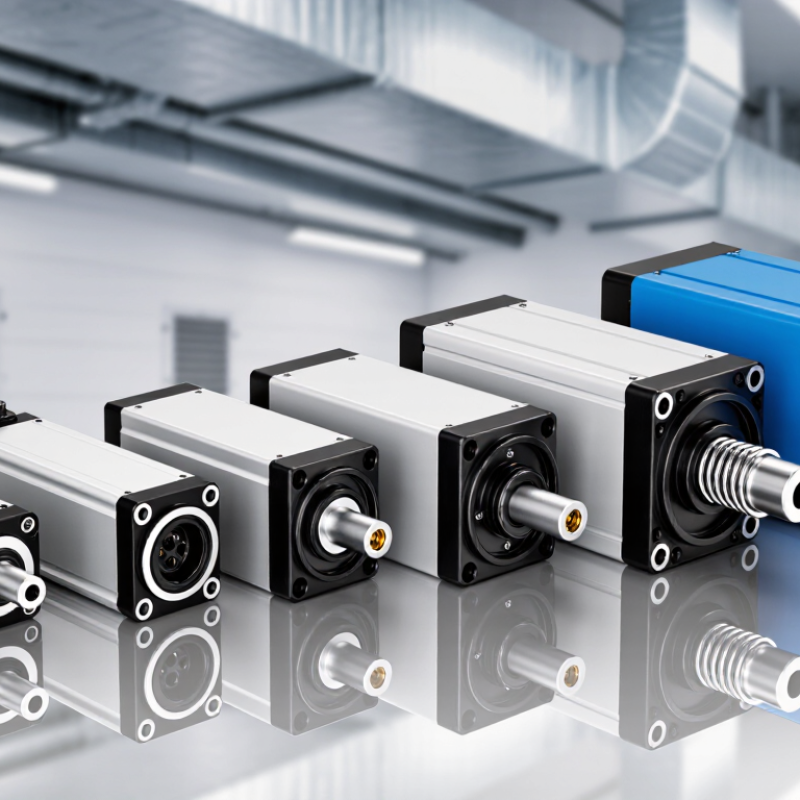
Electric damper actuators are compact devices that open, close, or position dampers in ventilation and air-handling systems. They convert electrical energy into controlled rotary movement. A motor turns a gear train, while the output shaft moves the damper blade through a linkage or direct coupling.
The actuator receives a control signal from a thermostat, building controller, or safety system. Common signals include on-off commands and modulating inputs, such as 0–10 volts. Internal switches, sensors, or digital feedback can confirm the blade position. Some models also include spring-return action, which drives the damper to a safer position during power loss.
Torque matters more than appearance. Dust, blade size, shaft friction, and air pressure can increase the required force. In field commissioning, installers often discover that a clean test damper behaves differently after months of use. That assumption fails. Measure operating resistance when possible, then add a reasonable safety margin.
Global buyers should verify voltage, frequency, control type, enclosure rating, operating temperature, and mounting dimensions. A unit designed for a small round duct may not suit a heavy smoke-control damper. Documentation should clearly state wiring terminals, rotation direction, auxiliary contacts, and service limits. Local electrical and fire-safety requirements also deserve careful review. Cheap substitutions can create delays when connectors, signals, or shaft adapters do not match the existing system.
When comparing electric damper actuators, start with torque, not price. Measure the damper’s running torque and add a practical safety margin. Dust, shaft friction, and aging seals can increase resistance. Field commissioning often reveals undersized actuators stalling near the final few degrees. That is expensive.
Check the electrical details carefully. Supply options may include 24 V AC/DC or higher industrial voltages. Confirm the control method: floating-point, proportional, or two-position switching. A mismatch can cause unstable movement or no movement at all. Speed matters in ventilation systems, but faster is not always better. Review running time, duty cycle, noise, and manual override. Feedback signals improve position verification during maintenance.
For international projects, compare enclosure ratings, operating temperature, cable entry, shaft compatibility, and conformity documents. IP ratings describe dust and water protection, but installation quality still matters. Ask for test reports and traceable specifications, not only catalogue claims. A common mistake is overlooking stall protection or end-stop accuracy. That gap deserves questions. Also check fail-safe behavior during power loss, mounting clearance, and replacement access. The cheapest actuator may fit initially. Service problems may follow.
Key Features for Comparing Electric Damper Actuators
How to read the chart: The comparison uses common nominal torque classes specified for HVAC and industrial damper actuators. Higher torque supports larger or more resistant dampers, while compact models are typically suited to smaller ventilation and air-handling applications.
Important selection factors: Verify torque requirements, supply voltage, control signal, operating time, spring-return or non-spring-return function, enclosure protection, ambient temperature range, and regional certification requirements before purchase.
Seven Leading Electric Damper Actuator Options for Global Buyers
Global buyers need more than torque ratings. The right actuator should match airflow, control signals, safety duties, and local power systems. The IEA Buildings 2023 report states that buildings consume about 30% of global energy demand. Small control errors can therefore become expensive. Field checks often reveal poor sizing, not poor equipment, as the real problem.
Seven leading options cover most applications: spring-return models for emergency closure; non-spring-return models for stable ventilation; proportional actuators for precise airflow control; floating-point units for simple three-position commands; high-torque versions for large or resistant dampers; compact actuators for tight ceiling spaces; and weather-resistant models for rooftop installations. Each choice needs a documented torque calculation. Damper friction, blade seals, temperature, and mounting position all matter.
ASHRAE Standard 90.1 emphasizes effective HVAC control and equipment efficiency, while the U.S. Department of Energy links better controls with measurable building-energy savings. Buyers should verify cycle testing, ingress protection, noise levels, manual override design, and compatibility with 24 V or other regional supplies. Ask for test records. Do not rely on attractive catalog figures alone. A useful rule is simple: specify at least 25% torque margin, then confirm it through commissioning. That rule is practical, but not universal. Oversizing can reduce control accuracy and increase cost. My own review process would include a bench test with the actual damper, because laboratory assumptions sometimes fail in dusty, humid plant rooms.
| Option | Actuator Type | Typical Torque Range | Power Supply | Control Signal | Typical Running Time | Fail-Safe Function | Typical Protection | Best-Fit Application |
|---|---|---|---|---|---|---|---|---|
| 1 | Spring-return rotary actuator | 5–20 N·m | 24 V AC/DC or 230 V AC | On/off, 3-point, or 0–10 V | 30–150 seconds per 90° | Spring return to the configured safety position | Usually IP54–IP66 | Fresh-air, exhaust-air, and smoke-control dampers requiring power-failure positioning |
| 2 | Non-spring-return rotary actuator | 5–40 N·m | 24 V AC/DC or 230 V AC | On/off, 3-point, or modulating 0–10 V | 15–150 seconds per 90° | None; remains in its last position when power is removed | Usually IP54–IP66 | Standard HVAC volume-control dampers where fail-safe action is not required |
| 3 | High-torque rotary actuator | 40–160 N·m | 24 V AC/DC or 230 V AC | On/off, 3-point, or 0–10 V | 30–180 seconds per 90° | Available on selected configurations | Usually IP54–IP66 | Large dampers, high-pressure duct systems, and assemblies with high breakaway torque |
| 4 | Fire and smoke damper actuator | 4–18 N·m | 24 V AC/DC or 230 V AC | On/off with thermal release or safety-control input | Typically 30–90 seconds per 90° | Spring return; thermal protection commonly included | Often IP54 or higher, depending on enclosure | Fire and smoke dampers subject to applicable regional fire-test requirements |
| 5 | Modulating precision actuator | 5–40 N·m | 24 V AC/DC | 0–10 V, 2–10 V, or 4–20 mA with converter | 30–150 seconds per 90° | Optional spring return on selected models | Usually IP54–IP66 | Energy-efficient ventilation, laboratory air systems, and precise air-balancing applications |
| 6 | Networked smart damper actuator | 5–40 N·m | 24 V AC/DC | BACnet MS/TP, Modbus RTU, or digital bus control | 30–150 seconds per 90° | Optional, depending on model configuration | Usually IP54–IP66 | Building-management systems requiring remote commissioning, feedback, and diagnostics |
| 7 | Outdoor and corrosive-environment actuator | 10–160 N·m | 24 V AC/DC or 230 V AC | On/off, 3-point, or 0–10 V | 30–180 seconds per 90° | Available with spring-return versions | Typically IP65–IP67; material and coating vary | Rooftop units, coastal installations, industrial ventilation, and exposed outdoor dampers |
Application determines the best electric damper actuator. Common duties include fresh-air control, exhaust regulation, pressure relief, VAV systems, heat recovery, laboratory ventilation, and smoke management. Fire and smoke applications require certified products and approved control sequences. Ordinary comfort actuators are not suitable substitutes.
Compatibility begins with torque, shaft shape, rotation angle, voltage, and fail-safe action. Measure damper resistance under real airflow, not only on a workshop bench. A higher torque rating is not automatically better. Oversized actuators may increase cost, noise, and energy use. The U.S. Department of Energy reports that HVAC can represent about 40% of commercial building energy consumption. Small control errors can become expensive. Check 24 V AC/DC or other supply requirements, modulating signals, feedback, network protocols, and enclosure protection. Global projects also need local electrical and fire-control requirements reviewed early.
Installation quality is equally important. Align the actuator with the shaft, secure the bracket, and confirm the full stroke manually before energizing it. Leave service access near the damper. Commission minimum and maximum positions while measuring airflow and pressure. ASHRAE Standard 90.1 emphasizes automatic control and efficient ventilation operation, while the IEA’s Energy Efficiency 2023 report identifies buildings as responsible for roughly 30% of global final energy use. In practice, documentation is often incomplete. That is a weakness worth correcting. Record wiring, torque settings, rotation direction, and test results for future maintenance.
The “best” actuator depends on the damper, control strategy, and installation environment. For global projects, compare seven practical options: two-position, modulating, spring-return, non-spring-return, high-torque, compact, and weather-resistant models. Torque must exceed the damper’s measured resistance, not only the catalog estimate. Add a safety margin for dirt, aging seals, and cold starts. Confirm voltage, running time, rotation angle, manual override, feedback, and fail-safe position before approval.
Standards require careful checking. IEC 60529 helps define IP protection, but an IP rating does not prove chemical resistance or long-term outdoor performance. Verify applicable regional requirements, such as electrical safety, EMC, RoHS, or local conformity marks. Ask suppliers for test reports, wiring diagrams, material declarations, production traceability, and calibration records. ISO 9001 certification supports process control, yet it does not replace product testing. A clean certificate can still hide weak inspection practices.
Tips: Test one sample on the actual damper. Record current, noise, travel time, and surface temperature. Request lifecycle data at the expected load. Evaluate supplier response speed, spare-part availability, warranty terms, and lead-time stability. Factory audits can reveal useful details, including poor cable sealing or inconsistent labeling. Do not trust impressive torque figures alone. In commissioning work, installation errors often look like actuator failures. That part is easy to overlook. Even experienced buyers should review the specification after the first field test.
Office: (281) 855-2218
Copyright © 2025 Telco Intercontinental Corp. All rights reserved. Privacy Policy | Legal Disclaimer
Telco®, TelcoMotion®, and TelcoGreen® are registered trademarks of Telco Intercontinental Corp.