Main Menu
A Comma Blade Coating Machine can apply a controlled layer of liquid onto a moving web, but the right model depends on the material and production target. A setup that works well for a thin adhesive may not suit a dense slurry or heat-sensitive film. Small details matter: coating width, line speed, blade-gap adjustment, web tension, and drying capacity can all affect the finished surface. So can cleanup time. It is easy to overlook.
This guide examines seven comma blade coating machines through practical selection criteria, rather than treating one specification as proof of overall quality. We consider intended applications, operating flexibility, adjustment features, maintenance access, and the support information buyers should verify with manufacturers. Where available, published specifications can help narrow the choices, but they do not replace a sample run with your own material. Real production may reveal issues that a brochure cannot.
There is no universal winner. A compact pilot line may be more useful for development work, while a wider system may better fit continuous production. Buyers should also check whether the machine’s working range matches their substrate, coating thickness, and facility conditions. Ask about spare blades and training. Those practical questions are not glamorous, yet they can shape daily operation. The models below offer a starting point for comparison, not a substitute for technical review or a carefully planned trial.
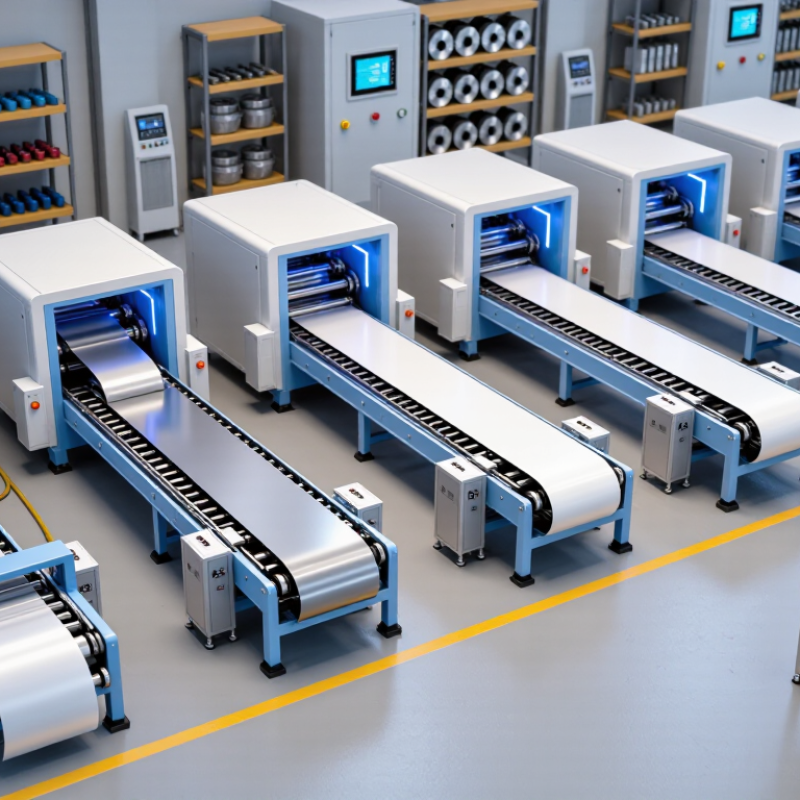
Comma-blade coating uses a rounded, comma-shaped metering blade to spread liquid across a moving web. The blade helps control the coating bead and wet layer. Web speed, blade gap, tension, and formulation also affect uniformity. It suits continuous films, but one machine setting will not work for every substrate. Compare equipment by full-width repeatability, not headline speed alone.
Film thickness is reported in micrometres (µm); always note whether the figure describes wet or dry film. Dry thickness changes with solids content and drying shrinkage, so a wet-gap reading can mislead. Viscosity, measured in millipascal-seconds (mPa·s), describes resistance to flow at a stated temperature and shear condition. One reading may not capture a material’s behavior during coating. A smooth first pass proves little; repeated checks are safer.
Tips: Record temperature, coating speed, blade gap, and viscosity together. Measure thickness at several points across the web, not only in the center. Keep a sample for comparison; visual inspection can miss thin bands. Small changes matter.
The seven options below are comparison profiles, not verified specifications for named models. Width is in millimeters, speed in meters per minute, and film range means target wet-coating thickness in micrometers. A compact lab unit may cover 300 mm, 0.5–5 m/min, and 5–100 µm. A pilot coater might offer 500 mm, 1–10 m/min, and 5–150 µm. A narrow-web line could reach 800 mm, 5–30 m/min, and 10–200 µm. A standard production setup may span 1,200 mm, 5–50 m/min, and 10–250 µm.
For wider work, consider a 1,600 mm line running 3–40 m/min with a 15–300 µm range. A high-speed profile may coat 1,000 mm at 20–100 m/min, usually with a narrower 5–150 µm window. A heavy-film configuration could handle 1,500 mm, 1–20 m/min, and 50–500 µm. These figures are planning bands; confirm usable width, stable speed, and thickness tolerance in supplier data and trials. The widest line is not always the best fit.
Tips: Test the actual liquid and substrate. Watch the coating bead at both speed extremes. Check edge quality, cross-web uniformity, and startup waste. One detail is easy to miss: viscosity changes can shift the practical film range. Ask for measured trial results, not just maximum settings.
When comparing the seven best comma blade coating machines, examine how precisely each controls the blade gap. A digital setting is useful only if it matches the measured clearance. Check whether adjustments are repeatable in micrometers, and whether the gap stays stable across the working width. Tiny changes matter. A few micrometers can alter the wet film, especially with low-viscosity liquids or thin substrates. Ask how operators verify calibration, not just what the screen displays. Setup can be fiddly, and a displayed value alone is not proof of accuracy.
Web tension deserves the same scrutiny. Look for stable readings in newtons and controls that respond smoothly as roll diameter changes. Too much tension can stretch delicate film; too little may cause wrinkles or wandering edges. Test with the intended substrate, since a setting that works for thick foil may not suit a light polymer web. Then assess thickness uniformity across the web and along its length. Request sample measurements, including edge-to-center variation, and confirm whether figures describe wet or dried coating. One clean sample is not enough. Compare repeated runs under the same conditions, while noting that sensors and sampling methods can still miss local defects.
For comma blade coating, the best drying system depends on the coating load, web speed, and solvent—not oven temperature alone. A practical comparison can cover seven configurations: unheated airflow, infrared preheating, single-zone hot air, multi-zone hot air, impingement air, infrared and hot-air hybrids, and extended tunnel ovens. Treat temperature bands as screening examples, not operating recommendations: low-temperature zones may run around 40–60°C, while hotter stages may reach 60–140°C. Check the coating and solvent data before setting conditions.
Numbers can mislead. A display showing 100°C does not reveal how much solvent the oven removes per hour. Ask for measured removal capacity, exhaust airflow, web width, line speed, and residence time. For example, a narrow, slow-moving coated strip may dry well in a compact zone, while a wider web may need stronger, evenly distributed airflow. That matters. Compare the wet coating load with the system’s demonstrated solvent-removal rate, and check that temperatures stay consistent across the web. I would also verify exhaust performance and process controls with qualified engineering support. One weakness in simple comparison charts is that they often omit test conditions; without them, capacity figures are hard to compare fairly.
Choosing among the seven best comma blade coating machines starts with the substrate, not the brochure. Thin PET film, copper foil, paper, and porous nonwovens respond differently to blade pressure, web tension, and coating viscosity. For delicate films, prioritize fine gap adjustment, stable unwinding, and low-tension control. Small tension changes can wrinkle the web. Rough or absorbent materials may need a wider gap range and controlled feeding to limit skips and edge pooling. Check usable width, wet-film thickness range, pump compatibility, and dryer length against your actual formulation.
Production volume changes the requirements. Pilot lines benefit from quick gap changes and easy cleaning. Continuous production calls for repeatable metering, stable speed, and adequate drying capacity. The IEA’s Global EV Outlook 2024 reports about 2.2 terawatt-hours of global battery-cell manufacturing capacity in 2023, highlighting the scale of battery supply chains. That figure is not a machine-sizing target; utilization and product mix still matter. Request trials with your substrate and coating, then inspect coat weight across the full web, not only the center. Imperfect edges may persist. Leave room for adjustment.
Compare seven common comma-blade coater configurations by their typical fit for different substrates and production needs. Higher scores indicate a stronger general fit, not a measured machine specification or product ranking.
The 1–5 ratings are qualitative selection guidance based on typical process capabilities. Actual performance depends on machine design, coating formulation, web width, line speed, and process settings.
Office: (281) 855-2218
Copyright © 2025 Telco Intercontinental Corp. All rights reserved. Privacy Policy | Legal Disclaimer
Telco®, TelcoMotion®, and TelcoGreen® are registered trademarks of Telco Intercontinental Corp.