Main Menu
Choosing a Twin Screw Air Compressor in 2026 is not just a matter of comparing horsepower or headline prices. The right machine must match your real airflow demand, operating pressure, duty cycle, and site conditions. A unit that looks efficient on a brochure may still waste energy if it runs unloaded for long periods. Small details matter: the receiver size, intake temperature, control settings, and room for maintenance access.
Compressed-air specialist Ron Marshall’s system-level guidance can be paraphrased as: “Judge a compressor by how well it serves the whole system, not by the machine alone.” This is an editorial paraphrase, not a verbatim quotation. It points to a practical buying truth. Measure demand before choosing a fixed-speed or variable-speed model, and compare lifecycle costs alongside purchase price. Check whether oil-injected or oil-free operation suits your process, then confirm service intervals, parts availability, and warranty terms with the supplier. Ask for performance data at your actual pressure. Numbers at a different operating point can mislead.
This guide will help buyers compare specifications without treating every claim as equal. It covers sizing, efficiency, controls, installation, and supplier checks. Some assumptions will still need testing on site. Real demand can be messy. A careful shortlist, supported by measured data and qualified technical advice, is more useful than a rushed decision.
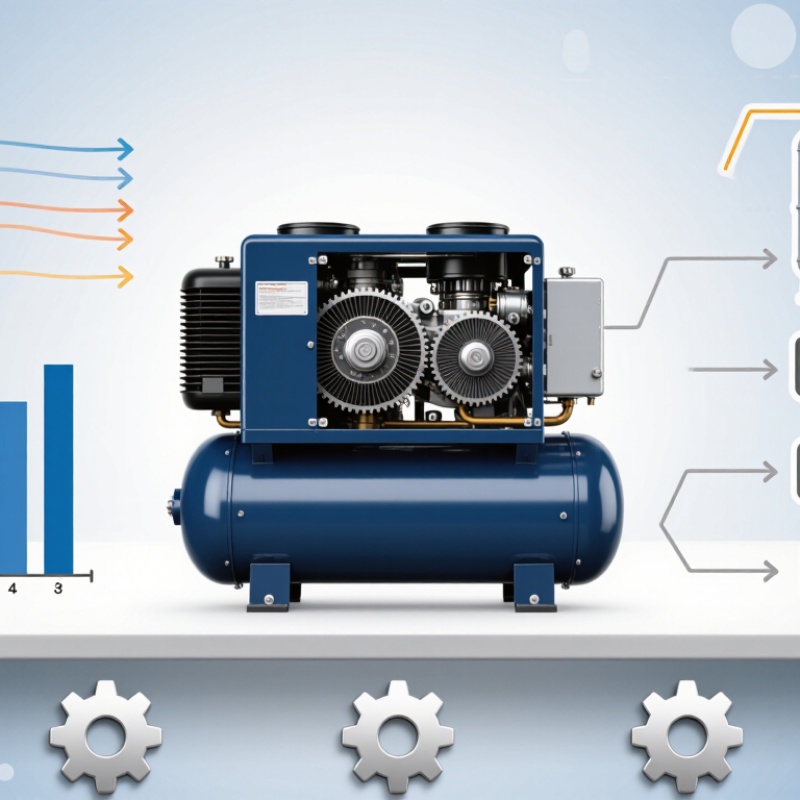
A twin screw air compressor draws air through an inlet and traps it between two rotating, intermeshing rotors. As the air moves along the rotors, the available space decreases, raising its pressure. The compressed air then leaves through an outlet for storage or direct use. In oil-injected models, oil helps seal gaps, remove heat, and lubricate moving parts. Oil-free designs use different clearances and may require additional cooling stages. The details vary by design. That matters.
These compressors are common in factories that need a steady supply of compressed air, such as metalworking shops, packaging lines, and automotive assembly facilities. They can also support pneumatic tools and process equipment that runs for long shifts. For food, pharmaceutical, or electronics production, the air treatment system and compressor type must match the required cleanliness level; “oil-free” does not mean every contaminant is removed. A dryer, filters, and regular checks may still be needed. In practice, buyers should consider operating hours, pressure demand, air quality, and room temperature. A compressor sized only for peak demand may spend too much time lightly loaded. That trade-off is easy to miss.
For a twin screw compressor, calculate airflow from the tools and machines that may run at the same time—not the sum of every nameplate on site. Record each device’s required flow in cubic feet per minute (CFM) at its stated pressure. If three machines need 18, 12, and 8 CFM together, their combined demand is 38 CFM. Add a modest allowance for leakage and future demand, then check it against measured use. This example is not a sizing rule; actual duty cycles matter. The U.S. Department of Energy’s Improving Compressed Air System Performance sourcebook reports that leaks can waste 20–30% of compressor output in poorly maintained systems. Find and repair leaks before buying capacity to cover them.
Set pressure by working backward from the most demanding point of use. Start with that tool’s minimum inlet pressure, then account for pressure loss through filters, dryers, pipes, and fittings while air is flowing. A gauge reading with idle equipment can be misleading. Measure at peak demand, ideally near the critical machine. The DOE sourcebook notes that raising system pressure by 2 psi can increase energy use by about 1%; avoid padding the setpoint without evidence. CAGI guidance also emphasizes evaluating the whole compressed-air system, not just the compressor. A demand worksheet is useful, but it is only an estimate. Check it against operating data before final selection.
A twin screw compressor can run at fixed speed or use variable-speed control. Fixed-speed models suit steady demand, while variable-speed units adjust output as air use changes. Measure demand across a real production shift, not just during a quiet hour. Start with the air profile. Note pressure changes, idle periods, and simultaneous equipment use. A small receiver tank may soften short peaks, but it cannot solve a persistent capacity shortage.
Compare oil-injected and oil-free designs against the air quality your process requires. Oil-free air may be necessary for sensitive applications, while oil-injected models can be suitable when downstream filtration meets the required standard. Confirm this with a qualified supplier. Check the full system, including dryers, filters, and pressure losses. An impressive compressor specification can look less attractive once these are included.
Control systems affect both operation and energy use. Look for clear pressure settings, fault histories, and load-hour data that operators can actually read. Ask how the unit behaves at partial load and whether multiple compressors can coordinate. Efficiency figures need context: compare input power at the same pressure and delivered airflow, using consistent test conditions. Also consider maintenance access, ventilation, and service intervals. A tidy spreadsheet may still miss the heat trapped beside a poorly ventilated machine. That detail matters.
A twin screw compressor’s purchase price tells only part of its cost. Compare electricity use, maintenance parts, installation, and expected downtime over the same operating period. Check performance at your actual pressure and airflow, not just the headline rating. A unit that runs unloaded for long stretches may cost more than its purchase quote suggests.
The U.S. Department of Energy’s Improving Compressed Air System Performance sourcebook estimates that compressed-air leaks can waste 20–30% of compressor output. Small leaks matter. Include leak checks and repair labor in your annual budget. The same sourcebook notes that compressed air can account for about 10% of industrial electricity use. That adds up. Request measured power and flow data, then compare estimated energy costs using your site’s electricity rate. Estimates are imperfect; real demand changes by shift and season.
Reliability depends on operating conditions and support, not just machine design. Ask suppliers for service response times, local parts availability, commissioning steps, and maintenance intervals in writing. Confirm who will check alignment, ventilation, and control settings after installation. Ask for references from facilities with similar duty cycles. A low quote can still be sensible, but only when support terms and service access are clear. I would also check how performance claims are verified; brochures rarely show every site condition.
| Configuration | Typical fit | Estimated installed cost (USD) | Assumed average input power | Estimated five-year energy cost (USD) | Scheduled service allowance (5 years) | Estimated five-year total cost | Reliability and supplier-support checks |
|---|---|---|---|---|---|---|---|
| 75 kW fixed-speed twin screw | Steady demand with limited flow variation; confirm that the compressor is not routinely unloaded. | $32,000 | 55 kW | $132,000 | $15,000 | $179,000 | Check operating-hour service requirements, separator and filter availability, local technician coverage, and response time for breakdown service. |
| 75 kW variable-speed twin screw | Demand that varies during operating hours; verify the expected flow range and minimum stable speed. | $42,000 | 48 kW | $115,200 | $17,000 | $174,200 | Ask about drive cooling and protection, drive-component warranty terms, commissioning, control tuning, and the availability of qualified drive-service support. |
| 90 kW fixed-speed twin screw | Consider only where measured peak demand or future expansion justifies the larger capacity; oversizing may increase unloaded running. | $38,000 | 62 kW | $148,800 | $17,000 | $203,800 | Confirm that the proposed capacity matches measured demand. Request a maintenance schedule, parts lead times, warranty exclusions, and a documented service escalation path. |
Calculation assumptions: 4,000 operating hours per year, five years, and electricity at $0.12/kWh. Energy cost is calculated from assumed average input power × operating hours × electricity rate. The total includes estimated installed cost, five-year energy cost, and scheduled service allowance; it excludes financing, taxes, downtime, unscheduled repairs, and residual value. Before comparing offers, verify delivered flow and input power at the required pressure, preferably using comparable test conditions and stated measurement standards. Actual costs and service intervals depend on the site, duty cycle, installation, and supplier terms.
Plan the installation around the air demand, not just the compressor’s rated output. Leave room to open service panels and remove filters, and keep the air intake away from dust, heat, and vehicle exhaust. Check floor loading, ventilation, electrical supply, and pipe routing before delivery. A long, undersized pipe run can increase pressure loss. Small details matter. A site drawing may still miss a hot corner or a blocked service door, so walk the space before fixing the layout.
During operation, record discharge pressure, temperature, running hours, and unusual vibration. The U.S. Department of Energy’s Improving Compressed Air System Performance sourcebook reports that leaks can waste 20–30% of compressor output in poorly maintained systems. Schedule leak checks and inspect intake filters, oil levels, separators, drains, and coolers according to the equipment manual. Keep maintenance records; they help reveal gradual changes, though a log alone will not catch every fault.
Tips: Listen for hissing during quiet shifts, mark suspected leaks, and confirm them with a suitable detector. Do not raise system pressure to compensate for a restriction until you have checked the pipes, filters, and demand. Check condensate drains regularly, especially after humid days.
Office: (281) 855-2218
Copyright © 2025 Telco Intercontinental Corp. All rights reserved. Privacy Policy | Legal Disclaimer
Telco®, TelcoMotion®, and TelcoGreen® are registered trademarks of Telco Intercontinental Corp.