
Main Menu

Choosing the best Square Pipe Making Machine in 2026 requires more than comparing prices and advertised speed. Buyers should examine production goals, pipe dimensions, steel grades, factory space, and long-term maintenance needs. A machine producing 40×40 millimeter tubes may not handle thicker 100×100 millimeter sections efficiently. Capacity matters.
This guide compares common machine types, including roll forming lines, welded tube mills, and flexible production systems. Each option has practical strengths and limitations. Experienced operators usually inspect forming stands, welding stability, sizing accuracy, cutting performance, and control-system access before placing an order. They also review sample pipes, not only brochures. A clean square profile, consistent wall thickness, and smooth weld seam reveal useful details. Ask for documented test results. Ask about spare parts.
Reliable suppliers should explain installation, training, warranty coverage, and expected operating costs clearly. Their technical advice should match your material and output requirements. However, no selection is perfect. A highly automated line may reduce labor but increase troubleshooting demands. A lower-priced machine may appear attractive, yet weak components can create costly downtime. That assumption can fail. Buyers should therefore calculate total ownership cost, energy use, maintenance frequency, and operator skill requirements. The following analysis offers a practical framework for choosing a suitable 2026 model. It reflects industry practices, but factory conditions differ. Confirm every specification before signing a purchase agreement.
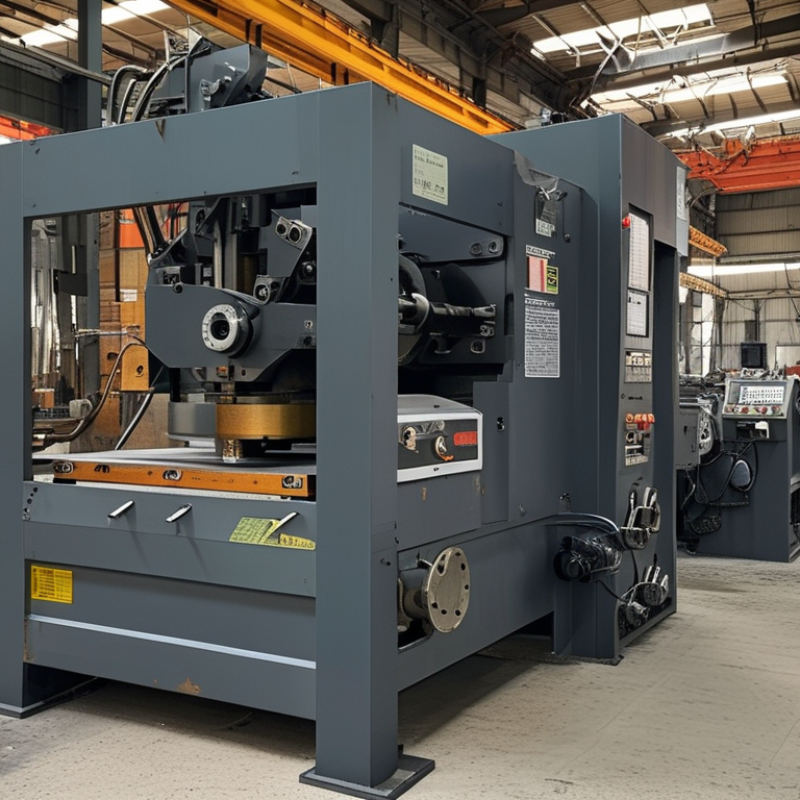
A square pipe making machine forms flat steel strip into hollow, four-sided sections. Most systems use an electric resistance welding process, commonly called ERW. The line usually includes decoiling, strip leveling, roll forming, welding, sizing, cutting, and discharge. Each stage matters. Poor alignment can create uneven corners and weak welds.
According to the World Steel Association, global crude steel production reached about 1.88 billion tonnes in 2024. Its October 2024 outlook also projected steel demand growth of 1.2% in 2025. These figures support continued demand for efficient tube production, especially in construction, furniture, agriculture, and industrial frames. Square pipes offer consistent geometry, simple storage, and useful load distribution. They appear in gates, shelving, solar structures, vehicle components, and factory supports.
For buyers in 2026, the suitable machine type depends on strip thickness, pipe dimensions, steel grade, and planned output. A high-frequency welded line suits stable, large-volume production. A flexible mill may serve workshops producing several sizes. Check forming accuracy, weld control, changeover time, energy use, and spare-part access. Industry equipment assessments often compare productivity and total operating cost, not purchase price alone. That is the practical point. A faster line can still lose money through scrap, downtime, or difficult maintenance. I would also question catalog output figures. Factory trials using the buyer’s actual strip are more reliable than impressive brochures.
A square pipe making machine is a production line that forms steel strip into square or rectangular hollow sections, joins the edges by welding, sizes the tube, and cuts it to specified lengths. The most suitable machine type depends on material, tube dimensions, production volume, surface requirements, and the required level of automation.
| Machine Type | Typical Material | Common Square/Rectangular Tube Range | Main Forming and Welding Method | Typical Production Capability | Key Functions | Best Applications | Main Buyer Considerations |
|---|---|---|---|---|---|---|---|
| High-Frequency ERW Square Tube Mill | Carbon steel, galvanized steel, and low-alloy steel strip | Approximately 15 × 15 mm to 300 × 300 mm; rectangular sections are also commonly produced | Continuous roll forming followed by high-frequency electric resistance welding and sizing | Often about 20–120 m/min, depending on tube size, wall thickness, material, and line configuration | Uncoiling, strip leveling, edge preparation, forming, high-frequency welding, bead removal, sizing, straightening, measuring, and cutting | Structural tube, construction frames, greenhouse structures, racking, furniture, and general fabrication | Best general-purpose option for high-volume carbon-steel production; requires reliable weld control, cooling, tooling, and strip quality |
| Direct Square Forming ERW Mill | Carbon steel, galvanized steel, and structural steel strip | Commonly used for medium and large square or rectangular hollow sections, often from about 80 × 80 mm upward | Strip is progressively formed closer to the final square or rectangular profile before welding and sizing | Typically lower than small-tube mills because larger sections require greater forming force and stabilization | Heavy-duty uncoiling, leveling, direct forming, high-frequency welding, external bead removal, sizing, straightening, and cut-to-length | Large structural hollow sections, columns, beams, industrial frames, and infrastructure projects | Reduces repeated forming transitions for large profiles; requires a rigid frame, strong drive system, and precise roll tooling |
| Round-to-Square Conversion Tube Mill | Carbon steel and galvanized steel strip | Typically suitable for several square and rectangular sizes within a medium production range | Forms and welds a round tube first, then uses sizing rolls to convert it into a square or rectangular section | Commonly about 30–100 m/min, depending on the product size and wall thickness | Continuous forming, ERW welding, bead removal, round-tube sizing, square conversion, straightening, and automatic cutting | Flexible production of multiple standard square and rectangular tube sizes | Usually offers simpler size changes than dedicated direct-forming systems, but corner geometry and dimensional accuracy must be checked carefully |
| Multi-Function Round, Square, and Rectangular Tube Mill | Carbon steel, galvanized steel, and selected stainless steel grades, subject to welding-system specification | Often covers approximately 20 × 20 mm to 200 × 200 mm, with rectangular sizes within the designed range | Interchangeable or quick-change forming and sizing tooling with ERW welding | Usually about 20–100 m/min; speed varies substantially between round and square products | Profile changeover, strip feeding, roll forming, welding, bead removal, sizing, straightening, flying or fixed-length cutting, and automatic discharge | Service centers and manufacturers serving several construction, furniture, mechanical, and fabrication markets | Prioritize changeover time, tooling cost, stored recipes, dimensional repeatability, and compatibility with the intended material range |
| Stainless Steel TIG-Welded Square Tube Line | Austenitic and ferritic stainless steel strip, such as common 300-series and 400-series grades | Commonly used for small and medium square or rectangular tubes, often from about 10 × 10 mm to 150 × 150 mm | Precision roll forming followed by tungsten inert gas welding; post-weld polishing may be added | Often about 5–40 m/min, depending on grade, wall thickness, finish, and welding requirements | Strip preparation, precision forming, TIG welding, weld bead treatment, sizing, straightening, polishing, inspection, and cutting | Architectural handrails, food-service equipment, decorative tubes, sanitary installations, and premium interior products | Requires clean material handling, stable shielding gas, controlled heat input, suitable tooling, and surface-finish protection |
| Laser-Welded Precision Tube Line | Carbon steel, stainless steel, galvanized steel, and other compatible thin-gauge strip materials | Generally used for small to medium precision profiles; the practical range depends on laser power and wall thickness | Roll forming followed by focused laser welding with a narrow heat-affected zone | Commonly about 20–100 m/min for suitable thin-wall products, depending on material and section size | High-precision forming, laser welding, weld monitoring, sizing, straightening, inspection, and high-speed cutting | Automotive components, precision furniture, appliance parts, lightweight frames, and applications requiring a neat weld zone | Offers low heat input and a narrow weld profile, but requires higher initial investment, accurate strip alignment, and qualified laser safety systems |
| Heavy-Wall Square Tube Mill | Carbon steel, low-alloy steel, and structural steel strip | Typically medium to large sections with wall thicknesses commonly above 6 mm, subject to machine design | Heavy-duty forming with high-frequency welding or another specified longitudinal welding process | Usually about 10–60 m/min because thick walls require greater forming force, welding energy, and cooling capacity | Heavy strip handling, powered forming, high-energy welding, bead removal, multi-pass sizing, straightening, inspection, and precision cutting | Load-bearing columns, heavy machinery frames, bridges, industrial structures, and construction equipment | Check maximum strip width, forming force, weld penetration, cooling capacity, drive torque, and the straightness tolerance of finished tubes |
| Automatic Cut-to-Length and Packing Line | Finished welded square and rectangular tubes from carbon steel, galvanized steel, or stainless steel lines | Compatible with the upstream tube mill's product range | Integrated measuring, flying or synchronized cutting, run-out handling, bundling, counting, and packing | Designed to match the upstream mill speed; output depends on tube length, section size, and bundle configuration | Length measurement, automatic cutting, sorting, counting, stacking, bundling, labeling, and material transfer | High-volume factories seeking lower labor requirements and consistent finished-product handling | Evaluate cut-length tolerance, scrap control, bundle weight, automation compatibility, safety guarding, and integration with production data systems |
Buyer guideline: For most carbon-steel construction tube orders, a high-frequency ERW mill or multi-function ERW mill is the practical starting point. Choose direct square forming for larger structural sections, TIG welding for stainless-steel surface-sensitive products, laser welding for precision thin-wall applications, and a heavy-wall line when high thickness and load-bearing performance are the primary requirements. The stated ranges are typical industry planning values; final specifications should be confirmed against the target material grade, strip width, wall thickness, tube dimensions, production speed, and applicable standards.


