2026 Best Electric Three Wheeler Cargo for Global Buyers?
The 2026 market for Electric Three Wheeler Cargo vehicles is becoming more practical, competitive, and demanding. Global buyers now compare more than purchase prices. They examine payload capacity, battery chemistry, charging time, service coverage, road clearance, and real operating costs. A vehicle carrying vegetables through Nairobi faces different pressures from one delivering parcels in Bangkok or spare parts in São Paulo.
Suman Mishra, Managing Director and CEO of Mahindra Last Mile Mobility, has described electric three-wheelers as “a significant opportunity to democratize mobility.” Her view reflects the sector’s wider direction. These vehicles can reduce fuel exposure, simplify urban deliveries, and support quieter commercial transport. Yet optimism needs discipline. A low advertised price may hide battery replacement costs, weak after-sales support, or limited performance on steep roads. The best Electric Three Wheeler Cargo is not always the one with the largest battery. Sometimes, a smaller pack with reliable local charging performs better.
This guide examines the leading cargo configurations expected to attract global buyers in 2026. It considers range under realistic loads, motor output, cargo-box design, braking systems, driver comfort, warranty terms, and fleet data. Details matter. A reinforced floor, sealed connectors, and a visible battery meter can influence daily productivity more than polished marketing language.
There is no universal winner.
Climate, infrastructure, financing, and local service skills change the decision. Some specifications also look impressive on paper but disappoint during crowded delivery routes. Buyers should test vehicles with genuine cargo, not empty demonstration units. That imperfect step often reveals the truth.
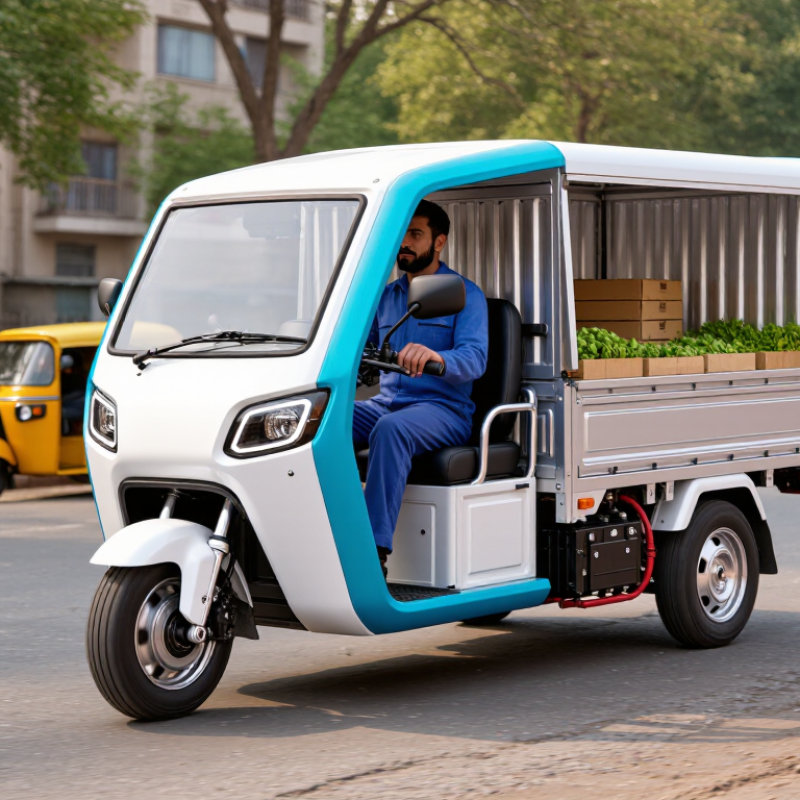
Defining Electric Cargo Three-Wheelers by Payload, Range, and Drive Class
2026 Best Electric Three-Wheeler Cargo for Global Buyers
For global buyers, the best electric cargo three-wheeler starts with a verified payload, not a showroom claim. Payload includes the driver, battery options, tools, and cargo. A vehicle rated for 600 kilograms may carry less after these weights are counted. Ask for axle-load data and the approved gross vehicle weight. Measure the load bed. A long, low platform often suits produce, parcels, or construction supplies better than a taller box.
Range must reflect working conditions. Published figures commonly assume light cargo, flat roads, moderate speed, and warm weather. Real routes include slopes, traffic stops, rough surfaces, and battery aging. Request test results with a defined payload, route length, average speed, and temperature. A practical fleet review should record energy use per trip, charging time, and remaining battery capacity. Numbers without conditions are difficult to trust.
Drive class describes how power reaches the wheels and where the vehicle can work. A single-motor rear drive may reduce cost and simplify maintenance. Dual-motor or differential systems can improve traction on wet roads and inclines, but they add components and service demands. Buyers should compare braking performance, suspension load, turning radius, and ground clearance. Local certification, charging compatibility, and spare-parts support also matter. Some specifications will look impressive, yet field performance may disappoint. That risk deserves a short supervised trial before a large purchase.
2026 Best Electric Three-Wheeler Cargo for Global Buyers?
Electric cargo three-wheelers are commonly differentiated by payload capacity, practical driving range, and drive class. The benchmark values below represent realistic market specifications for global commercial applications and do not refer to any individual company or brand.
Light-duty models are suitable for urban parcels and narrow streets, while standard-duty vehicles provide a balance between payload and range. Heavy-duty configurations offer the highest carrying capacity and are better suited to industrial, agricultural, and longer-distance delivery work.
Comparing 2026 Batteries Using BNEF’s $115/kWh 2024 Price Benchmark
For global buyers, a 2026 electric three-wheeler cargo decision begins with battery economics, not painted bodywork. BNEF reported a 2024 average lithium-ion battery-pack price of $115 per kWh. This figure is a useful reference, not a quotation for every vehicle. It reflects broad market averages across regions, chemistries, and applications. A 10 kWh pack therefore suggests $1,150 at benchmark level. Real pack cost can rise after cells, housing, controls, cooling, testing, logistics, and margin. The arithmetic is simple. Procurement is harder.
A practical buyer should compare usable energy, not only advertised capacity. A 12 kWh pack may provide less energy after reserve limits and battery aging. For urban delivery, daily routes, stop-and-go traffic, hills, payload, and air temperature change consumption. In route trials, a lightly loaded vehicle can behave differently from one carrying 500 kilograms through congested streets. That difference can erase a spreadsheet advantage. A battery with safer thermal behavior and stable cycle life may justify a higher initial cost. Still, sellers should provide test conditions. Without them, range claims remain soft evidence.
For 2026 tenders, request pack warranty terms, cycle data, replacement pricing, charging time, and local service capability. Ask whether the $115 benchmark is being used honestly, or merely as a sales anchor. Battery chemistry also matters. Some lower-cost designs trade energy density for durability and safety, which may suit cargo routes. Others reduce vehicle weight but can increase replacement anxiety. I would not select a pack from price alone. That is an imperfect rule, but real fleets punish optimistic assumptions. Measure energy use over several loaded weeks before finalizing the order.
Evaluating Cargo Capacity, Charging Speed, Safety, and Total Cost of Ownership
2026 Best Electric Three-Wheeler Cargo for Global Buyers
Cargo capacity should be measured by payload, usable volume, and axle loading. A large box is not always a useful box. The IEA’s Global EV Outlook 2024 reports that electric three-wheelers already exceed half of sales in several leading Asian markets. This signals operating maturity, but specifications still vary widely. Buyers should test a loaded vehicle on actual streets, including slopes, potholes, and tight loading areas. A 500-kilogram payload can become impractical when suspension travel is limited.
Charging speed affects daily revenue more than brochure range. A vehicle charging from 20% to 80% during a lunch break can complete another delivery shift. Yet charging claims often use ideal temperatures and new batteries. BloombergNEF reported an average lithium-ion battery-pack price of 115 dollars per kilowatt-hour in 2024, supporting lower purchase costs, but replacement pricing remains uncertain. Check charger compatibility, peak input, thermal protection, and the electricity tariff at the depot. Fast charging is useful.
Safety and total cost of ownership deserve equal attention. UNECE Regulation No. 136 provides useful electric-powertrain safety requirements for applicable vehicle categories, while local approval rules still decide market access. Buyers should verify braking performance, rollover stability, battery isolation, lighting, and cargo restraint points. For TCO, calculate energy, tires, service labor, financing, insurance, downtime, and residual value over five years. A simple spreadsheet can expose hidden costs. I would not trust a low-cost forecast without local maintenance invoices and real fleet data. That weakness matters.
Checking Global Compliance with UNECE R100, R136, and Local Import Rules
For 2026 electric cargo three-wheelers, compliance should guide purchasing decisions, not only payload and range. The International Energy Agency reported almost 10 million electric two- and three-wheelers sold globally in 2023. This growth increases scrutiny of battery safety, charging systems, and technical documentation. A low price means little if customs delays the shipment.
UNECE R100 is central to rechargeable electrical energy storage system safety. It covers tests involving vibration, mechanical shock, fire exposure, overcharge, and electrical protection. UNECE R136 applies to electric powertrains in relevant L-category vehicles, including certain three-wheelers. Its requirements can affect insulation, wiring, functional safety, and protection against electric shock. The correct vehicle category matters. A cargo model may not fit every approval path.
Local import rules still decide market access. Buyers should verify type approval, brake and lighting standards, electromagnetic compatibility, customs classification, battery labeling, and charging compatibility. The United Nations Economic Commission for Europe publishes the regulatory framework, while the IEA Global EV Outlook provides market context. Documents should match the exact battery, motor, controller, and vehicle configuration. Small differences matter. A certificate for one version may not cover another. Even experienced buyers can overlook regional registration procedures, and that remains a practical weakness worth checking before shipment.


