+1 (281) 855-2218

10 Tips for Choosing Pneumatic Valves?

Choosing the right Pneumatic Valves can determine whether a machine runs smoothly or wastes energy every shift. These components control air direction, pressure, speed, and actuator movement. A small mismatch can cause slow cylinders, noisy exhaust, or repeated downtime. The details matter.

Industry research supports careful selection. The U.S. Department of Energy’s compressed-air guidance reports that leaks can waste 20% to 30% of compressor output in poorly maintained systems. That figure makes valve sealing, fitting quality, and maintenance access practical concerns, not minor specifications. ISO 4414 also emphasizes safe design, pressure control, and predictable pneumatic-system behavior. Meanwhile, market analyses from Grand View Research and MarketsandMarkets identify automation, packaging, and manufacturing as major demand areas for pneumatic equipment.

This guide explains ten useful checks for selecting Pneumatic Valves. It considers valve function, port size, operating pressure, flow capacity, response time, media quality, materials, control voltage, installation space, and service life. Real-world experience still matters. A catalog rating may look excellent, yet performance can change with long tubing, moisture, temperature, or poor filtration. That is easy to overlook.

No checklist is perfect.

The best choice balances engineering data with the machine’s actual working conditions. Engineers should verify manufacturer specifications, test samples when possible, and document assumptions before purchase. These steps support reliable decisions and help avoid expensive substitutions after installation. Some applications need a specialist review, especially where personnel safety or critical production equipment is involved.
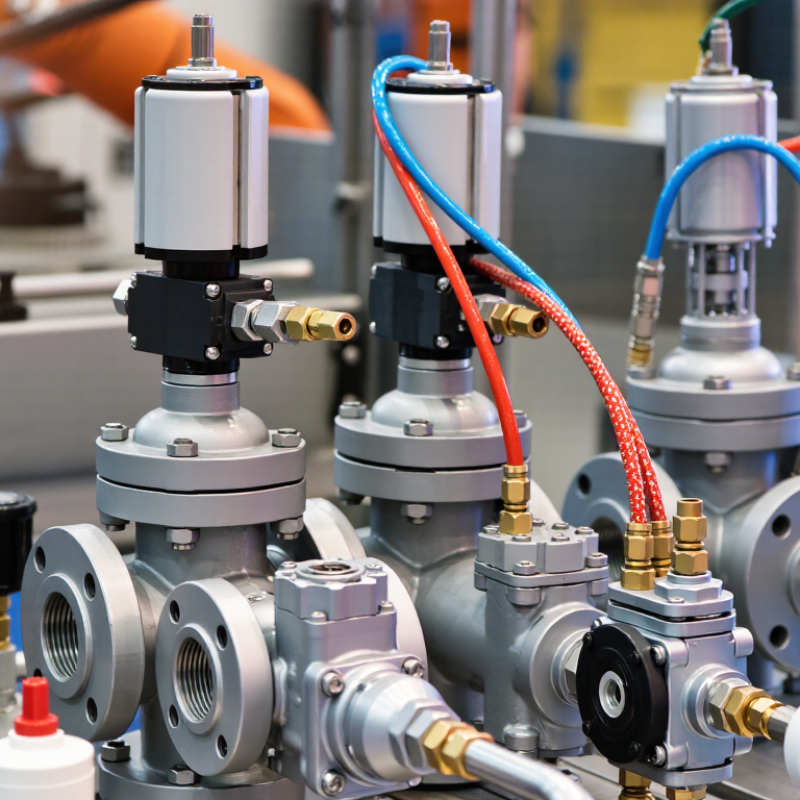
10 Tips for Choosing Pneumatic Valves?

Define the Application and Performance Requirements

Define the application before comparing pneumatic valves. Record the working medium, pressure range, temperature, flow rate, cycle frequency, and available air quality. A valve for clean, dry air may fail quickly in a wet or dusty environment. The piping size also matters. Oversizing can reduce control accuracy, while undersizing creates pressure loss and slow actuator movement.

Tip: Describe the real operating cycle. Will the valve switch twice daily or every few seconds? Specify the actuator volume, required response time, and preferred fail position during air loss. Consider whether the system needs normally open, normally closed, or proportional control. I have seen projects focus on maximum pressure while overlooking minimum pressure. That small omission caused unreliable movement during plant start-up.

Tip: Test the difficult conditions, not only the ideal ones. Check cold starts, pressure fluctuations, contaminated air, and long idle periods. Confirm connection standards, seal compatibility, noise limits, and maintenance access. A manual override may help during inspection, but it can introduce accidental operation if poorly protected. My own early checklists sometimes missed installation orientation. That mistake was minor on paper, yet it complicated drainage and servicing. Ask operators to review the layout before approval. Their practical feedback often exposes problems that specifications do not show.

Select the Appropriate Pneumatic Valve Type

Selecting the appropriate pneumatic valve type starts with the actuator, not the catalog page. A single-acting cylinder usually needs a 3/2 valve, while a double-acting cylinder commonly uses a 5/2 valve. A 5/3 valve may suit applications requiring a center position, but its center configuration matters. Closed center, exhaust center, and pressure center create different operating results.

Check the working pressure, air quality, flow demand, and required response time. A valve with undersized ports can make a cylinder move slowly or stall under load. Oversizing is not always better; it can increase cost, noise, and unnecessary air consumption. Solenoid valves support remote control, while manual or mechanical valves can be more reliable in simple, local operations. For sensitive speed control, proportional valves may provide finer adjustment than basic on-off designs.

In field installations, I have learned to confirm the actuator’s return behavior during power loss. The safest position is not identical for every machine. Review the valve symbol, port numbering, mounting method, and seal compatibility before ordering. I once focused on flow rate and overlooked the available voltage, causing an avoidable wiring change. That assumption was wrong. Ask whether the valve must exhaust air, hold pressure, or move to a defined position during an emergency. A short test with clean, regulated air can reveal leakage and timing problems before production begins.

10 Tips for Choosing Pneumatic Valves: Select the Appropriate Pneumatic Valve Type

No. Selection Tip Recommended Valve Type or Approach Important Data to Check Practical Selection Notes
1 Define the actuator motion Directional control
Use a 3/2-way valve for a single-acting actuator and a 5/2-way valve for a double-acting actuator.
Confirm the number of ports, valve positions, actuator type, and required exhaust arrangement. A single-acting cylinder normally requires one supply port, one actuator port, and one exhaust port. A double-acting cylinder requires separate ports for extension and retraction.
2 Match the operating pressure Pressure compatibility
Select a valve whose working-pressure range includes the actual system pressure.
Check minimum and maximum operating pressure, pressure differential, proof pressure, and working-medium requirements. The valve may fail to shift or may operate slowly if the available pressure is below its minimum requirement. Never exceed the rated pressure range.
3 Calculate the required flow rate Flow capacity
Choose a valve with sufficient effective flow area or standardized flow rating for the actuator speed.
Evaluate Cv, flow coefficient, effective orifice area, nominal port size, actuator bore, stroke, and desired cycle time. A larger port does not automatically guarantee higher performance. Restrictions in fittings, tubing, silencers, and regulators can also limit flow.
4 Select the appropriate actuation method Control method
Use solenoid actuation for electrical control, pilot actuation for high-flow switching, or manual/mechanical actuation for local operation.
Check voltage, current, response time, manual override, pilot pressure, switching frequency, and control-signal compatibility. For pilot-operated valves, verify that the pilot pressure is adequate. Direct-acting designs are often preferable when pressure is very low or flow demand is modest.
5 Choose the correct valve function Circuit behavior
Consider normally closed, normally open, closed-center, exhaust-center, or pressure-center configurations according to the machine sequence.
Review the valve symbol, default position, transition behavior, exhaust path, and fail-state requirements. The default state should support the intended safe condition when electrical power or control pressure is lost.
6 Consider response speed and cycle frequency Dynamic performance
Select a fast-response valve for rapid cycling, or a valve with controlled switching for smoother motion.
Compare energizing and de-energizing response times, allowable cycles per minute, duty cycle, and actuator load. Very fast switching can produce impact, vibration, and pressure surges. Flow controls or cushioning may be needed to regulate actuator motion.
7 Verify the electrical and environmental rating Installation conditions
Select the required enclosure, connector, insulation class, and environmental protection level.
Check supply voltage, power consumption, ambient temperature, humidity, dust, water exposure, vibration, and hazardous-area requirements. The valve’s electrical protection rating must suit the installation location. Coil temperature can rise during continuous energization.
8 Select suitable materials and seals Media compatibility
Choose body, spool, diaphragm, and seal materials that are compatible with the compressed gas and surrounding environment.
Confirm compatibility with dry or lubricated air, moisture, oil vapor, cleaning chemicals, temperature, and corrosion exposure. Standard pneumatic valves are generally intended for filtered compressed air. Special gases or aggressive media may require dedicated construction and seals.
9 Check installation and connection requirements Port and mounting format
Match threaded, push-in, manifold, sub-base, or flange connections to the existing pneumatic layout.
Review port thread standard, port size, mounting orientation, manifold spacing, tubing outside diameter, and exhaust silencer arrangement. Thread standards are not interchangeable. Confirm the required standard and use suitable sealing practices to prevent leakage or thread damage.
10 Plan for safety, maintenance, and future service Lifecycle selection
Choose a valve with the required safety function, diagnostic capability, replaceable components, and accessible maintenance points.
Evaluate redundancy, monitored switching, manual isolation, spare-part availability, service interval, leakage limits, and documentation. Install appropriate air preparation, isolation, and exhaust controls. Depressurize the system before maintenance and verify the machine’s safe state.

Match Valve Specifications to the System

10 Tips for Choosing Pneumatic Valves?

Match Valve Specifications to the System

A pneumatic valve should fit the machine, not merely the available pipe. Start by confirming the working medium, operating pressure, temperature range, and required flow rate. A valve rated for higher pressure may still perform poorly if its flow capacity is too low. Check the Cv value, port size, and pressure drop under real operating conditions. Datasheets often show ideal figures. Your machine may not.

Review the actuation method carefully. Solenoid, manual, mechanical, and pilot-operated valves suit different control arrangements. Confirm the control voltage, response time, switching frequency, and required air quality. In a dusty workshop, exposed electrical parts may create maintenance problems. In a cold area, moisture can freeze inside the circuit. Small details matter.

I once selected a compact valve because its dimensions matched an existing panel. The flow path was restrictive, and the cylinder moved slowly. That shortcut seemed sensible, but it was not. Check seal materials against the air, lubricant, temperature, and nearby chemicals. Verify the fail position, connection standard, mounting direction, and service access. ISO 4414 guidance can support safer pneumatic design, but it cannot replace site testing. Leave room for inspection. Measure actual pressure at the valve, not only at the compressor. Specification matching is practical work, and sometimes the first selection needs changing.

Evaluate Materials, Air Quality, and Environmental Conditions

Choosing pneumatic valves requires more than matching port size and pressure. Material selection must reflect the air, fluid, temperature, and surrounding atmosphere. Aluminum is lightweight, but stainless steel offers stronger resistance in washdown or corrosive areas. Polymer seals can perform well, yet their compatibility depends on oil, solvents, and heat. A practical review should compare the manufacturer’s compatibility chart with actual process chemicals. I have seen selections fail because “clean” air was assumed, not measured.

Tip: Inspect the environment first. Record humidity, dust, vibration, temperature swings, and cleaning chemicals. A valve near a furnace may need high-temperature seals. Outdoor equipment may require protection against condensation and ultraviolet exposure. An IP rating helps, but it does not replace enclosure inspection after installation.

Tip: Treat air quality as a design variable. ISO 8573-1 classifies compressed air by particles, water, and oil. Choose filtration and drying levels according to the valve’s sensitivity, not habit. The U.S. Department of Energy reports that compressed-air leaks can waste 20–30% of compressor output in poorly maintained systems. That loss can also reduce pressure at distant valves. Check dew point, line pressure, and filter differential pressure during operation. A pressure gauge at the compressor is not enough. One detail I would reconsider is overspecification: extremely clean air can increase energy and maintenance costs without improving control. Test the real duty cycle before final approval.

10 Tips for Choosing Pneumatic Valves: Material and Environmental Fit

Typical temperature ranges for common valve seal materials are shown below. Actual limits depend on pressure, chemicals, cycle frequency, and the valve design, so always verify the manufacturer’s specifications.

How to use this chart: Select a seal material whose operating range covers the minimum and maximum temperatures of the application. Also consider air moisture, oil content, cleaning chemicals, UV exposure, and abrasive particles when evaluating pneumatic valves.

Compare Installation, Maintenance, Safety, and Total Cost

Choosing pneumatic valves requires more than matching port size and pressure. In plant audits, I check installation access, air quality, cycle frequency, and failure consequences. A compact valve may fit neatly, yet become difficult to service beside a guarded machine. Measure twice. The U.S. Department of Energy’s Improving Compressed Air System Performance sourcebook reports that compressed air can consume about 10% of industrial electricity. It also identifies leakage as a common loss, often reaching 20–30% of compressor output. Select valves with suitable flow capacity, short tubing, accessible fittings, and reliable sealing. Leaks matter.

Maintenance costs can exceed the purchase price. Compare coil replacement, seal availability, cleaning requirements, diagnostic features, and expected service life. Record pressure drop at the actual flow rate, not only the catalog maximum. A valve that causes excessive pressure loss may increase compressor demand throughout every shift. The European Commission’s Energy Efficiency in Industry guidance emphasizes compressed-air optimization, including leak reduction and pressure management. These details directly affect total cost.

Safety deserves equal weight. Verify working pressure, temperature limits, exhaust direction, and fail-safe behavior during power or signal loss. ISO 4414 requires pneumatic systems to address risks from stored energy, unexpected movement, and isolation procedures. Use guarded exhausts where particles or noise create hazards. A practical review should include installation labor, downtime, inspection time, energy use, spare parts, and disposal. My own evaluations sometimes overvalue fast switching and undervalue cleaning access. That mistake is expensive. Ask maintenance technicians to test the proposed valve before approval, because real dust, moisture, and rushed servicing reveal weaknesses that specifications may miss.

SHOP BY BRAND