+1 (281) 855-2218

Top 10 100 Pin SCSI Cables for Global Buyers

A dependable 100 Pin Scsi Cable can keep legacy storage and specialized equipment connected, but choosing one takes more than matching a connector. Buyers should check cable length, pin layout, shielding, termination, and the host device’s requirements. Small differences matter. A plug may look correct yet fail to seat securely or support the intended setup. This guide introduces ten cable options for global buyers, with practical comparison points rather than a promise that one model suits every system.

The selection process should begin with the equipment manual and the cable’s manufacturer specifications. Look for clear product photos, stated compatibility, and details about construction. For example, measure the route between a workstation and its drive enclosure, then allow room for bends without pulling the connectors. A shorter cable may help reduce clutter; a longer one may be necessary for a rack or test bench. Check packaging, warranty terms, and shipping availability in your region, too. Details can vary by seller. Even careful listings sometimes leave questions unanswered, so confirm uncertain specifications before ordering. That extra check may feel tedious, but it can prevent a costly mismatch. The following overview is a starting point, not a substitute for verifying your exact hardware.
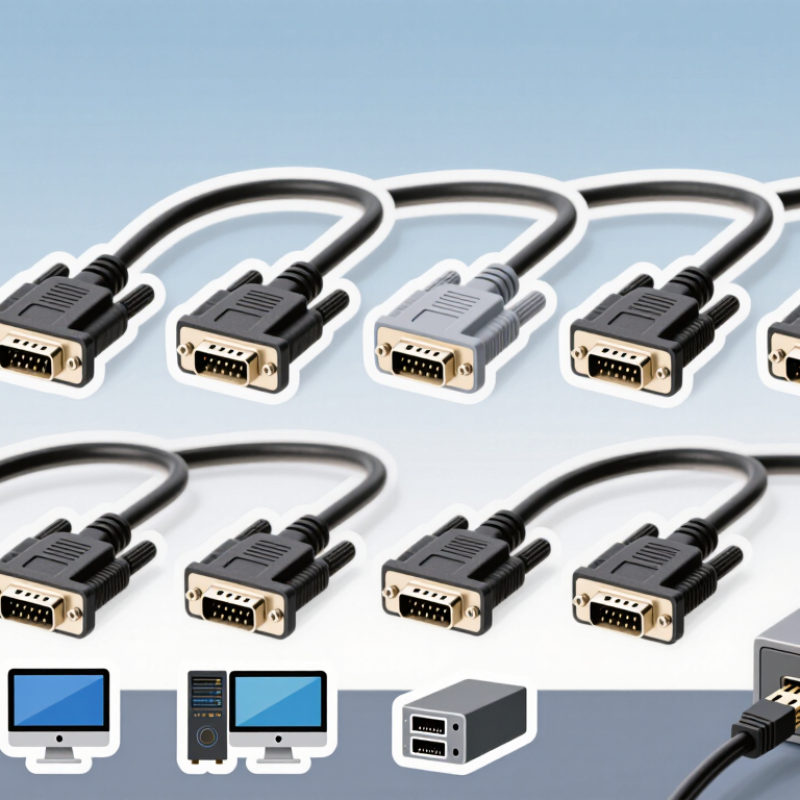
Top 10 100 Pin SCSI Cables for Global Buyers

Understanding 100-Pin SCSI Cables and Their Common Applications

A 100-pin SCSI cable is best understood as a connector format, not a performance rating. The pin count alone does not identify the SCSI generation, signaling method, or supported data rate. Technical specifications published by INCITS T10 distinguish interface modes and bus widths; for example, Fast-20 wide SCSI can reach 40 MB/s under its defined conditions. Check the equipment manual and cable pinout before ordering. A connector that fits may still carry the wrong signals.

These cables are generally relevant when maintaining legacy servers, storage enclosures, industrial controllers, or specialized test equipment. In practice, confirm whether the system uses single-ended or differential signaling, and whether termination is built into the cable or device. The SCSI Parallel Interface specifications from INCITS T10 describe electrical and timing requirements that help explain why cable length and termination matter. Small details count. A missing terminator can cause intermittent detection, while a bent pin may produce faults that appear to be drive failures. I have seen connector photos look convincing, yet the pin layout did not match; photos alone are not enough. Check the part number, wiring diagram, and host-device compatibility before purchase.

Key Connector, Length, Shielding, and Compatibility Specifications

A 100-pin SCSI cable is not defined by pin count alone. Check the connector shell, keying, pin layout, and gender at both ends. Small differences matter. Compare the host adapter and device documentation, including whether the interface is single-ended, differential, or another implementation. A pinout diagram or clear connector photo can prevent a mismatch that a brief product description may not reveal.

Choose a length that fits the equipment layout without leaving a large coil beside the drive. Longer is not always safer. Signal limits depend on the SCSI implementation, bus speed, and total bus configuration, so confirm the applicable specifications before ordering. Shielding can help reduce interference, especially near power supplies or motors, but it cannot correct poor grounding or an incompatible cable. Check that the shield has a sound path through the connector shells, and route the cable away from noisy equipment where practical. For a final check, inspect the contacts and verify continuity against the correct pinout. It is easy to assume two 100-pin cables are interchangeable; that assumption deserves a second look.

Top 10 100 Pin SCSI Cables for Global Buyers - Key Connector, Length, Shielding, and Compatibility Specifications
No. Cable Configuration Connector Details Typical Length Shielding Typical Application Compatibility Checks
1 Internal straight-through cable 100-position connector at both ends; verify gender, keying, and pinout 0.3 m Usually unshielded ribbon construction inside a grounded enclosure Short internal connection between a compatible controller and device Confirm the device and host use the same 100-pin interface and signal assignment; do not infer protocol compatibility from pin count alone.
2 Internal straight-through cable 100-position connector at both ends; matching connector style required 0.5 m Unshielded ribbon or individually insulated conductors, depending on assembly Internal connection in a larger chassis where a short cable does not reach Check routing, connector orientation, bus termination, and the total cable length of the SCSI bus.
3 Internal cable with locking connectors 100-position connectors with compatible latches or retention features 0.3–0.5 m Typically unshielded for enclosed internal use Equipment subject to vibration or frequent servicing Confirm latch geometry and connector dimensions match the device header; locking features do not establish electrical compatibility.
4 External straight-through cable 100-position shielded connectors at both ends; shell and gender must match equipment ports 0.5 m Overall foil or braid shielding with a conductive connector shell Short external link between compatible SCSI equipment Verify shell grounding, pinout, connector keying, and the applicable bus-length limit for the SCSI signaling method.
5 External straight-through cable 100-position shielded connectors at both ends 1.0 m Overall shield; drain-wire and shell-bonding details should be specified General-purpose external connection where additional reach is needed Check the total bus length, all attached cable sections, termination placement, and device support for the exact connector pinout.
6 External straight-through cable 100-position shielded connectors; confirm male/female arrangement at both ends 1.5 m Braided or foil-and-braid overall shield Longer external connection in a system whose bus-length budget permits it Longer cable does not guarantee operation at every SCSI transfer rate; check the complete bus topology and electrical specifications.
7 External cable with high-retention connector shells 100-position shielded connectors with compatible screw locks or latches 1.0 m Overall shield with conductive shells and secure shell-to-shield termination Installations needing improved mechanical retention Confirm the locking mechanism fits the equipment port and that the connector shell is grounded as required by the system.
8 Internal low-profile cable 100-position connectors at both ends; compact backshell or low-profile termination 0.2–0.3 m Normally unshielded; maintain separation from noise sources where practical Space-constrained equipment enclosures Check bend radius, clearance, pin-1 orientation, connector height, and the manufacturer's electrical requirements.
9 Custom-length internal cable 100-position connectors selected to match the host and device headers 0.1–0.8 m, specified to order Unshielded ribbon or shielded construction as required by the installation Retrofits and equipment with nonstandard internal routing Provide a verified wiring diagram and pinout; require continuity and short-circuit testing before installation.
10 Custom-length external cable 100-position shielded connectors with specified gender, keying, and shell style 0.3–2.0 m, subject to system limits Overall foil or braid shield; specify connector-shell bonding Replacement or integration work requiring a particular external reach Obtain host and device documentation, verify the exact 100-pin assignment, and confirm total bus length and termination requirements.

Buyer note: “100-pin SCSI” identifies a connector position count, not a universal pinout or guaranteed SCSI protocol. Before ordering, verify connector gender, keying, wiring diagram, signaling method, grounding, termination, and the total cable length allowed by the specific system.

How to Select a Cable for Different SCSI Systems

Selecting a 100-pin SCSI cable starts with identifying the complete bus, not just matching the connector. Systems can differ in signaling, device generation, and internal or external routing. Check the host adapter, backplane, and drive documentation together. A plug that fits may still have the wrong pinout or electrical interface. Small details matter.

For older single-ended setups, confirm that every device supports the same signaling mode. LVD systems need suitable cable construction and compatible termination; mixing modes can reduce performance or prevent stable operation. Count devices and check the bus layout before choosing a length. Keep branches short, avoid unnecessary adapters, and place termination only at the specified bus ends. Length limits vary by bus type and device count, so follow the system documentation. Do not guess.

Inspect conductor condition, shielding, connector keying, and strain relief, especially in equipment handled during servicing. Compare photographs and measurements, then request a pinout when specifications are unclear. Test one connection at a time and watch for intermittent errors during data transfers. A cable can look perfect and still be wrong. Recheck the cable before blaming the drive; troubleshooting can be messy.

Top 10 Types of 100-Pin SCSI Cables for Global Buyers

A 100-pin SCSI cable is a specialized connection, not a universal fit. Pin count alone does not confirm compatibility. Check the connector shape, keying, wiring, and equipment documentation before ordering. A clear photograph can help, but it cannot verify the internal pinout.

Common cable types are easier to distinguish by construction and use. Internal flat-ribbon cables keep conductors side by side and suit compatible enclosures with enough space. Round internal cables bundle those conductors, making routing around a drive cage more manageable. External shielded cables protect connections between separate units; inspect the connector shell and locking hardware. Straight-through cables connect matching interfaces, while adapter or breakout assemblies change the connection layout. These categories may overlap.

Fit matters. Measure the route, including bends near the chassis opening. Avoid sharply folding a ribbon cable; inspect for bent pins, worn insulation, and loose shields. Compare both ends, since a connector that looks right may carry a different pin assignment. Ask for a pinout or a verified compatibility note when records are unclear. A seller’s label may be incomplete. It is easy to over-trust the number “100,” and that shortcut can lead to a cable that physically fits but does not work.

International Sourcing, Compliance, and Quality Checks

Sourcing 100-pin SCSI cables internationally starts with confirming the exact interface, connector gender, keying, and pin mapping. Pin count alone does not prove compatibility. A clear drawing and sample can prevent costly mismatches, especially when equipment documentation is old or incomplete. That happens.

Ask suppliers to identify cable length, conductor construction, shielding, and connector materials. Request traceable production records and a written change-control process. For each destination, verify applicable labeling, material, and electromagnetic compatibility requirements with qualified compliance staff. Requirements vary by market, and a generic certificate may not cover the finished cable.

Quality checks should go beyond appearance. Inspect connector alignment and strain relief, then test continuity, shorts, and pin-to-pin mapping on every production lot. Check shielding termination and cable flexibility against the agreed specification. Keep a sealed reference sample for comparison. A small sample can still miss inconsistent assembly across a larger order, so define inspection criteria and sampling levels before shipment. No checklist catches everything; document failures and adjust the next inspection rather than assuming the supplier’s first report is enough.

Top 10 100-Pin SCSI Cable Checks for Global Buyers

Checklist coverage by sourcing and quality workstream. Counts show how the 10 checks below are grouped; they are not market rankings or test results.

The 10 checks cover connector and pinout fit, cable length and interface compatibility, continuity, unintended shorts, shielding, strain relief, compliance documentation, and shipment traceability. Confirm requirements against the intended SCSI system, approved drawing, and destination-market rules.

SHOP BY BRAND